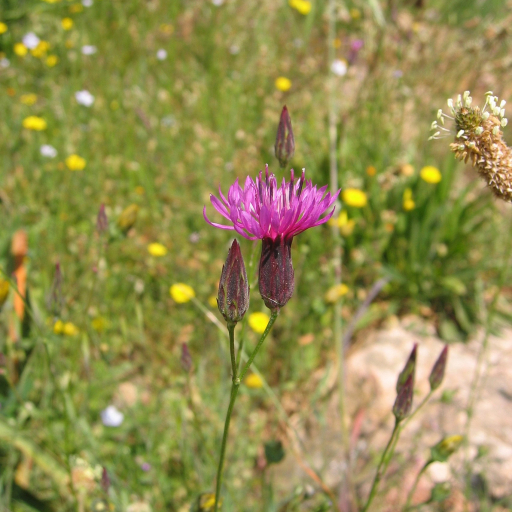
Plant Overview
Known to many as the False Star-thistle or Black-tassels, Crupina crupinastrum is a slender, opportunistic traveler originating from the sun-drenched Mediterranean. While it may look like a delicate wildflower with its soft pinkish-purple heads, it is a rugged survivor capable of thriving in the harshest, rockiest soils. In some parts of the world, it is admired for its wild beauty, while in others, it is a formidable "invader" that outpaces local grasses.
🔍 How to Identify
- 🌸 The Flower Head: Small, narrow flower heads that lack the sharp spines of true thistles. They are typically a soft lavender or pinkish-purple, topped with a distinctive tuft of dark, bristly "tassels."
- 🍃 Feathery Foliage: The leaves are deeply lobed and feathery (pinnatifid), giving the plant a light, airy appearance. The lower leaves often form a flat rosette against the ground before the stem shoots upward.
- 📏 Slender Stems: The stems are upright, ribbed, and can grow quite tall, often branching near the top to display multiple flower heads swaying in the breeze.
🏡 In Your Garden & Ecology
- ☀️ Sun Seeker: This plant is a specialist in dry, disturbed ground. It thrives in full sun and can tolerate poor, rocky, or gravelly soil where other plants might wither.
- 🚜 The Great Spreader: Outside of its native range, it is often viewed as a "noxious weed." It produces a large number of seeds that are easily transported by wind, water, or clinging to the fur of passing animals, allowing it to quickly dominate open grasslands.
⚠️ Safety & Toxicity
- 🐾 Low Toxicity: Crupina crupinastrum is not generally considered poisonous to humans or household pets like cats and dogs.
- 🌾 Livestock Nuisance: While not chemically toxic, the stiff, bristly "tassels" on the seeds can cause minor mechanical irritation to the mouths and throats of grazing livestock if consumed in large quantities.
✨ Fun Fact
The genus name Crupina is derived from a Dutch word meaning "to creep." This refers to the curious way the seeds' stiff, backward-pointing bristles allow them to "walk" across the ground or hitchhike on clothing and fur to find new places to grow!

Detailed Care Instructions

Place in a bright room that is sun drenched almost all day. Or directly in a south-facing window.

To properly water this plant, it is important to take note of the soil moisture level. One should check the soil regularly and water the plant when the soil is dry to the touch. When watering, it is advisable to do so deeply and slowly to ensure that the water penetrates the roots. Overwatering should also be avoided, as this can lead to root rot and other plant diseases. In addition, it is important to water at the base of the plant and avoid getting water on the leaves, as this can encourage fungal growth.
The best type of soil to use with this plant is a well-draining loam soil with a pH level ranging from neutral to alkaline. The ideal soil texture should be slightly sandy and should contain a balanced amount of organic matter. It is also important to ensure that the soil is not compacted, as this can impede root growth and water absorption. Adequate levels of nitrogen, phosphorus, and potassium are essential for the healthy growth and development of these plants. Therefore, it is recommended to supplement the soil with a slow-release fertilizer that provides these essential nutrients. Regular watering is also crucial, but care should be taken not to overwater, as this can lead to root rot. Overall, the key to successful growth of this plant is to provide well-draining, nutrient-rich soil that is watered appropriately.








