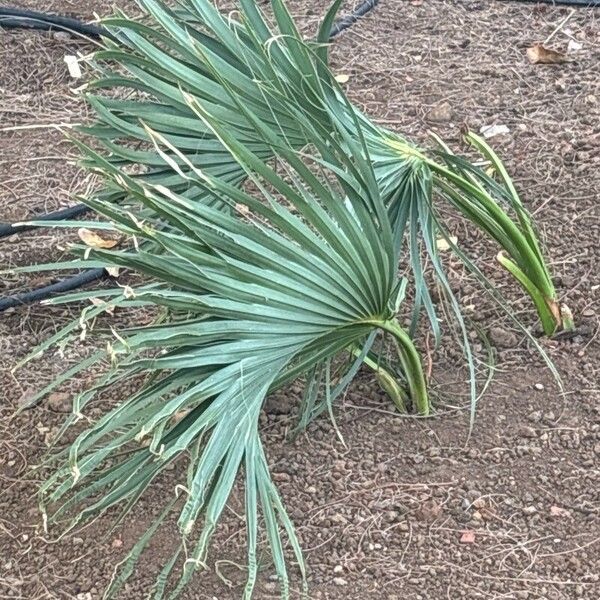
Plant Overview
Known affectionately as the Root Spine Palm or "Escoba," this Central American native looks like it stepped straight out of a prehistoric jungle. It is famous for its "armored" appearance, featuring a slender trunk protected by a dense cage of branched, woody spines. While it’s a slow grower, its elegant fan-shaped fronds and silver-backed leaves make it a stunning centerpiece for any tropical-themed collection.
🔍 How to Identify
- 🌵 The Trunk Armor: The most distinct feature is the "root spines"—modified aerial roots that grow downward and harden into sharp, branched thorns covering the stem.
- 🖐️ Fan-Shaped Fronds: Large, circular leaves (palmate) that are deeply divided into segments, giving the plant a delicate, airy silhouette.
- 🥈 Silvery Undersides: If you flip a leaf over, you’ll notice a beautiful, chalky white or silvery sheen that contrasts sharply with the deep green topside.
- 🌴 Growth Habit: It typically grows as a single, slender trunk, reaching moderate heights in the wild but remaining manageable in cultivation.
🏡 In Your Garden
- 🛡️ Placement Strategy: Because of those wicked spines, this palm should be planted away from walkways or "high-traffic" areas where people might accidentally brush against the trunk.
- ☁️ Light and Humidity: It thrives in bright, filtered light—mimicking the dappled sun of a rainforest canopy. It is a humidity-lover, so it appreciates misting or being placed near a water feature.
- 🌱 Root Sensitivity: Like many palms, it has a sensitive root system and dislikes being moved frequently. Once you find its "happy place" in well-draining, organic soil, try to leave it undisturbed.
⚠️ Safety & Toxicity
- ⚔️ Physical Hazard: While the plant is not known to be chemically toxic to humans or pets, the trunk spines are extremely sharp and can cause painful puncture wounds.
- 🐾 Pet Safety: Keep curious dogs or cats away; even a playful bump into the trunk could result in a trip to the vet for a scratch or puncture.
✨ Fun Fact
The common name "Escoba" (Spanish for broom) comes from the traditional use of this palm; throughout Central America, the stiff, durable leaf segments are still harvested and tied together to make high-quality handmade brooms!

Detailed Care Instructions

Some plants require more regular watering than others, which should be done every few days. It's critical to maintain the soil moist all of the time. The water requirements of the same plant placed in pots with varying sizes will differ. Because the water in the smaller pot evaporates faster than the water in the larger pot, it will require more watering. Regardless of pot size, the surface should constantly be maintained moist.







