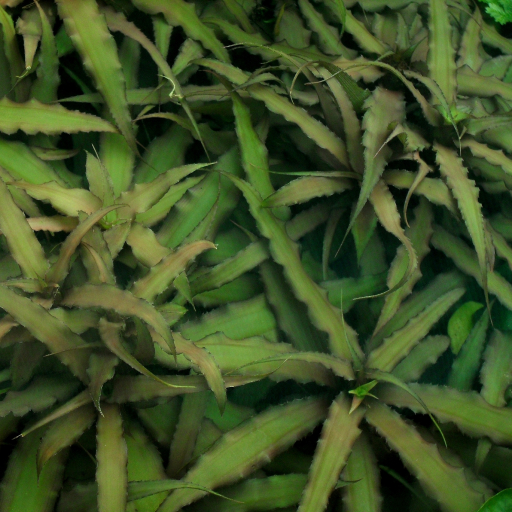
Plant Overview
Often called the "Green Earth Star" or "Starfish Plant," Cryptanthus acaulis is a botanical gem that hails from the shaded rainforest floors of Brazil. Unlike its flashy cousins that hang from trees, this little bromeliad is a grounded beauty, forming a perfect, flat starburst of foliage. Its name literally translates to "hidden flower," hinting at the modest blossoms that tuck themselves deep within its center.
🔍 How to Identify
- 🌿 Growth Habit: A true "earth star," it grows in a low-profile, stemless rosette that hugs the soil, rarely rising more than a few inches high.
- 🍃 Foliage Texture: The narrow, sword-shaped leaves have distinctly wavy (undulate) edges and are covered in tiny, silvery scales called trichomes that give it a matte finish.
- ⚪ The "Hidden" Bloom: During the flowering season, small, three-petaled white flowers emerge from the very center of the rosette, appearing to nestle within the leaves rather than rising on a stalk.
🏡 In Your Garden
- 🌎 Rooted in Reality: Unlike epiphytic bromeliads (which grow on trees), this species is terrestrial. It relies on a functional root system for nutrients, meaning it prefers to stay in a pot with rich, well-draining soil rather than being mounted on wood.
- ☁️ Humidity is Key: Because it is a jungle-floor resident, it thrives in high-humidity environments. This makes it an elite candidate for terrariums or steamy bathrooms where it can soak up moisture through its leaves.
⚠️ Safety & Toxicity
- ✅ Safe for Pets: Cryptanthus acaulis is widely recognized as non-toxic to cats, dogs, and horses, making it a "worry-free" addition to a pet-friendly home.
- 🧤 Prickly Edges: While not poisonous, the leaf margins have tiny, serrated teeth. They aren't sharp enough to draw blood easily, but they can be scratchy to sensitive skin or curious toddlers.
✨ Fun Fact
The genus name Cryptanthus comes from the Greek words kryptos (hidden) and anthos (flower). It was named this because the flowers are so deeply recessed into the foliage that they are often overlooked by casual observers!

Detailed Care Instructions
To grow a Cryptanthus Acaulis plant, also known as Earth Star, follow these steps:
- Choose the right location: Cryptanthus Acaulis plants prefer bright, indirect sunlight. Place them near a window where they can receive filtered or dappled light throughout the day.
- Select a suitable pot: Use a pot with good drainage to prevent waterlogging. Cryptanthus Acaulis plants are relatively small, so you can use a compact pot.
- Potting mix: Use a well-draining potting mix that is specifically formulated for succulents or cacti. It should be porous to prevent excessive moisture retention.
- Planting: Gently remove the plant from its nursery container. Place it in the new pot, ensuring that the crown, the point where the leaves meet the soil, is slightly elevated. Fill the remaining space with potting mix, pressing it lightly around the base of the plant.
- Watering: Water the plant thoroughly but infrequently. Allow the soil to dry out slightly between waterings to prevent root rot. Cryptanthus Acaulis plants can tolerate a bit of drought.
- Humidity: These plants appreciate high humidity levels. To increase humidity, you can place a tray filled with water near the plant or use a humidifier.
- Fertilizing: Feed the plant with a balanced, water-soluble fertilizer diluted to half strength during the growing season (spring and summer). Avoid fertilizing during the dormant period (fall and winter).
- Temperature: Cryptanthus Acaulis plants prefer temperatures between 65-80°F (18-27°C). Protect them from sudden temperature drops and drafts.
- Propagation: These plants can be propagated through offsets, which are small plants that grow at the base of the parent plant. Gently separate the offsets from the main plant and plant them in their own pots using the same potting mix.
- Maintenance: Remove any dead or damaged leaves by gently pulling them at the base. Overcrowded clusters can be divided and repotted to encourage healthier growth.
By following these steps and providing your Cryptanthus Acaulis plant with proper care, you can enjoy a beautiful and thriving plant.

Place in a bright room that is sun drenched almost all day. Or directly in a south-facing window.

Cryptanthus Acaulis plant belongs to the family of bromeliads. It requires regular and consistent watering but should not be over-watered. It is important to avoid getting water in the center of the plant as it may cause the plant to rot. Always water around the base of the plant instead of pouring water on top of the leaves. The ideal way to water this plant is to keep the soil consistently moist but not soggy. The frequency of watering depends on the temperature and humidity of your environment. During the warm summer months, it may be necessary to water the plant more frequently. On the other hand, during the cooler months, the plant may require less water. It is always advisable to check the soil moisture level by inserting your finger a few inches into the soil. If the soil feels dry, then it is time to water the plant. Lastly, use room temperature water when watering as cold water can shock the roots of the plant.
- Choose a balanced, water-soluble fertilizer specifically designed for indoor plants.
- Dilute the fertilizer to half strength or less, following the dosage instructions on the package.
- Water the plant thoroughly before applying the fertilizer.
- Apply the fertilizer evenly to the soil, avoiding getting it on the leaves or in the center of the rosette.
- Water the plant again to help distribute the fertilizer and prevent the soil from drying out too much.
- Fertilize once a month during the growing season (spring and summer) and reduce or stop fertilizing in the fall and winter when the plant's growth slows down.
Cryptanthus Acaulis plant prefers a well-draining soil medium with good aeration. The ideal soil pH for this plant is between 5.5 and 6.5. A mix of peat moss, perlite or vermiculite, and pine bark is a suitable option for this plant as it provides good drainage while retaining moisture. The pine bark also provides a source of nutrients for the plant as it decomposes over time. Adding charcoal to the soil mixture can help to purify the soil by absorbing excess moisture and impurities. It is important to avoid using heavy and compact soil types, such as clay soil, as it can cause root rot and hinder the growth of the plant. Adding organic fertilizers to the soil mix can also help to provide the necessary nutrients for the plant to thrive.
Cryptanthus Acaulis plants can be propagated through division. First, carefully remove the mother plant from its pot and gently separate the offsets or pups from the main plant. Use a clean, sharp knife to cleanly cut the offsets away from the main plant. Each pup should have several healthy leaves and some root tissue attached.
Plant the pups in a well-draining potting mix, making sure to cover the roots and firm the soil around the base of the plant. Water the soil until it’s moist but not waterlogged, and keep the pups in a warm, humid location out of direct sunlight while they establish themselves.
It's important to not expose the pups to direct sunlight while they are rooting because they are more sensitive during this time. After a few weeks, check the soil moisture level and water as needed. Once the pups have developed new roots, they can be gradually acclimated to a brighter light and less humidity.
Be sure to label the new plants containers with date of propagation.








