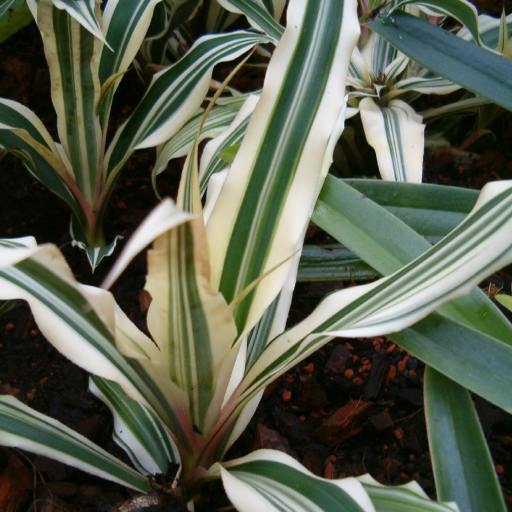
Plant Overview
Known affectionately as the "Earth Star" or "Starfish Plant," Cryptanthus bromelioides is a terrestrial gem hailing from the humid forest floors of Brazil. Unlike its cousins that cling to trees (epiphytes), this plant prefers to keep its feet firmly in the soil. Its low-growing, celestial silhouette and architectural charm make it a show-stopping addition to any indoor jungle or terrarium.
🔍 How to Identify
- 🌟 The Silhouette: Grows in a flat, symmetrical rosette that mimics the shape of a multi-pointed star radiating from a central core.
- 🌊 Leaf Texture: The leaves are long, leathery, and narrow with distinctly wavy, "crinkled" edges that provide a sense of movement.
- 🎨 Coloration: Displays a rich palette of bronze-green or olive, often dusted with a silvery sheen caused by tiny scales (trichomes) that help the plant absorb moisture from the air.
🏡 In Your Garden
- 🌱 Soil Lover: Because this is a terrestrial bromeliad, it cannot survive on air alone. It requires a rich, moisture-retaining but well-draining soil mix—think of it more like a tropical houseplant than a typical air plant.
- ☁️ Humidity Fanatic: Originating from the misty Atlantic forests, it thrives in high humidity. It is the perfect candidate for a glass terrarium or a bathroom windowsill where it can soak up steam.
- 🪴 Clumping Habit: Over time, the mother plant will produce "pups" or offsets from its base. This creates a lush, multi-starred carpet that can eventually fill an entire pot.
⚠️ Safety & Toxicity
- ✅ Non-Toxic: Cryptanthus bromelioides is generally considered non-toxic to cats, dogs, and humans, making it a "worry-free" choice for family homes.
- 🌵 Prickly Edges: While not poisonous, the leaf margins are lined with tiny, serrated teeth. These can be slightly sharp, so use caution when repotting or if you have curious toddlers who might grab the leaves.
✨ Fun Fact
The name Cryptanthus is derived from the Greek words kryptos (hidden) and anthos (flower). It refers to the plant’s habit of producing tiny, white blossoms that remain tucked deep inside the center of the foliage, often so well-hidden that you might miss them entirely if you aren't looking closely!

Detailed Care Instructions
To grow Cryptanthus bromelioides plants, follow these steps:
- Light: Place the plant in an area with bright, indirect light. Avoid direct sunlight, as it can scorch the leaves.
- Temperature: The ideal temperature for Cryptanthus bromelioides is between 60-80°F (15-27°C). Avoid extreme temperature fluctuations.
- Watering: Keep the soil consistently moist but not waterlogged. Use room temperature water and allow the top inch of soil to dry out slightly between waterings. Avoid letting the plant sit in standing water.
- Humidity: Cryptanthus bromelioides prefers a humid environment. You can increase humidity by misting the leaves regularly or placing the pot on a tray filled with water and pebbles.
- Soil: Use a well-draining potting mix that is specifically formulated for bromeliads or orchids. It should be slightly acidic with good aeration.
- Fertilization: Feed the plant with a diluted, balanced houseplant fertilizer every 3-4 months during the growing season (spring and summer). Follow the instructions on the fertilizer package for proper dosage.
- Repotting: Repot the Cryptanthus bromelioides plant when it becomes root bound or every 1-2 years. Choose a slightly larger pot and use fresh potting mix.
- Propagation: Cryptanthus bromelioides can be propagated by division. Carefully separate the offsets (smaller plants growing at the base) from the main plant and plant them in their own pots.
- Pests: Monitor the plant for pests like mealybugs or spider mites. If necessary, treat them with insecticidal soap or neem oil, following the instructions carefully.
- Pruning: Trim any dead or damaged leaves to maintain the plant's appearance and promote healthy growth.
Remember to observe your plant regularly and adjust care accordingly as each plant can have slightly different needs.

Place in a bright room that is sun drenched almost all day. Or directly in a south-facing window.

To properly water this plant, it is important to first check the soil moisture level by feeling the top inch of soil. If the soil is dry, it is time to water. Use room temperature water and pour it into the soil, avoiding getting water on the leaves or central cup. Make sure not to overwater the plant as it can lead to root rot. Wait until the top inch of soil is dry before watering again. It is also important to ensure proper drainage in the pot and to not let the plant sit in standing water.
To fertilize this plant, you should use a balanced, slow-release fertilizer with an NPK ratio of 10-10-10. Apply the fertilizer every 3 months, mixing it into the soil and watering it thoroughly. Be careful not to over-fertilize, as this can cause the plant to develop brown spots or burn the tips of its leaves. Additionally, ensure that you are providing adequate light and watering the plant regularly, as both of these factors can impact its overall health and ability to absorb nutrients from the soil.
The ideal soil for the Cryptanthus Bromelioides plant is one that is well-draining and can hold moisture while also allowing air to circulate. It should not be compacted or heavy, but rather loose and friable. A soil mix that is typically used for epiphytes or orchids would work well, which typically includes materials such as bark, sphagnum moss, and perlite. It is important not to use soil that is too rich or contains too much fertilizer, as this may cause the plant to become overly lush and weak. Generally, a soil mix that is composed of 50% bark, 30% perlite, and 20% sphagnum moss is ideal for the Cryptanthus Bromelioides plant.
To propagate this plant, you will need a healthy mature plant and a sharp, sterilized pair of scissors. Cut off a healthy baby plant or pup from the parent plant, making sure to include some of the parent plant's stem tissue. Allow the cut to dry and callus over for a few days, then plant the pup in a well-draining potting mix with some perlite or sand mixed in. Keep the newly planted pup in a warm and bright spot, but shielded from direct sunlight for a few weeks until it establishes roots and starts to grow on its own. Water the pup sparingly at first, and gradually increase watering as it becomes more established.








