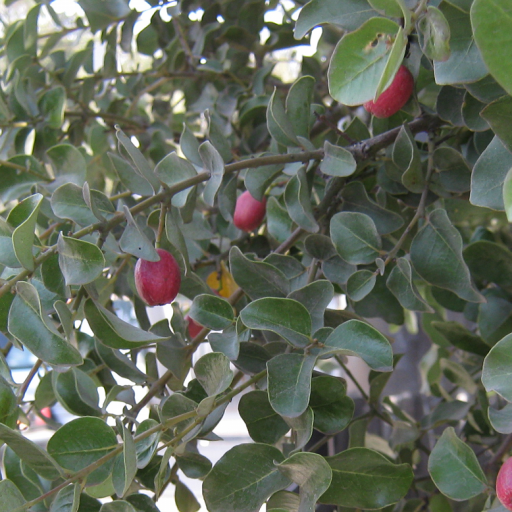
Plant Overview
Known affectionately in its homeland as the Peumo, Cryptocarya alba is the crowning jewel of the Chilean sclerophyll forest. This evergreen beauty is famous for its dense, rounded canopy that creates a "cathedral effect" of cool shade in otherwise sun-drenched landscapes. For centuries, it has been a staple of indigenous Mapuche culture, valued for its aromatic leaves and bright, edible fruits.
🔍 How to Identify
- 🍃 Waxy Foliage: The leaves are thick, leathery, and oval-shaped. They feature a striking contrast: a glossy, deep green on the top and a much paler, almost blue-grey underside.
- 🍎 Vibrant Drupes: In late summer and autumn, the tree produces eye-catching red or pinkish-red fruits that resemble small, elongated olives or berries.
- 👃 Aromatic Scent: If you crush a leaf between your fingers, it releases a spicy, pleasant fragrance reminiscent of cinnamon and laurel.
🏡 In Your Garden
- 🌱 The "Nurse" Requirement: In its youth, the Peumo is somewhat shy. It prefers "nurse" conditions—meaning it likes to grow in the shade of other trees or structures until it is established enough to handle direct, harsh sunlight.
- 💧 Drought Strategy: Once its root system is deep, it is incredibly drought-tolerant. It has evolved to survive long, dry Mediterranean summers by holding moisture in its thick, waxy leaves. Avoid overwatering once the tree reaches maturity, as it prefers well-draining, slightly acidic soil.
⚠️ Safety & Toxicity
- ✅ Generally Safe: The Peumo is considered non-toxic to humans and is frequently used in traditional medicine and regional cooking.
- 🐾 Pet Caution: While not listed as a major toxin, the high concentration of essential oils in the leaves can cause mild stomach upset in curious cats or dogs if ingested in large quantities. Always monitor pets around aromatic evergreen foliage.
✨ Fun Fact
The fruit of the Peumo is an acquired taste! In Chile, there is an old tradition of "cooking" the berries not on a stove, but in your pocket. By carrying them around, the body heat softens the fruit and mellows the flavor, which is often described as a unique mix of creamy fat and balsamic vinegar.

Detailed Care Instructions
To grow Cryptocarya alba, also known as Peruvian laurel or canelón, you can follow these steps:
- Obtain seeds or young plants: You can purchase Cryptocarya alba seeds from a reputable nursery or online seed supplier. Alternatively, you can obtain young plants from a garden center or through plant exchanges.
- Choose a suitable location: Cryptocarya alba prefers partial shade to full sun and well-draining soil. Select a spot in your garden or outdoor space that provides these conditions.
- Prepare the soil: Before planting, dig the soil to loosen it and remove any weeds or debris. You may also consider improving the soil quality by adding compost or organic matter.
- Plant the seeds or young plants: If using seeds, sow them in pots or seed trays filled with a well-draining potting mix. Cover the seeds lightly with soil and keep them moist. Once the seedlings are around 4-6 inches tall, transplant them into larger pots or directly into the ground. If using young plants, dig a hole slightly wider and deeper than the root ball, place the plant in the hole, and backfill with soil, gently firming it around the roots.
- Watering: After planting, water the Cryptocarya alba plants thoroughly and regularly, keeping the soil consistently moist but not waterlogged. Avoid letting the soil dry out completely.
- Mulching and fertilizing: Apply a layer of organic mulch around the base of the plants to help retain moisture, suppress weeds, and provide some nutrients. You can also fertilize the plants every few months with a balanced, slow-release fertilizer according to the manufacturer's instructions.
- Pruning: As the Cryptocarya alba plant grows, you may need to prune it to maintain its shape and overall health. Pruning should be done in late winter or early spring before new growth begins. Remove any dead, damaged, or overcrowded branches, and trim back long shoots to encourage bushier growth.
- Pest and disease control: Cryptocarya alba is generally resistant to pests and diseases. However, keeping the plants healthy through proper watering, fertilizing, and pruning can help prevent any potential issues. If necessary, you can use organic pest control methods such as neem oil or insecticidal soap.
Remember to research and respect any specific regulations or restrictions regarding the cultivation of Cryptocarya alba in your area.

Cryptocarya Alba is a plant species that requires moderate watering. The plant should be watered when the top layer of soil is dry to the touch. It is important not to overwater the plant, as this can lead to root rot and other issues. When watering, it is best to water deeply and thoroughly, allowing the water to penetrate through the soil and reach the roots. It is also important to ensure that the plant is receiving enough water, but not too much, as this can lead to damage and other issues. Additionally, it is best to water in the morning or late afternoon, when the temperatures are cooler and the plant is less likely to lose water through evaporation. It is also important to ensure that the soil is well-draining, as this will help prevent waterlogged soil and other issues that can arise from poor drainage.
To fertilize this plant, use a slow-release, balanced fertilizer in the early spring. Apply the fertilizer according to the instructions on the package. Avoid over-fertilizing as this can lead to leaf burn and other issues. Water the plant thoroughly after fertilizing to help the nutrients penetrate the soil.
Cryptocarya Alba plant prefers well-draining and loamy soil with a pH level of 5.5 to 6.5. The soil should be rich in organic matter and have good aeration. It is recommended to mix the soil with compost or aged manure before planting. It is important to avoid using heavy soils or soils that are prone to waterlogging, as the plant does not tolerate wet feet. Additionally, regular watering is essential to maintain the plant's moisture requirements, especially during the early stages of growth.
Cryptocarya Alba can be propagated through several methods such as seed propagation, cutting propagation, and layering propagation.
For seed propagation, ripe fruit should be collected from the plant and the seeds should be extracted. The seeds should be dried and then soaked in water for 24 hours to soften the seed coat. Seeds can then be sown in well-drained soil and covered with a thin layer of soil. The soil should be kept moist and the seedlings should be protected from direct sunlight.
For cutting propagation, mature stems should be selected and cut into 10-20 cm sections. The cuttings should be dipped in rooting hormone and then planted in well-drained soil. The soil should be kept moist and the cuttings should be protected from direct sunlight.
For layering propagation, a low-growing branch of the plant should be selected and a section of the stem should be buried in moist soil. The stem should be covered with soil and then secured in place. The stem should be checked regularly to make sure it remains moist and the new plant can be separated from the parent plant once it has established roots.
Regardless of the propagation method chosen, it is important to plant the new Cryptocarya Alba plant in well-drained soil and provide it with adequate water and sunlight for optimal growth and health.








