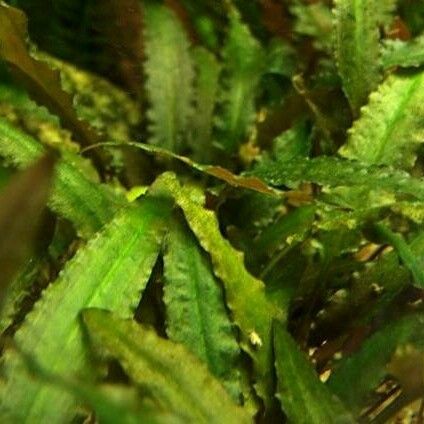
Plant Overview
Known affectionately as the "Undulated Crypt," this Sri Lankan native is a staple of the freshwater aquarium world. It bridges the gap between wild riverbeds and home aquascapes, offering a moody, bronze-to-green aesthetic that shifts depending on its environment. Whether you are a beginner or a master aquascaper, this plant is a reliable companion for adding rich texture to the mid-ground of your tank.
🔍 How to Identify
- 🍃 The Leaf Profile: Look for long, lance-shaped leaves that taper to a sharp point, often displaying a striking contrast between the top and bottom surfaces.
- 〰️ Wavy Margins: Its most defining feature is the "undulated" or crinkled edge of the leaf, which gives it a ruffled, three-dimensional appearance when swaying in moving water.
- 🎨 Variable Hues: Depending on your lighting and iron levels, the foliage shifts from a deep forest green to a rich, earthy bronze or chocolate brown.
🏡 In Your Garden (Aquarium Context)
- 🧘 The "Crypt Melt" Mystery: When first introduced or moved, this plant may suddenly drop all its leaves. Don't throw it away! It is simply shedding its old form to grow back stronger and more adapted to your specific water chemistry.
- 🪴 Substrate Lover: Unlike many aquatic plants that pull nutrients from the water column, this species is a "heavy root feeder." It prefers a nutrient-rich substrate and dislikes being moved once its extensive root system is established.
- 💡 Light Adaptability: While it can survive in dim corners where other plants might perish, providing moderate light will reward you with much more vibrant, reddish-brown coloration and a more compact growth habit.
⚠️ Safety & Toxicity
- ✅ Safe & Non-Toxic: Cryptocoryne undulata is completely safe for fish, shrimp, and snails. It is also non-toxic to household pets like cats and dogs should they take a curious sip from the aquarium water.
- 🌿 Sturdy Texture: Because the leaves are relatively tough and leathery, they are less likely to be eaten by herbivorous fish, making them a great choice for tanks with "nippy" inhabitants.
✨ Fun Fact
In its natural habitat in Sri Lanka, this plant is an "amphibian" of the botanical world. It can grow entirely submerged during the rainy season or transition to living above water on muddy riverbanks when the water levels drop!

Detailed Care Instructions
Cryptocoryne undulata is a popular aquatic plant known for its wavy leaves and ability to adapt to various conditions. Here are some tips for successfully growing this plant in an aquarium:
1. Tank Setup
- Aquarium Size: A minimum of 10 gallons is recommended, but larger tanks provide more stable conditions.
- Substrate: Use a nutrient-rich substrate, as Cryptocoryne thrives in nutrient-dense environments. Soil or specially formulated aquatic plant substrate can work well.
2. Lighting
- Light Requirements: Cryptocoryne undulata prefers low to moderate light. Too much light can cause algae growth and stress the plant. Aim for about 6-8 hours of light per day.
- Type of Light: A full-spectrum LED or fluorescent light is ideal for promoting healthy growth.
3. Water Conditions
- Temperature: Maintain a water temperature between 22°C to 28°C (72°F to 82°F).
- pH Level: Ideal pH is between 6.0 and 7.5.
- Hardness: Soft to moderately hard water is best (3-12 dGH).
- Water Changes: Regular water changes (about 20-30% weekly) help maintain water quality.
4. Fertilization
- Liquid Fertilizers: Use a balanced liquid fertilizer specifically formulated for aquarium plants, following the manufacturer's recommended dosages.
- Root Tabs: Place root tabs in the substrate to provide additional nutrients for the plant's root system.
5. Propagation
- Cryptocoryne undulata commonly propagates through runners, which are small offshoots that grow from the base of the plant. When these become a few inches long, they can be gently cut from the parent plant and replanted.
6. Tank Mates
- Choose tank mates that are not overly aggressive and won't uproot or damage the plant. Peaceful fish and invertebrates are usually good companions.
7. Care and Maintenance
- Keep an eye on the plant for signs of nutrient deficiencies (e.g., yellowing leaves) and adjust fertilization as needed.
- Check for algae growth on the leaves and clean them gently if necessary.
8. Submergence Issues
- Cryptocoryne plants can experience "melting" when first introduced to a new tank or when conditions change. This is normal; the plant often recovers and new growth appears.
By providing the right conditions and care, you can successfully grow Cryptocoryne undulata in your aquarium, adding beauty and biodiversity to your aquatic environment.
To care for your Cryptocoryne undulata, it's important to establish a suitable watering routine that mimics its natural habitat. Here are detailed instructions on how to water this aquatic plant effectively:
- Substrate Consideration: Ensure that the substrate in which the plant is rooted retains moisture but also has good drainage. A mix of nutrient-rich substrate with sand or fine gravel can help maintain moisture levels without becoming waterlogged.
- Watering Frequency: Water your plant regularly, but avoid over-saturating the substrate. The soil should remain consistently damp but not soggy. A typical schedule might involve checking on the moisture levels every few days, but this can vary depending on environmental factors like humidity and temperature.
- Water Quality: Use dechlorinated water for best results. Tap water can contain chemicals that may harm the plant. You can let tap water sit for 24 hours to allow chlorine to dissipate, or use water from a reverse osmosis (RO) system if available.
- Water Depth: If the plant is submerged in an aquarium, ensure that the water level is appropriate. The leaves should be above water, ideally with just the root system submerged. This mimics its natural habitat and helps prevent leaf rot or mildew.
- Observation: Regularly check the plant for signs of distress, such as yellowing or wilting leaves, which could indicate insufficient or excessive watering. Adjust your watering practices accordingly.
- Fertilization: Occasionally, adding a nutrient solution to the water can support healthy growth. However, ensure that you do not exceed recommended levels, as an excess can lead to algal blooms and water quality issues.
- Environmental Conditions: Maintain stable temperature and humidity levels around the plant. Sudden changes can stress the plant and affect its water absorption.
By adhering to these guidelines, you can ensure optimal hydration for your Cryptocoryne undulata, promoting healthy growth and vibrant foliage.
For optimal growth of Cryptocoryne undulata, follow these fertilizing instructions:
- Fertilizer Type: Use a balanced liquid fertilizer specifically designed for aquatic plants or a slow-release granular fertilizer. Look for a formulation rich in nitrogen (N), phosphorus (P), and potassium (K), ideally with micronutrients like iron.
- Frequency:
- If using liquid fertilizers, apply once every two weeks during the active growing season (spring and summer). Reduce frequency in the fall and winter months when growth slows.
- If using slow-release granules, apply according to the product instructions, typically every few months.
- If using liquid fertilizers, apply once every two weeks during the active growing season (spring and summer). Reduce frequency in the fall and winter months when growth slows.
- Dosage:
- For liquid fertilizers, dilute according to the manufacturer's recommendations. Start with half the suggested dose to prevent over-fertilization, especially in newly established aquariums.
- For granular products, ensure to follow the specific dosage instructions, placing the granules near the base of the plant.
- For liquid fertilizers, dilute according to the manufacturer's recommendations. Start with half the suggested dose to prevent over-fertilization, especially in newly established aquariums.
- Water Conditions: Ensure that the aquarium water conditions are suitable for the plant's growth. Maintain pH levels between 6.0 and 7.5, with stable hardness and adequate light conditions.
- Monitoring: Observe the plant for signs of nutrient deficiency, such as yellowing leaves or poor growth. Adjust fertilization as needed based on these observations.
- Water Changes: Regular water changes (10-20% weekly) help maintain water quality and nutrient levels. This also aids in preventing nutrient buildup in the substrate.
By following these fertilization guidelines, you can promote healthy growth and vibrant coloration of this aquatic plant.
For cultivating Cryptocoryne undulata, it's essential to use a substrate that meets its specific needs for optimal growth. Here are key details regarding the soil composition and characteristics:
- Substrate Type: A nutrient-rich substrate is preferred. You can use a commercially available aquatic plant substrate specifically designed for submerged plants. These substrates usually contain a mix of clay, peat, and organic matter.
- Texture: The substrate should have a fine texture that allows for good root development without being too compact. This helps prevent anaerobic conditions which can lead to root rot.
- Nutrient Content: It should be rich in nutrients, particularly potassium, nitrogen, and trace elements. Incorporating root tabs or slow-release fertilizer can enhance nutrient availability.
- pH Level: The ideal pH range for the substrate is typically between 6.0 and 7.5. It is advisable to opt for a slightly acidic to neutral substrate to support healthy growth.
- Grain Size: Substrates with grain sizes ranging from 1 to 3 mm are ideal, allowing for adequate water flow while providing enough anchorage for the roots.
- Organic Matter: Including organic matter such as well-decomposed leaf litter can help retain moisture and provide additional nutrients over time.
- Water Retention: The substrate should retain moisture without becoming waterlogged, which can be achieved with a balanced ratio of organic and inorganic materials.
By focusing on these characteristics when selecting or creating a substrate, you can create an optimal environment for the growth of Cryptocoryne undulata in an aquarium or aquatic gardening setup.
To propagate the aquatic plant known scientifically as Cryptocoryne undulata, you can employ several methods:
1. Vegetative Propagation (Offsets or Runners)
Cryptocoryne undulata can reproduce through offsets, which are small plantlets that develop from the parent plant. Here are the steps:
- Identify Offsets: Look for small plantlets that emerge from the base of the mother plant. These will often have roots and a few leaves.
- Preparation: Gently remove the mother plant from the substrate. Be careful not to damage the roots of both the parent and the offsets.
- Separation: Use clean, sharp scissors or a knife to separate the offsets from the main plant. Make sure each offset has some roots attached.
- Replanting: Place the offsets in a suitable substrate, ensuring they are anchored well. Maintain a good water level and avoid excessive disturbance.
- Care: Provide appropriate lighting and nutrients. Keep the water temperature and parameters stable to encourage healthy growth.
2. Division
If the parent plant has become quite large or dense, division can be an effective method.
- Remove from Tank: Carefully take the plant out of the water and substrate.
- Divide: Gently separate the root system into two or more clumps. Each clump should ideally have a good number of healthy leaves and roots.
- Replant: Position each divided clump back into the substrate. Ensure that they are secure and positioned appropriately to access light and nutrients.
- Maintenance: Regularly monitor water parameters and light conditions to facilitate adaptation and growth.
3. Cultivation in Emersed Conditions
If you have the option to grow this species in emersed conditions (above water), it can be a faster route for propagation.
- Setup: Create a humid environment with optimal light levels and temperatures suitable for growth.
- Cuttings: Take healthy stems and trim them to about 4-6 inches in length. Each cutting should have at least a couple of leaves attached.
- Planting: Insert the cuttings into a moist substrate. Ensure that the environment remains humid to promote root development.
- Transition: Once the cuttings have established roots, they can be transitioned back to aquatic conditions.
Additional Tips
- Water Quality: Maintain good water quality with appropriate parameters (temperature, pH, hardness).
- Nutrients: Use root tabs or liquid fertilizers designed for aquatic plants to promote healthy growth during and after propagation.
- Lighting: Ensure adequate light, as it supports robust growth and can encourage propagation.
By following these methods, you can successfully propagate the species in a home aquarium or planted tank setup.







