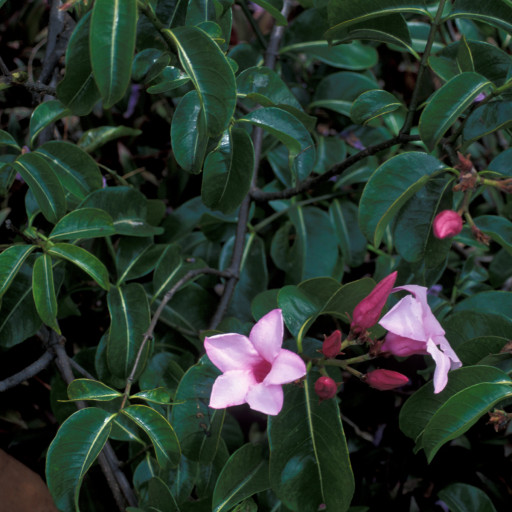
Plant Overview
Often called the Rubber Vine, Cryptostegia grandiflora is a stunning but aggressive beauty that originally hails from Madagascar. While it looks like a harmless ornamental with its delicate purple blooms, it is known in some parts of the world as the "Green Strangler" because of its ability to smother entire forests. Historically, it was cultivated for the high-quality rubber found in its milky sap, but today it is mostly known for its dual identity as a garden showstopper and a persistent invader.
🔍 How to Identify
- 🌸 Bell-Shaped Blooms: Features large, showy flowers that range from pale lilac to deep purple, typically with five overlapping petals forming a distinct funnel shape.
- 🍃 Waxy Foliage: The leaves are a deep, glossy green, leathery to the touch, and grow in opposite pairs along the stems, providing a lush backdrop for the flowers.
- 🌱 Seed Pods: Produces distinctive, large triangular pods that usually grow in pairs at the ends of branches. When they dry and crack open, they release hundreds of seeds with long, silky white hairs.
🏡 In Your Garden
- 🧗 The Master Climber: This plant is a vigorous woody climber that can reach heights of 30 feet or more by scrambling over other vegetation. If you grow it, it requires a very sturdy trellis and frequent, aggressive pruning to keep it from "wandering" into neighboring trees.
- ☀️ Sun Seeker: It thrives in full sun and is remarkably drought-tolerant once established. However, be extremely cautious: in tropical or subtropical regions, it can escape cultivation and become a major ecological threat. Always check your local invasive species list before adding this to your landscape.
⚠️ Safety & Toxicity
- 🚫 Poisonous Status: Highly toxic to humans, pets, and livestock.
- 🧴 Irritating Sap: The plant produces a thick, milky white sap that contains "cryptostegina." This can cause severe skin irritation, rashes, or even temporary blindness if it gets into the eyes.
- ❤️ Internal Danger: All parts of the plant contain cardiac glycosides. If ingested, these toxins can interfere with heart function, leading to serious illness or even death in pets and children.
✨ Fun Fact
During World War II, when traditional rubber supplies were cut off by conflict, Cryptostegia grandiflora was used as a major emergency source of latex to produce tires and military equipment for the Allied forces!

Detailed Care Instructions
To grow Cryptostegia Grandiflora plants, also known as rubber vine or purple-robed passionflower, follow these steps:
- Climate: Cryptostegia Grandiflora thrives in warm, subtropical to tropical climates. Ensure your area has a minimum winter temperature of 50°F (10°C) or above.
- Soil: Choose well-draining soil with a pH between 6 and 7.5. Amend the soil with organic matter, such as compost, to improve its fertility and drainage.
- Sunlight: Provide the plant with full sun exposure for optimal growth and flowering. A minimum of 6-8 hours of sunlight per day is recommended.
- Watering: Established plants are somewhat drought-tolerant but benefit from regular watering, particularly during dry periods. Ensure the soil remains moist but not waterlogged. Water deeply and allow the soil to dry out slightly between waterings.
- Planting: The best time to plant Cryptostegia Grandiflora is in spring or early summer after the danger of frost has passed. Dig a hole twice as wide and deep as the plant's root ball. Gently place the plant in the hole and backfill with soil, lightly firming it around the base.
- Mulching: Apply a layer of organic mulch, such as bark or wood chips, around the base of the plant to help retain moisture, suppress weed growth, and regulate soil temperature.
- Pruning: Regular pruning is essential to maintain the plant's shape, as Cryptostegia Grandiflora can quickly become overgrown. Prune in late winter or early spring before new growth emerges. Remove dead or damaged branches and shape the plant to your desired form.
- Fertilizing: Apply a balanced, slow-release fertilizer in spring and early summer to promote healthy growth and flowering. Follow the manufacturer's instructions for proper dosage and application.
- Support: If growing the plant as a vine, provide it with a trellis, arbor, or other support structure for climbing. Secure the plant's tendrils to the support system to guide its growth.
- Pest and Disease Control: Cryptostegia Grandiflora is generally resistant to pests and diseases. However, monitor the plant regularly for any signs of aphids, mealybugs, or whiteflies. Treat any infestations promptly with organic insecticides or horticultural oils.
Remember to check if Cryptostegia Grandiflora is considered invasive in your area. While it can be a beautiful addition to your garden, it has the potential to spread rapidly and become problematic in certain regions.

Place in a bright room that is sun drenched almost all day. Or directly in a south-facing window.

To properly water this plant, it is important to consider a few factors. First, the type of soil it is planted in should be well-draining to prevent waterlogging. Second, the amount of water needed will depend on the climate and time of year. In general, it is best to water deeply and infrequently, allowing the soil to dry out slightly between waterings. It is important not to overwater, as this can lead to root rot. Finally, be sure to water at the base of the plant rather than on top of the leaves to prevent fungal growth.
- Select a slow-release balanced fertilizer, such as a 10-10-10 or a 14-14-14 NPK (nitrogen, phosphorus, potassium) blend.
- Dilute the fertilizer according to the package instructions, usually around 1 tablespoon per gallon of water.
- Water the Cryptostegia Grandiflora plant thoroughly before applying fertilizer.
- Slowly pour the diluted fertilizer onto the soil around the base of the plant, avoiding contact with the foliage.
- Ensure that the fertilizer is evenly distributed around the root zone area.
- Avoid over-fertilizing, as excessive nutrients can harm the plant. Follow the recommended frequency mentioned on the fertilizer packaging, typically once every 4-6 weeks during the active growing season (spring and summer).
- Monitor the plant's growth and appearance. If it shows signs of nutrient deficiency, such as pale leaves or stunted growth, consider increasing the frequency or concentration of fertilizer application slightly.
- Irrigate the plant after fertilizing to help the nutrients reach the root zone and prevent fertilizer burn.
- During the dormant period (fall and winter), reduce or discontinue fertilization as the plant's growth slows down. Resume fertilizing in the following spring when the plant starts actively growing again.
The best soil to use with this plant is one that is well-draining, fertile, and slightly acidic with a pH level of around 6.0 to 7.0. It should have a good mix of organic matter and sand to ensure proper aeration and water drainage. Heavy clay soils should be avoided as they can lead to waterlogged roots and damage the plant. A good potting mix for containers can be made by combining peat moss, perlite, and vermiculite in equal parts. When planting in the ground, adding compost or well-rotted manure to the soil can help to improve its nutrient content and structure, promoting healthy growth of the plant.
Propagation of this plant can be achieved through various methods, including seed propagation, stem cuttings, and root division.
Seed propagation involves collecting the seeds from the plant after they have fully matured and dried. The seeds can then be sown into a well-draining soil mix and kept in a warm and sunny area until they germinate and develop into young plants.
Stem cuttings can also be taken from the plant by carefully removing a section of the stem and placing it in a rooting hormone. The cutting should then be planted in a well-draining soil mix and kept warm and moist until roots form and new growth appears.
Root division involves carefully digging up the mature plant and dividing the root system into multiple sections. These sections can then be replanted in separate containers or locations in the garden.
Regardless of the propagation method chosen, it is important to ensure that the new plants are kept well-watered and in a warm and sunny location until they have established themselves.








