Plant Overview
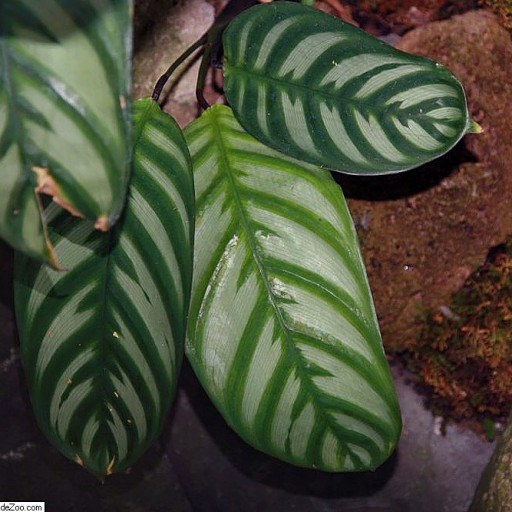
Known affectionately as the "Never Never Plant," Ctenanthe amabilis is a striking member of the Marantaceae family, hailing from the lush, shaded floors of the Brazilian rainforest. It is celebrated for its graphic, silvery foliage that looks almost hand-painted, making it a favorite for those wanting to add a touch of tropical elegance to their indoor collection. Like its cousins, the Calatheas, this plant is famous for its "nastic movements," shifting its leaves throughout the day as if it were performing a slow-motion dance.
🔍 How to Identify
- 🍃 Leaf Pattern: The oval leaves feature a beautiful silvery-green base topped with dark green, "fishbone" or "herringbone" markings that radiate from the center vein.
- 🎨 The Underside: Flip a leaf over to find a stunning contrast; the undersides are typically a deep, velvety burgundy or soft purple.
- 📏 Growth Habit: It grows in a bushy, clump-forming manner, with leaves rising on slender stems that can reach about 12 to 18 inches in height.
🏡 In Your Garden
- ☁️ Atmospheric Needs: Because it originates from the humid tropics, this plant thrives on moisture in the air. If the air is too dry, you’ll notice the leaf edges turning brown and crispy—a sign that it’s craving a humidifier or a pebble tray.
- 💧 Water Quality Matters: This species can be quite a "diva" regarding its drink. It is sensitive to the chlorine and fluoride found in most tap water, which can cause spotting on the leaves. Using filtered water or rainwater helps keep the foliage pristine.
- 🌑 Light Sensitivity: In the wild, it lives under the thick canopy of trees. In your home, it prefers bright, indirect light. Direct sunlight will quickly bleach the beautiful silver patterns and scorch the delicate leaves.
⚠️ Safety & Toxicity
- 🛡️ Status: Non-Toxic.
- 🐾 Details: Great news for pet owners! Ctenanthe amabilis is generally considered safe and non-toxic to cats, dogs, and children. While it’s not meant for snacking, you won't need to worry if a curious kitten takes a nibble.
✨ Fun Fact
This plant is a true "Prayer Plant." It possesses a specialized organ called a pulvinus at the base of each leaf. This acts like a tiny muscle, allowing the plant to fold its leaves upward at night (like hands in prayer) and lower them during the day to maximize light absorption!

Detailed Care Instructions

Place in a window with dappled sun or a spot in the middle of a room. Or directly in a window facing west or east.

Ctenanthe Amabilis plants prefer to be kept consistently moist but not waterlogged. They should be watered when the top 1-2 inches of soil feel dry to the touch. When watering, be sure to thoroughly moisten the soil but avoid allowing water to sit in the plant's saucer. This can lead to root rot. It is also important to use room temperature water as cold water can shock the plant's roots. In addition to regular watering, these plants thrive in humid conditions so misting or using a humidifier can be beneficial.
These plant needs regular fertilizing during growing seasons. Fertilizing your plants in dormant state during the winter, might result in scorching or browning of the leaf tips. If mature plants display signs of nutrient insufficiency, fertilizer administration is necessary to restore the plant to its previous state.
You may use All Purpose Plant Food or Green Plant Food for your Calathea Amabilis
Ctenanthe Amabilis plant prefers a well-draining soil that is rich in nutrients. A suitable soil mix can be prepared by mixing equal parts of peat moss, perlite, and vermiculite. The soil should have a slightly acidic to neutral pH range (between 5.5 - 7.0). Additionally, the soil should be kept moist but not waterlogged, as excessive moisture can lead to root rot. It is also recommended to add some organic matter, such as compost or leaf mold, to the soil mix to improve its structure and promote healthy growth of the plant.
Common pests of the calathea amabilis include Mealybugs, spider mites, thrips. Make a habit of checking your calathea amabilis frequently for pests so that any infestations can be caught and managed early.








