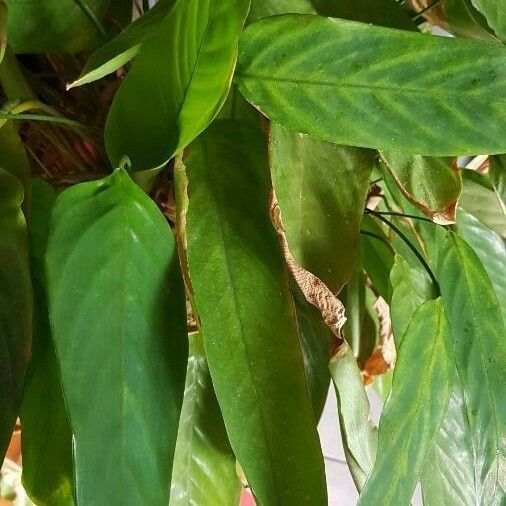
Plant Overview
Meet the Bamburanta, often called the Giant Never-Never Plant. Hailing from the lush, shaded undergrowth of Brazil, this structural beauty brings a sophisticated, architectural vibe to any indoor space. While many members of the Marantaceae family are known for wild patterns, the Ctenanthe compressa prides itself on its deep, monochromatic greens and impressive, upright stature that resembles a miniature bamboo forest.
🔍 How to Identify
- 🍃 The Foliage: Large, oblong leaves that boast a rich, waxy green finish. They are thinner and more elongated than most Calatheas, giving them an elegant, blade-like appearance.
- 🎋 The Stems: Its most striking feature is its long, bamboo-like stems that grow in a slightly "zigzag" or tiered pattern, allowing the plant to reach heights of up to 3 feet indoors.
- 🌙 The "Dance": As a true prayer plant, it exhibits nyctinasty; the leaves stand vertically at night like hands in prayer and flatten out during the day to capture light.
🏡 In Your Garden
- 🌫️ Humidity is King: This plant acts as a living hygrometer. If your indoor air is too dry, the leaf edges will quickly turn crispy and brown. It craves a "jungle" environment, making it a perfect candidate for a well-lit bathroom or a spot near a humidifier.
- 🚿 Watering Nuance: The Bamburanta is famously "picky" about chemicals. It often reacts poorly to the chlorine and fluoride found in tap water. Using distilled water or rainwater will keep the foliage pristine and prevent "tip burn."
⚠️ Safety & Toxicity
- 🐾 Non-Toxic: This is a fantastic "worry-free" plant for animal lovers. It is completely non-toxic to cats, dogs, and horses.
- 👶 Safe for Humans: It poses no threat to children, though its tall, thin stems can be somewhat brittle, so it’s best placed where it won't be knocked over by high-energy play.
✨ Fun Fact
The folding movement of the leaves isn't just for show! Scientists believe the Bamburanta "prays" at night to allow moisture to drip down its stems toward the roots, ensuring it stays hydrated in the competitive rainforest environment.

Detailed Care Instructions
To grow Ctenanthe Compressa plant, follow these steps:
- Choose a suitable location: Ctenanthe Compressa prefers bright, indirect light or partial shade. Avoid direct sunlight, as it can scorch the leaves. A north or east-facing window is ideal.
- Soil requirements: Use a well-draining potting mix or create a mix by combining equal parts of peat moss, perlite, and compost. This species prefers slightly acidic soil.
- Planting: Select a suitable container with drainage holes to prevent waterlogging. Gently remove the plant from its nursery pot and place it in the new container, ensuring that the root ball is level with the soil surface. Add more soil around the sides to hold it in place and press gently.
- Watering: Water the plant thoroughly, allowing the excess water to drain. Ctenanthe Compressa prefers to be kept consistently moist but not overly wet. Water when the top inch of soil feels dry to touch.
- Humidity: This tropical plant thrives in high humidity environments. To increase humidity, place a tray filled with water near the plant or use a humidifier.
- Temperature: Ideally, keep the temperature between 60-80°F (15-27°C). It is sensitive to cold drafts, so avoid placing it near air conditioning vents or opening windows during winter.
- Fertilization: Feed the plant every two months during the growing season (spring and summer) using a balanced houseplant fertilizer. Dilute the fertilizer to half strength to avoid over-fertilization.
- Pruning: Trim any yellow or damaged leaves using clean pruning shears. This will help maintain the plant's appearance and encourage healthy growth.
- Propagation: Ctenanthe Compressa can be propagated through division during repotting. Carefully separate the plant into smaller sections, ensuring each section has roots. Plant these divisions in separate pots with well-draining soil.
- Pest control: Monitor the plant for pests such as spider mites, mealybugs, or aphids. If any are present, treat them with insecticidal soap or neem oil, following the product instructions.
By providing the right light, moisture, and humidity, your Ctenanthe Compressa plant should thrive and grow well.

Place in a window with dappled sun or a spot in the middle of a room. Or directly in a window facing west or east.

To properly water this plant, it is important to first examine its soil to determine if it is already moist. If the soil feels slightly damp, it is not necessary to water the plant yet. However, if the soil feels dry to the touch, it is time to water.
When watering, it is important to use room temperature water and to avoid getting the leaves wet. This can be achieved by directing the water at the soil rather than pouring it directly onto the plant.
It is also recommended to allow the soil to drain and not let the plant sit in standing water as this can lead to root rot.
Overall, this plant prefers to be kept evenly moist but not overly watered, so it is important to monitor its soil regularly.
- Ensure that the Ctenanthe Compressa plant has been well-watered before fertilizing.
- Choose a balanced water-soluble fertilizer with equal amounts of nitrogen, phosphorus, and potassium (N-P-K). An example could be a 10-10-10 or 20-20-20 fertilizer.
- Follow the instructions on the fertilizer packaging to determine the appropriate dosage based on the size and age of the plant. Measure the fertilizer accurately to avoid over-fertilization.
- Dilute the fertilizer in water according to the package instructions. Typically, a ratio of 1 teaspoon per gallon of water is a good starting point.
- Gently pour the diluted fertilizer solution onto the soil around the base of the Ctenanthe Compressa plant. Avoid splashing the leaves to prevent fertilizer burn.
- Allow excess fertilizer solution to drain away, ensuring that the plant is not left sitting in a pool of water.
- Repeat the fertilization process every 4-6 weeks during the active growing season (spring and summer).
- During the dormant period (fall and winter), reduce the frequency of fertilizing to once every 2-3 months.
- Monitor the plant's response to the fertilizer, adjusting the dosage or frequency as needed based on its growth and overall health.
- Remember to always read and follow the instructions provided by the manufacturer for the specific fertilizer you choose, as different products may have varying application guidelines.
The Ctenanthe Compressa plant prefers a well-draining and nutrient-rich soil that retains moisture but does not become waterlogged. A quality potting mix that includes peat moss, perlite, and vermiculite is suitable for this plant. The soil pH should be slightly acidic to neutral, with a range of 6-7.5. Loamy soil with good drainage will help prevent root rot. Avoid using heavy or clay soils as they can retain too much moisture and suffocate the roots. The soil should be moist but not waterlogged, and it's important to maintain consistent moisture levels by watering the plant whenever the top inch of soil feels dry to the touch. Adding organic matter to the soil can increase nutrient levels and improve soil texture.
To propagate Ctenanthe Compressa, you can follow the steps below:
- Choose a healthy parent plant: Select a mature and disease-free Ctenanthe Compressa plant from which you wish to take cuttings.
- Prepare the tools: Gather all the necessary tools, including a sterilized sharp knife or pruning shears, rooting hormone (optional), small pots or containers, and well-draining potting mix.
- Prepare the cuttings: Identify suitable stems for cutting. Look for stems that are healthy, non-flowering, and have at least two to three sets of leaves. Using the sterilized knife or pruning shears, make a clean, diagonal cut just below a leaf node. Each cutting should be around 4-6 inches long.
- Remove lower leaves: Carefully remove the lower leaves from the lower third of each cutting. This helps prevent excess moisture loss and encourages root development.
- Optional: Apply rooting hormone: While not necessary, applying a rooting hormone powder or gel to the cut ends of the stems can enhance root development and increase the chances of successful propagation. Gently dip the cut end of each stem into the rooting hormone and shake off any excess.
- Potting mix preparation: Fill small pots or containers with a well-draining potting mix. A mixture of peat moss, perlite, and vermiculite usually works well, ensuring good moisture retention without becoming waterlogged.
- Plant the cuttings: Make a small hole in the potting mix with your finger or a pencil and insert the cut end of each stem into the hole. Firmly press the soil around the stem to ensure good contact.
- Provide proper conditions: Place the potted cuttings in a warm and humid environment with bright, indirect light. Avoid direct sunlight as it can scorch the delicate leaves. Maintain a consistent temperature between 65-75°F (18-24°C).
- Mist the cuttings regularly: Ctenanthe Compressa prefers high humidity. Mist the cuttings with water daily or as needed to keep the leaves moist, but avoid over-watering to prevent root rot.
- Monitor growth: Within a few weeks, you should start to see new growth emerging from the cuttings. This indicates successful root development. Be patient, as it may take several months for roots to fully develop.
- Gradually acclimate the new plants: Once the new plants have established roots and show significant growth, gradually acclimate them to lower humidity levels and regular room conditions. This will help them transition smoothly and minimize stress.
By following these steps, you can propagate Ctenanthe Compressa and expand your collection of this beautiful plant!








