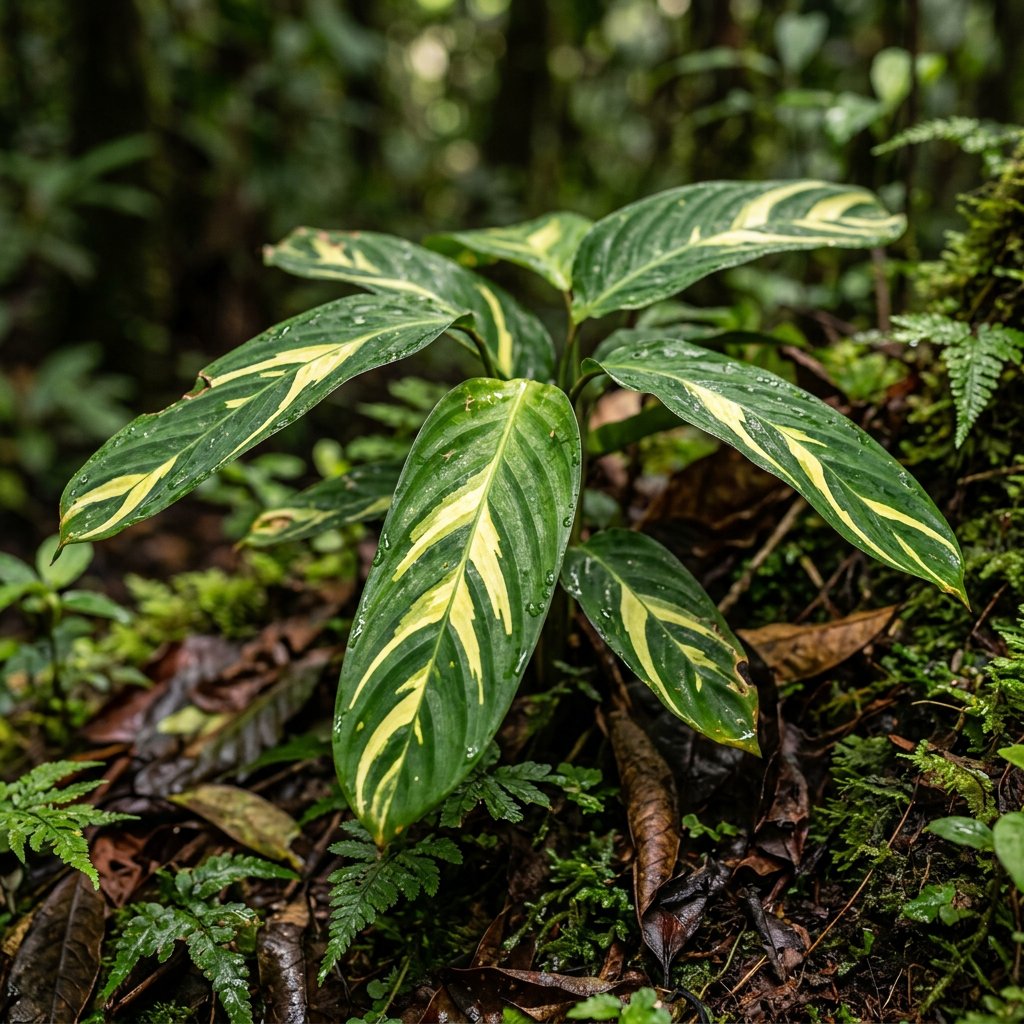
Plant Overview
Often called the "Bamburanta" or the "Never-Never Plant," Ctenanthe lubbersiana is a tropical masterpiece originating from the lush rainforests of Brazil. It is beloved for its "hand-painted" appearance, featuring irregular golden streaks that look like sunbeams hitting a forest floor. As a member of the Marantaceae family, it is a close relative to Calatheas and shares their fascinating, animated personality.
🔍 How to Identify
- 🍃 The Foliage: Large, oblong leaves that feature a "brushstroke" variegation pattern. Each leaf is unique, displaying splashes of creamy yellow and lime green against a deep emerald base.
- 🎋 The Growth Habit: Unlike many of its low-creeping relatives, this variety grows on upright, zig-zagging branched stems that resemble bamboo, allowing it to reach heights of up to three feet.
- 📏 Leaf Texture: The leaves are smooth and slightly matte, lacking the velvety texture of some Calatheas, which makes them a bit more resilient to dust and handling.
🏡 In Your Garden
- 💧 The Humidity Requirement: This plant is a true "humidity hog." Because it evolved in the steamy tropics, it requires high ambient moisture; if the air is too dry, the leaf edges will quickly turn crisp and brown.
- 🌤️ Light Sensitivity: It prefers "dappled" light, mimicking the sun filtering through a tree canopy. Avoid direct afternoon sun at all costs, as it will bleach the vibrant yellow variegation and cause the leaves to curl in distress.
- 🚿 Water Quality Nuance: The Never-Never plant can be quite a "diva" regarding tap water. It is sensitive to fluoride and salts; using distilled or rainwater prevents the unsightly yellow spotting often caused by municipal water.
⚠️ Safety & Toxicity
- 🐾 Pet Friendly: Excellent news for pet owners! The Ctenanthe lubbersiana is non-toxic to cats and dogs, making it a worry-free choice for animal-loving households.
- 👶 Safe for Humans: This plant does not contain calcium oxalate crystals or irritating saps, making it safe for homes with curious toddlers.
✨ Fun Fact
- 🙏 The "Prayer" Movement: This plant performs a daily dance called "nyctinasty." To conserve moisture and protection, it folds its leaves upward at night—resembling hands held in prayer—and lowers them again when the morning sun returns.

Detailed Care Instructions
| Color | White, But Insignificant |
| Soil Ph | Acidic, Neutral |
| Humidity | High |
| Lighting | Part Sun |
| Toxicity | Toxic |
| Soil Type | Well-Drained, Moist |
| Bloom Time | Varies Depending On Conditions |
| Difficulty | Medium |
| Plant Type | Perennial, Evergreen |
| Mature Size | Up To 3 Feet Tall |
| Native Area | Central And South America |
| Temperature | 18°C - 25°C |
| Sun Exposure | Partial Shade |
| Hardiness Zones | 9-12 |
To grow Ctenanthe Lubbersiana plant, follow these steps:
- Choose the right location: Ctenanthe Lubbersiana plants prefer bright, indirect light. Place them near a north or east-facing window where they can receive gentle morning or late afternoon sun without being directly exposed to intense sunlight.
- Maintain optimal temperature and humidity: Ctenanthe Lubbersiana plants thrive in warm environments with temperatures between 60-80°F (15-27°C). They also prefer high humidity levels, so misting the plant regularly or placing a humidifier nearby can help create the ideal conditions.
- Watering: Keep the soil evenly moist, but not soggy. Water the plant when the top inch of soil feels dry. Avoid overwatering, as it can lead to root rot. During winter, reduce watering frequency but ensure the soil doesn't completely dry out.
- Fertilizing: Feed the plant with a balanced houseplant fertilizer once a month during the growing season (spring and summer). Dilute the fertilizer according to the instructions on the package to avoid over-fertilization.
- Pruning: Regularly trim the yellow or brown leaves to maintain the plant's appearance and encourage healthy growth. You can also pinch off the tips of new growth to prevent the plant from becoming too leggy.
- Propagation: Ctenanthe Lubbersiana plants can be propagated through division. When the plant becomes root-bound, carefully separate the root clumps into smaller sections, ensuring each section has healthy roots and foliage. Plant the divisions in their own pots with well-draining soil.
- Repotting: As the plant grows, it may outgrow its current container. Repot Ctenanthe Lubbersiana in a container that is slightly bigger than its current one, using a well-draining potting mix.
Remember to regularly monitor your plant's condition, keeping an eye out for pests such as spider mites or mealybugs. If any signs of infestation occur, treat them accordingly. With proper care and attention, your Ctenanthe Lubbersiana plant should thrive and grow.

Place in a window with dappled sun or a spot in the middle of a room. Or directly in a window facing west or east.

To water this plant, you should first check the soil moisture level by inserting your finger about an inch into the soil. If it feels dry, it is time to water. Use room temperature water and pour it slowly onto the soil until moisture begins to seep out the bottom of the pot. Allow excess water to drain before placing the plant back in its location. Avoid letting the soil dry out completely or soaking it with too much water as this can harm the plant.
To fertilize a Ctenanthe Lubbersiana plant, use a balanced water-soluble fertilizer at quarter strength every two weeks during the growing season (spring and summer). Reduce the frequency of fertilization to once a month in the fall, and stop during the winter months. Do not fertilize a newly repotted plant for the first 6 months. Remember to always follow the instructions on the fertilizer package.
When planting the C. Lubbersiana plant, it is important to use a well-draining soil mix that is rich in nutrients. A loose soil structure is important for root development, so soil mixes that include perlite, vermiculite, or coarse sand are ideal. The soil pH should be slightly acidic to neutral, with a range between 5.5 and 7.5. Organic matter such as compost or peat moss can be added to improve soil fertility and structure. This plant prefers moist soil, but too much moisture can lead to root rot, so it is important to allow the soil to partially dry out before watering again. Regular fertilization with a balanced fertilizer can help promote healthy growth and vibrant foliage.
To propagate this plant, you will need a healthy parent plant. You should sterilize your cutting tools and a container before beginning. Choose a mature stem with several leaves and cut it using a sterile sharp knife. Make sure the cutting has at least one node. Dip the cutting in rooting hormone and plant it in a pot filled with a mix of potting soil and perlite. Cover the pot with a clear plastic bag and place it in a warm and bright spot with indirect sunlight. Water the cutting and the soil very gently, keeping the soil moist but not soaked. After a few weeks, your plant should start developing roots and new leaves. Wait until it grows bigger and stronger before repotting it into a bigger container.








