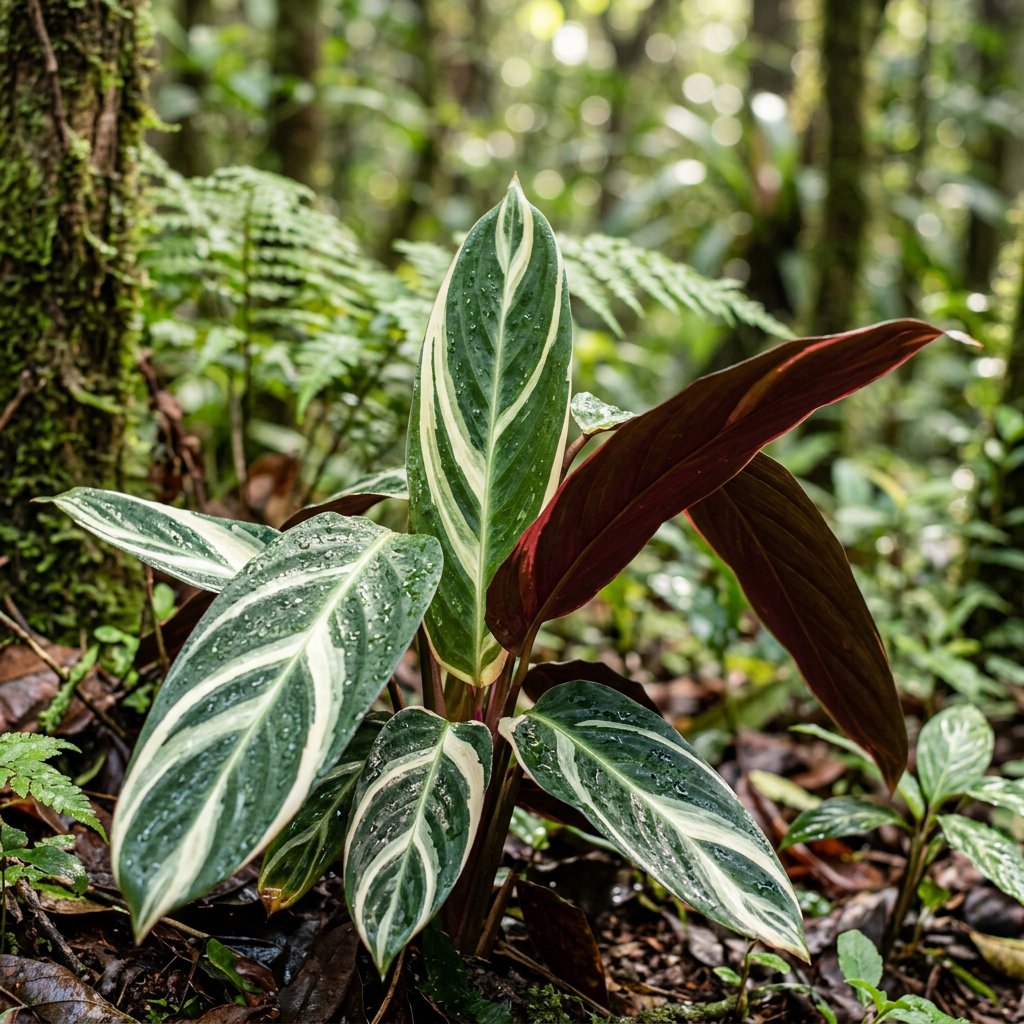
Plant Overview
Commonly known as the Never-Never Plant or Giant Bamburanta, this Brazilian native is a true showstopper for interior design. Belonging to the Marantaceae family, it is famous for its "prayer plant" behavior, where it rhythmically raises its leaves at night as if in prayer. It’s a plant that brings movement and a dramatic splash of silver and burgundy to any corner of the home.
🔍 How to Identify
- 🌿 The Foliage: Long, lance-shaped leaves that can reach up to 18 inches. The topside features a striking herringbone pattern of silver and dark green.
- 🍷 The Underside: Flip the leaf over to find a stunning, deep burgundy or royal purple color that provides a sharp contrast to the green surface.
- 📏 Growth Habit: It grows in a clumping, upright fashion on tall, thin stalks, giving it a more structural, "bamboo-like" appearance compared to its flatter cousins.
🏡 In Your Garden
- 💧 The Water Quality Quirk: Unlike hardier houseplants, this one is a bit of a "water snob." It is highly sensitive to fluoride and chlorine found in tap water, which can cause the leaf tips to turn brown and crispy. Using filtered water or rainwater is the secret to keeping it pristine.
- ☁️ Atmospheric Needs: Because it originates from the humid undergrowth of Brazilian rainforests, it craves high humidity. It’s the perfect candidate for a well-lit bathroom or a spot near a humidifier, as dry air will quickly make its leaves curl.
- ⛅ Sun-Shy Personality: It prefers "dappled" light. In the wild, it lives under the canopy of giant trees; in your home, direct afternoon sun will bleach the beautiful silver patterns and scorch the delicate leaves.
⚠️ Safety & Toxicity
- 🐾 Pet Friendly: Great news for animal lovers! The Ctenanthe oppenheimiana is non-toxic to cats and dogs, making it a safe choice for curious paws.
- 👶 Human Safe: It is generally considered non-toxic to humans, though it’s always best to keep any ornamental plant away from small children to avoid choking hazards or minor stomach upset if ingested.
✨ Fun Fact
The Never-Never Plant is a master of "Nyctinasty." It has a tiny "joint" called a pulvinus at the base of each leaf that fills and empties with water to change pressure. This allows the plant to "dance" throughout the day, following the light and folding up tightly at night to conserve moisture!

Detailed Care Instructions
| Color | White, But Insignificant |
| Soil Ph | Acidic, Neutral |
| Lighting | Part Sun |
| Toxicity | Toxic |
| Soil Type | Well-Drained, Moist |
| Bloom Time | Varies Depending On Conditions |
| Plant Type | Perennial, Evergreen |
| Mature Size | Up To 3 Feet Tall |
| Native Area | Central And South America |
| Sun Exposure | Partial Shade |
| Hardiness Zones | 9-12 |
To grow a Ctenanthe Oppenheimiana plant, also known as the never-never plant or fishbone prayer plant, you can follow these steps:
- Select a suitable location: Place the plant in a spot that receives bright, indirect sunlight. Avoid exposing it to direct sunlight, as this can scorch the leaves. Additionally, ensure the temperature ranges between 65 to 75°F (18 to 24°C).
- Provide adequate humidity: Ctenanthe plants prefer high humidity levels. You can increase humidity by misting the leaves with water or placing a tray of water near the plant to allow for evaporation. Alternatively, you can use a humidifier or group plants together to create a humid microclimate.
- Watering: Water the plant thoroughly when the top inch of soil feels dry. Ensure that the soil is well-draining but remains consistently moist. Avoid overwatering, as it can lead to root rot. Reduce watering during colder months.
- Soil: Use a well-draining potting mix that is rich in organic matter. A mixture of peat moss, perlite, and compost can work well for Ctenanthe plants.
- Fertilizer: Feed the plant every two to four weeks during the growing season (spring and summer) with a balanced liquid fertilizer diluted to half strength. Avoid fertilizing during winter when the plant is dormant.
- Pruning: Trim any dead or damaged leaves to maintain the plant's appearance. You can also pinch back the tips of the plant to encourage bushiness.
- Division or repotting: If the plant becomes too large or crowded, you can divide it during spring when repotting. Gently separate the rhizomes and plant them in separate pots with well-draining soil.
- Pest control: Keep an eye out for pests like aphids, spider mites, or mealybugs, especially in warm and humid conditions. If you notice any infestation, use an insecticidal soap or neem oil to control them.
Remember to monitor your plant's health regularly and adjust care accordingly. With proper care, your Ctenanthe Oppenheimiana plant should thrive and grow into a beautiful and vibrant houseplant.

Place in a window with dappled sun or a spot in the middle of a room. Or directly in a window facing west or east.

Ctenanthe Oppenheimiana plant requires watering on a regular basis, depending on the temperature and humidity levels of its environment. It is essential to ensure that the soil remains moist but not waterlogged. Overwatering can lead to root rot and cause the plant to die.
Watering should be done at the base of the plant directly onto the soil, and never on the leaves or foliage, as this can cause leaf spotting and fungal infections. After watering, any excess water should be drained from the pot to prevent waterlogging.
The frequency of watering should be adjusted based on the season and the amount of light the plant receives. During the summer months when temperatures are higher, the plant may need to be watered more frequently than during the winter months when temperatures are cooler. Similarly, when the plant is exposed to direct sunlight, it may need more frequent watering than when it is in a shaded area.
To determine if it is time to water the plant, check the soil's moisture level by sticking a finger about an inch deep into the soil. If the soil feels dry, it is time to water the plant. If it feels moist, wait a few days before checking again.
A Ctenanthe Oppenheimiana plant prefers filtered, indirect light and high humidity levels. To maintain optimal moisture, consider placing a tray filled with water near the plant or use a humidifier to increase the humidity levels in the plant's environment.
To fertilize the Ctenanthe Oppenheimiana plant, you can use a balanced liquid fertilizer diluted to half strength, and apply it every two weeks during the growing season (spring and summer). During the dormant period (fall and winter), reduce the frequency of fertilization to once a month. Be careful not to over-fertilize, as this can cause foliage burn and damage to the plant. Always water the plant before and after fertilizing to avoid stress on the roots.
The Ctenanthe Oppenheimiana plant requires well-draining soil that is rich in organic matter. A recommended soil mix would be a combination of peat moss, perlite, and coarse sand or vermiculite. The soil should have a slightly acidic pH level between 5.5 and 7.0. It is important to ensure proper drainage to prevent waterlogging and root rot. The plant prefers consistently moist soil but not saturated. It is recommended to fertilize the plant monthly during the growing season with a balanced 10-10-10 fertilizer or an organic alternative. Avoid using tap water as it may contain chlorine and fluoride that can be harmful to the plant. Instead, collect rainwater or use distilled water.
To propagate this plant, select a healthy and mature stem with at least 2-3 leaves. Make a clean cut at a 45-degree angle using a sharp and sterilized pruning shear. Remove the lower leaves of the stem, leaving only the top leaves intact. Dip the cut end of the stem in rooting hormone powder to promote root growth.
Fill a small pot with a well-draining potting mix and create a hole in the center with a pencil or your finger. Insert the stem into the hole and gently pack the soil around it.
Water the plant thoroughly and cover it with a clear plastic bag to create a humid environment. Place it in a warm and bright location, out of direct sunlight. Mist the plant regularly to maintain the humidity level and keep the soil moist but not soggy.
After a few weeks, the stem should develop roots and new growth. You can remove the plastic bag and care for it as you would a mature Ctenanthe Oppenheimiana plant.








