Plant Overview
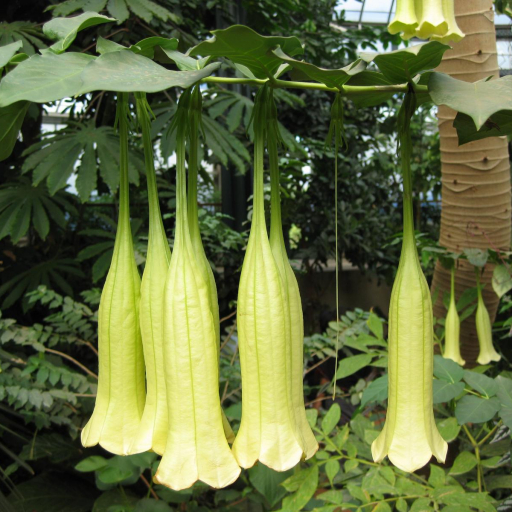
Often called the Dominican Bellflower, this rare Caribbean jewel is a showstopper for any tropical plant collector. Native to the rocky limestone cliffs of the Dominican Republic, it is prized for its dramatic, pendulous blossoms that hang like elegant, elongated chandeliers. While it looks like a creature from a fantasy novel, it is actually a sophisticated relative of the coffee plant (Rubiaceae family).
🔍 How to Identify
- 🔔 The Blooms: Its most striking feature is the 8- to 10-inch long, trumpet-shaped flowers that dangle vertically. They emerge as a pale lime green and fade to a creamy porcelain white as they mature.
- 🍃 Glossy Foliage: The leaves are deep emerald green with a waxy, high-shine finish and prominent veining, providing a lush backdrop for the pale flowers.
- 🌳 Structure: It grows as a woody, multi-stemmed shrub or small tree. In a garden setting, it maintains a graceful, airy habit rather than becoming a dense, bushy thicket.
🏡 In Your Garden
- 🌙 Midnight Perfume: The flowers are "vespertine," meaning they release their intoxicating fragrance primarily at night. The scent is a complex, gourmand mix of chocolate and hot cocoa, evolved to attract nocturnal moth pollinators.
- ☁️ Humidity is Key: Coming from a tropical island, this plant craves high humidity and consistent warmth. If the air is too dry, it may show its displeasure by dropping its flower buds before they have a chance to open.
- 🗿 Limestone Lover: In its natural habitat, it grows in alkaline, rocky soil. When potting it at home, ensure the soil is very well-draining; it hates "wet feet" and is susceptible to root rot if left in standing water.
⚠️ Safety & Toxicity
- 🚫 General Toxicity: Like many members of the Rubiaceae family and similar-looking "trumpet" flowers, the Cubanola should be treated as toxic. No part of the plant should be consumed.
- 🐾 Pets & Children: The plant contains alkaloids that can cause nausea, dizziness, or stomach upset if leaves or flowers are ingested. It is best placed in a location where curious pets or toddlers cannot reach the hanging blooms.
✨ Fun Fact
Despite its name, Cubanola domingensis is not native to Cuba! It is endemic strictly to the island of Hispaniola. It was named "Cubanola" because botanists originally thought it was closely related to a similar genus found in Cuba.

Detailed Care Instructions
Cubanola Domingensis is a tropical plant native to the Caribbean. Here are some tips on how to grow and care for this plant:
- Light: Cubanola Domingensis thrives in bright, indirect sunlight. Place it near a window where it can receive ample light throughout the day.
- Temperature: This plant prefers warm temperatures between 65-80°F (18-27°C). Protect it from drafts and extreme temperature fluctuations.
- Watering: Keep the soil consistently moist but not waterlogged. Water when the top inch of soil feels dry to the touch. Cubanola Domingensis is sensitive to overwatering, so be mindful not to let it sit in water.
- Humidity: Maintain a humid environment for Cubanola Domingensis by misting the leaves regularly or placing a humidifier nearby. This plant thrives in high humidity levels.
- Soil: Use a well-draining potting mix that is rich in organic matter. A mix of peat moss, perlite, and compost works well for Cubanola Domingensis.
- Fertilizing: Feed Cubanola Domingensis with a balanced liquid fertilizer every 4-6 weeks during the growing season (spring and summer). Avoid fertilizing in the fall and winter when the plant is in its dormant period.
- Pruning: Trim any yellow or dead leaves to encourage new growth. You can also prune the plant to maintain its shape and size.
- Propagation: Cubanola Domingensis can be propagated through stem cuttings. Take a cutting with at least two nodes and place it in water or soil to root.
By following these tips and providing the necessary care, you can successfully grow and enjoy your Cubanola Domingensis plant.
To water Cubanola Domingensis plant, you should thoroughly soak the soil until water begins to drain out of the bottom of the pot. Allow the soil to dry out slightly between waterings to prevent root rot. It is important to water the plant at the base, avoiding wetting the leaves to prevent diseases. Use room temperature water and make sure it is evenly distributed around the root ball. Adjust the frequency of watering based on the plant's specific needs and environmental conditions. Consider using a moisture meter to monitor the soil's moisture levels and provide the plant with the appropriate amount of water.
To fertilize the Cubanola Domingensis plant, use a balanced liquid fertilizer diluted to half strength. Apply the fertilizer every two weeks during the growing season, which is typically spring and summer. Avoid fertilizing in the winter months when the plant is dormant. Water the plant thoroughly after fertilizing to help distribute the nutrients to the roots. Follow the instructions on the fertilizer package for specific guidance on application rates and methods.
The ideal soil for Cubanola Domingensis plants should be well-draining and slightly acidic. A mixture of peat moss, perlite, and sand is recommended to create a loose and airy medium for optimal root growth. It is important to avoid heavy or compacted soils that can lead to waterlogged conditions. Adding organic matter such as compost or leaf mold can improve soil structure and fertility. A balanced mix of nutrients is also crucial for healthy growth, so using a slow-release fertilizer specifically formulated for tropical plants is recommended. Additionally, regular monitoring of soil moisture levels and adjusting watering frequency accordingly can help prevent root rot and other issues associated with improper soil conditions.
To propagate Cubanola Domingensis plants, you can take stem cuttings from a healthy mother plant. Make sure the cutting is at least 4-6 inches long and has several nodes. Remove any leaves from the bottom half of the cutting.
Next, dip the cut end of the stem cutting in a rooting hormone to promote root growth. Plant the cutting in a well-draining potting mix, making sure to bury at least one node in the soil. Keep the soil moist but not waterlogged, and place the cutting in a warm, humid environment with indirect sunlight.
After a few weeks, you should start to see roots forming on the cutting. Once the roots are established, you can transplant the new plant into a larger pot or directly into the garden.
Alternatively, Cubanola Domingensis plants can also be propagated by division. Simply divide the plant into smaller sections, making sure each new section has roots attached. Plant the new sections in separate containers or directly into the garden, and care for them as you would any established plant.








