Plant Overview
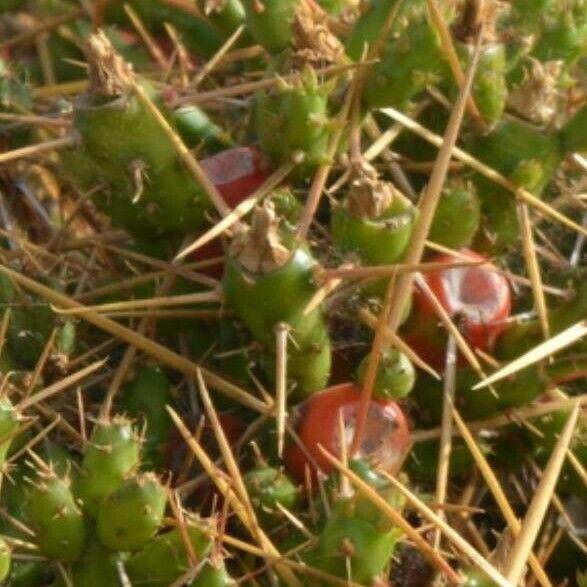
Often called the Golf Ball Cactus or Bolivian Prickly Pear, this charming succulent is a master of the high-altitude Andes. It grows in curious, rounded clusters that look like a pile of green marbles or golf balls resting in the sand. Native to the rugged terrains of Peru and Chile, it is a favorite for collectors who love architectural plants that tell a story of survival in harsh, rocky environments.
🔍 How to Identify
- 🎾 Segment Shape: The plant is composed of small, globular segments (cladodes) that are roughly the size of a golf ball and grow in dense, stacked mounds.
- 🌵 Spine Clusters: Each segment is dotted with fuzzy white areoles that sprout stiff, needle-like spines ranging from pale yellow to deep reddish-brown.
- 🌼 Crowned Blooms: In the right conditions, the top of the spheres will erupt with vibrant yellow or brilliant orange flowers that are surprisingly large compared to the body of the plant.
🏡 In Your Garden
- 🏜️ The Need for Grit: Because it originates from rocky mountain slopes, this cactus cannot tolerate sitting in damp soil. It requires a "gritty" mix—think more pumice and sand than peat—to ensure water moves through the pot instantly.
- ☀️ Light & Form: To keep its iconic "ball" shape, it needs intense, direct sunlight. If grown in low light, the new segments will stretch out into thin, weak cylinders, losing their aesthetic appeal.
- 🌬️ Cool Nights: Unlike tropical cacti, this species enjoys a significant drop in temperature at night, mimicking the thin air of its mountain home.
⚠️ Safety & Toxicity
- 🩹 Physical Hazard: While not chemically toxic to humans or pets, it is physically "armed." The segments detach very easily if bumped, a process called "hitchhiking" designed to help the plant spread in the wild.
- 🧤 Glochid Warning: Beyond the long spines, it carries "glochids"—microscopic, barbed hairs that are incredibly difficult to see and even harder to remove from skin or paws. Always use tongs or thick leather gloves when handling.
✨ Fun Fact
⛰️ High-Altitude Hero: Cumulopuntia sphaerica is a true mountaineer, found thriving at elevations of up to 4,000 meters (13,000 feet). At this height, it survives intense UV radiation and extreme temperature swings that would kill most other garden plants!

Detailed Care Instructions








