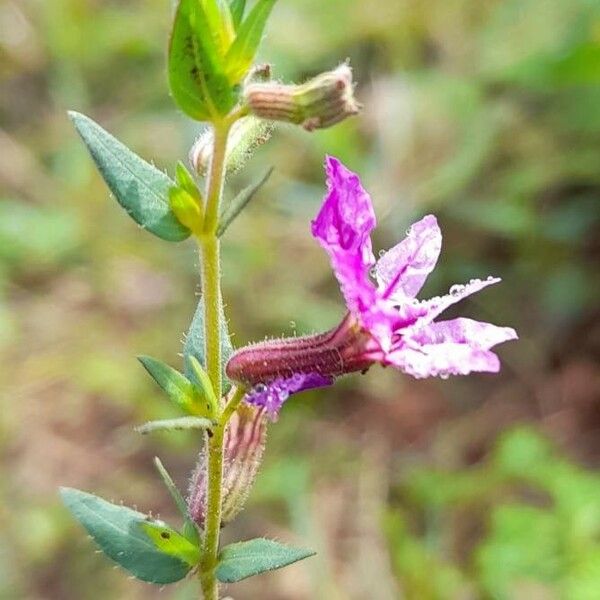
Plant Overview
Known as the Sticky Waxweed, this South American native is a hidden gem for anyone looking to create a lush, "living carpet" in their landscape. Often found trailing over rock walls or filling gaps in pavers, it is a resilient perennial that produces a relentless display of tiny, purple blooms. Its name, glutinosa, hints at its most peculiar trait: a sticky, resinous texture that coats its stems.
🔍 How to Identify
- 🌸 The Blooms: Small, trumpet-shaped flowers with six delicate, lavender-to-purple petals that look slightly "crinkled" like crepe paper.
- 🌿 The Foliage: Narrow, lance-shaped leaves that grow in opposite pairs along thin, wiry stems.
- 🕸️ The Texture: If you touch the stems, they feel distinctly tacky or "gluey." This sticky coating is a natural defense mechanism that helps deter crawling insects.
🏡 In Your Garden
- 🧱 The Perfect Edge: Because of its low-growing, spreading habit, it is an elite choice for rock gardens or "spilling" over the edges of hanging baskets and containers.
- 🦋 A Pollinator Party: Despite the tiny size of the flowers, they are rich in nectar and act as a magnet for hummingbirds, bees, and small butterflies throughout the warmer months.
- 🏜️ Tough as Nails: Once established, it is remarkably drought-tolerant. It prefers well-draining soil and can handle "tough love," making it ideal for gardeners who sometimes forget the watering can.
⚠️ Safety & Toxicity
- ✅ General Safety: Cuphea glutinosa is generally considered non-toxic to humans and common household pets like cats and dogs.
- 🧤 Skin Sensitivity: While not poisonous, the "sticky" resin on the stems can sometimes collect dust or pollen, which might cause mild skin irritation for those with very sensitive skin or allergies.
✨ Fun Fact
The "glue" on the stems isn't just for show! Scientists believe this sticky coating prevents "nectar thieves" (crawling insects that eat nectar without pollinating the flower) from reaching the blooms, ensuring that only flying pollinators—who actually help the plant reproduce—get the prize.

Detailed Care Instructions
To grow Cuphea Glutinosa plant, follow these steps:
- Choose a suitable location: Cuphea Glutinosa requires full sun to partial shade. Choose a location with well-draining soil.
- Prepare the soil: Mix organic compost or well-rotted manure into the soil to improve its fertility and drainage.
- Sow the seeds: Cuphea Glutinosa can be grown from seeds. Sow the seeds directly into the prepared soil, pressing them lightly into the soil surface. Keep the soil moist until germination occurs, which usually takes about 7-14 days.
- Transplanting: If you prefer to start the seeds indoors, sow them in small containers filled with seed-starting mix. Keep the soil moist, and once the seedlings have developed a few sets of true leaves, transplant them into larger pots or directly into the garden.
- Watering: Water the plants regularly, keeping the soil consistently moist but not waterlogged. Cuphea Glutinosa prefers slightly humid conditions.
- Fertilizing: Apply a balanced slow-release fertilizer during the growing season to provide necessary nutrients. Follow the package instructions for application rates.
- Pruning: Trim back the plant after each flowering season to maintain a compact shape and encourage branching and more blooms.
- Pests and diseases: Cuphea Glutinosa is generally resistant to pests and diseases. However, keep an eye out for common issues like aphids and spider mites. Treat any infestations promptly with insecticidal soap or neem oil.
- Overwintering: In colder regions, Cuphea Glutinosa is often grown as an annual. If you wish to overwinter the plant, bring it indoors before the first frost and place it in a cool, bright location. Reduce watering and fertilizing, and trim the plant back as needed. Resume regular care in spring when new growth appears.
With proper care and maintenance, your Cuphea Glutinosa plant should grow and produce beautiful purple flowers.

Place in a bright room that is sun drenched almost all day. Or directly in a south-facing window.

To water this plant, it is important to ensure that the soil is always slightly damp, but not waterlogged. It is recommended to water deeply about once a week, allowing the water to thoroughly penetrate the soil. Avoid overwatering, as this can cause root rot. In addition, it is important to water at the base of the plant, rather than watering from overhead, as this can result in disease and pests. Monitor the soil moisture regularly and adjust watering as needed based on the plant's needs and the surrounding environmental conditions.
To fertilize this plant, use a balanced, all-purpose fertilizer once per month during the growing season. Follow the instructions on the package for the appropriate amount to use. Be sure to water the plant thoroughly before and after fertilizing. Avoid applying fertilizer to dry soil, as this can burn the roots. Over-fertilizing can also lead to excessive foliage growth with fewer flowers.
The ideal soil for this particular plant is a loose, well-draining medium that is rich in nutrients. A good option is a mixture of garden soil and compost or a potting mix that includes perlite or vermiculite to improve drainage. It is important to ensure that the soil stays moist but not waterlogged, as excess water can cause root rot. Additionally, this plant prefers slightly acidic to neutral soil, with a pH range of 5.5 to 7.0.
To propagate this plant, you will need to take stem cuttings from the parent plant that are about 4-6 inches long and have at least two pairs of leaves. Remove the lower leaves from the cutting and dip the cut end into rooting hormone. Plant the cutting in a pot filled with well-draining soil and water thoroughly. Place the pot in a warm and bright location, but not in direct sunlight. Keep the soil moist and mist the cutting regularly to maintain its humidity. After a few weeks, the cutting should develop roots and new growth. Gradually acclimate the plant to its new environment and then transplant it into a larger pot or garden bed.








