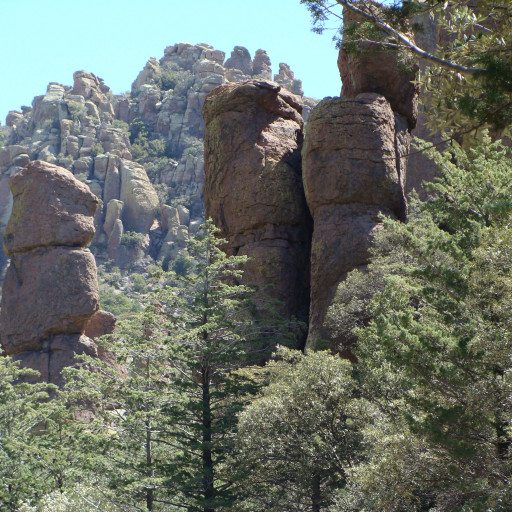
Plant Overview
The Arizona Cypress, often called the "Blue Ice" or "Silverleaf" tree, is a rugged survivor of the high-desert landscapes of the American Southwest. This stately evergreen is beloved for its hauntingly beautiful, glaucous-blue foliage that seems to shimmer under the moonlight. Unlike the fussy cedars of the coast, this cypress thrives where others fail, standing as a symbol of resilience and desert elegance.
🔍 How to Identify
- ❄️ Foliage Color: The leaves are tiny, scale-like, and overlap closely. They range from a dusty gray-green to a striking, frosty silvery-blue.
- ⚽ Woody Cones: It produces small, spherical cones (about 1 inch in diameter) that look like miniature soccer balls. These turn from green to a weathered gray-brown as they mature.
- 🍂 Textured Bark: On younger trees, the bark is thin and cherry-red, but as it ages, it becomes fibrous, furrowed, and shredding, giving the trunk a "shaggy" appearance.
🏡 In Your Garden
- 🌬️ The Ultimate Windbreak: Because of its dense, conical growth habit, it is a top choice for creating living privacy screens or windbreaks in dry, windy climates.
- ☀️ Sun Seeker: This tree is an "obligate sun-lover." It needs full, blistering sunlight to maintain its tight shape; in the shade, it becomes leggy, sparse, and prone to fungal issues.
- 🏜️ Tough Love Care: The Arizona Cypress is exceptionally drought-tolerant once established. Its biggest enemy is "wet feet"—it requires well-draining, even rocky soil, and will quickly develop root rot if kept in soggy, heavy clay.
⚠️ Safety & Toxicity
- 🟢 General Safety: This plant is considered non-toxic to humans and common household pets like dogs and cats.
- 🤧 Allergy Alert: During late winter and early spring, it produces large amounts of fine pollen which can be a significant trigger for hay fever sufferers in the Southwest.
- 🌵 Skin Sensitivity: The scale-like leaves can be quite stiff and prickly; wearing gloves is recommended when pruning to avoid minor skin abrasions.
✨ Fun Fact
The Arizona Cypress is a "fire-follower." Some of its cones are serotinous, meaning they are sealed with resin and often require the heat of a wildfire to open and release their seeds, ensuring a new generation grows in the nutrient-rich ash left behind.

Detailed Care Instructions
A healthy Arizona cypress will live for about 30 to 50 years, which is a relatively short lifespan for a tree.
What is an alternative to Arizona cypress?
Similar trees that are also drought tolerant and well-suited to desert climates are the Italian cypress (Cupressus sempervirens) and its attractive blue-green variation Cupressus sempervirens ‘Glauca’—both of which can be planted in tight rows to form privacy and wind barriers.
How fast do Arizona cypress trees grow?
These trees grow approximately 13 to 24 inches per year.
| Humidity | Dry |
| Lighting | Full Sun |
| Soil Type | Acidic, Alkaline, Loamy, Sandy, Well-Drained |
| Difficulty | Medium |
| Plant Type | Coniferous Evergreen |
| Mature Size | 40 To 50 Feet Tall, 15 To 30 Feet Wide |
| Native Area | Southwest United States, Mexico |
| Sun Exposure | Full Sun |
| Hardiness Zones | 7-9 |
To grow Cupressus Arizonica, commonly known as Arizona cypress, follow these steps:
- Selection: Choose a suitable planting location. Arizona cypress prefers full sun, well-draining soil, and a climate with hot summers and mild winters.
- Soil preparation: Prior to planting, prepare the soil by removing any weeds or grass from the planting area. The soil should be well-draining and rich in organic matter. If the soil is heavy clay or compacted, consider improving drainage by adding compost or sand.
- Planting: Dig a hole slightly larger than the root ball of the plant. Place the plant in the hole, ensuring that the top of the root ball is level with or slightly above the soil surface. Backfill the hole with soil, gently firming it around the roots. Water thoroughly after planting.
- Watering: Provide regular and deep watering during the first year of growth. Once established, Arizona cypress is drought-tolerant, but occasional deep watering during prolonged dry periods is beneficial. Avoid overwatering or letting the soil become waterlogged.
- Mulching: Apply a layer of mulch around the base of the plant to help conserve moisture, reduce weed growth, and regulate soil temperature. Keep the mulch about 2-3 inches away from the trunk to prevent rot.
- Pruning: Prune the plant to maintain its desired shape and size. Cupressus Arizonica can be pruned to form hedges or topiaries if desired. Pruning is best done in late winter or early spring before new growth begins.
- Fertilizing: Arizona cypress generally doesn't require frequent fertilization. However, if growth is slow or the foliage shows signs of nutrient deficiency, you can apply a balanced slow-release fertilizer in early spring.
- Pest and disease control: Arizona cypress is generally resistant to pests and diseases. However, occasionally, it can experience issues with bagworms or spider mites. Monitor the plant regularly and take appropriate steps if infestation occurs. Consult with a local garden center or professional if needed.
- Winter protection: If you are growing Arizona cypress in an area with extremely cold winters, consider providing some winter protection, such as wrapping the plant with burlap or providing a windbreak if necessary.
Remember to check the specific care requirements for Cupressus Arizonica in your region, as the climate and soil conditions can vary.

Place in a window with dappled sun or a spot in the middle of a room. Or directly in a window facing west or east.

1. Location: First, find the location of the plant. This evergreen tree prefers well-drained soil with a moderate amount of sunlight.
2. Watering Schedule: To ensure that the plant stays hydrated, you need to water it regularly. The frequency of watering ought to be determined by how quickly the soil surrounding the roots dries out. The standard guideline is to water when the soil seems dry to the touch, by sticking your finger into the soil up to your first knuckle.
3. Amount of Water: When watering, ensure that you are properly adding the appropriate amount of water. You should water the plant thoroughly, but not oversaturate the soil. The amount of water should be enough to reach the entire root system, but not sit too long on the surface.
4. Using a Hose: You can use a watering hose or watering can to distribute water to the tree. It is recommended that you water the plant at the base to ensure that water reaches the root system.
5. Drought Conditions: This type of tree is drought-resistant, but if the plant is growing in an arid environment or neglects proper watering, it may begin to wilt. If this occurs, increase the frequency of watering, but take care to not overwater.
6. Seasonal Adjustments: The watering routine of Cupressus Arizonica must be altered based on weather conditions. In hotter months, water the plant more often compared to cooler months.
7. Soil Quality: The soil should be well-draining, to avoid exposing roots to excess moisture. The quality of soil can affect both the water retention and flow around the roots, therefore it is important to make sure your tree is situated in the proper soil environment.
By following these guidelines, you can help to ensure that your Cupressus Arizonica plant stays hydrated, healthy & beautiful.
To fertilize this plant, you should apply a balanced fertilizer in the early spring and late summer. Make sure the fertilizer includes nitrogen, phosphorus, and potassium. Apply the fertilizer around the base of the plant and water thoroughly. Be careful not to over-fertilize, as this may cause the plant to grow too quickly and become weak. Monitor the plant's growth and adjust the fertilization as needed.
The ideal soil for this particular plant should be well-draining and slightly acidic with a pH level between 5.5 and 7.5. It should also be rich in organic matter and nutrients to ensure healthy growth and development. Avoid using heavy clay soils as they can retain too much moisture and lead to root rot. Instead, opt for a sandy loam or a soil mix that contains perlite, sand, or gravel to improve drainage. The plant also prefers soils with good aeration that allows for healthy root development. Lastly, avoid planting this species in areas with poor drainage or standing water as it is sensitive to excess moisture.
Cupressus Arizonica is a plant that can be propagated through cuttings. To do this, select a healthy, vigorous stem that is at least 15cm long and has several sets of leaves. Cut the stem just below a node (the point where leaves emerge) with a sharp, clean knife or pair of pruning shears. Remove any leaves from the bottom two-thirds of the stem, leaving just a few at the top. Dip the cut end of the stem in rooting hormone powder and plant it into a pot filled with a well-draining soil mix. Water the cutting well and place it in a bright, warm location out of direct sunlight. Keep the soil moist and mist the leaves occasionally to maintain humidity. After a few weeks, roots should begin to appear and the cutting can be transplanted into a larger pot or into the garden.








