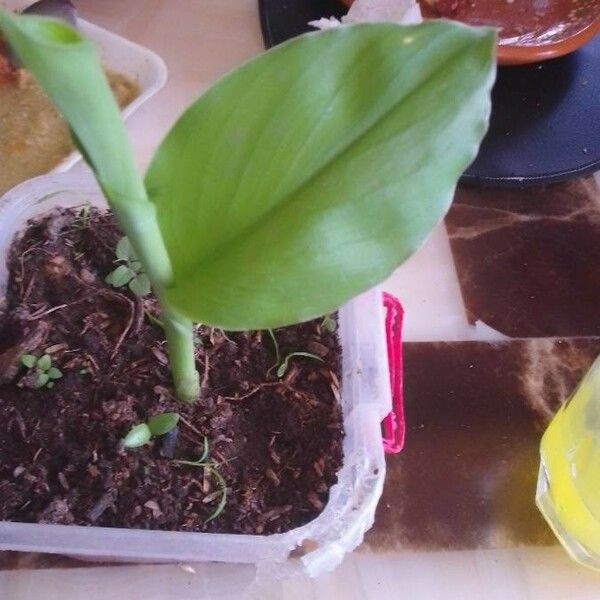
Plant Overview
Known as the "Pink and Blue Ginger" or "Black Turmeric," Curcuma aeruginosa is a jewel of the Southeast Asian jungle. While its cousins provide the bright orange spice we use in curry, this plant offers a moodier, more mysterious palette with its dark-veined leaves and striking blue-tinted roots. In traditional Indonesian medicine, it is a staple "medicine ginger" often used in herbal tonics for its powerful antimicrobial properties.
🔍 How to Identify
- 🍃 The Midrib Stripe: The most telling feature is the large, lance-shaped leaves which almost always feature a distinct maroon or deep purple stripe running right down the center.
- 💎 The Blue Heart: If you were to nick the rhizome (the underground root), you wouldn’t find orange; instead, the interior is a stunning shades of charcoal grey, dark violet, or light blue.
- 🌸 Showy Bracts: It produces "hidden" flowers that emerge from the base. The top bracts (the coma) are a brilliant, waxy pink or fuchsia, while the actual tiny flowers nestled below are usually a pale yellow.
🏡 In Your Garden
- ☁️ Filtered Light: This plant is a forest floor dweller. It thrives in dappled sunlight or "bright shade." If the leaves start to brown at the edges, it’s likely getting too much direct afternoon sun.
- 💧 The Drainage Dance: While it loves tropical humidity and regular watering, the rhizomes are highly susceptible to rot. Use a chunky, well-draining soil mix (like one designed for aroids) to ensure water doesn't sit around the roots.
- 💤 Seasonal Disappearance: Don't throw the pot away in winter! This plant often goes into a complete dormant state when temperatures drop, losing all its leaves. It will sprout back with a vengeance once the warmth and humidity return in late spring.
⚠️ Safety & Toxicity
- ✅ Safe for Humans: It is widely used in traditional medicine and skincare throughout Asia. However, the taste is quite bitter and pungent compared to culinary turmeric, so it is rarely used for cooking.
- 🐾 Pet Caution: While not considered deadly, most gingers contain essential oils and resins that can cause stomach upset, drooling, or vomiting in cats and dogs if they chew on the rhizomes or stems.
✨ Fun Fact
In Indonesian folklore, Curcuma aeruginosa is called "Temu Hitam." It is a key ingredient in "Jamu," a traditional herbal medicine system, where it is specifically used to stimulate the appetite and treat skin conditions.

Detailed Care Instructions
To grow Curcuma Aeruginosa plant, also known as the blue ginger, you can follow these steps:
- Obtaining rhizomes: Purchase Curcuma Aeruginosa rhizomes from a local nursery or online garden store. Make sure the rhizomes are healthy and free from any signs of disease or damage.
- Planting location: Choose a location for planting that receives partial to full shade. The blue ginger prefers filtered sunlight or dappled shade rather than direct sunlight.
- Soil preparation: Prepare the soil by loosening it and removing any weeds or grass. The blue ginger prefers well-draining soil that is rich in organic matter. Add compost or well-rotted manure to improve the soil's moisture-retaining capacity.
- Planting the rhizomes: Dig a shallow hole, around 3-4 inches deep, and place the rhizome in the hole with the bud-side facing up. Cover it with soil but ensure the rhizome is still visible. Space multiple rhizomes at least 6-8 inches apart to allow them to spread.
- Watering: After planting, water the rhizome thoroughly so that the soil is evenly moist but not waterlogged. Curcuma Aeruginosa prefers moist soil, so water it regularly to maintain a slightly damp environment.
- Mulching: Apply a layer of organic mulch, such as straw or wood chips, around the plant to retain moisture and suppress weed growth. Keep a gap around the rhizome itself to prevent rot.
- Fertilizing: Apply a balanced, slow-release fertilizer during the growing season to promote healthy growth. Follow the instructions on the fertilizer packaging for application rates.
- Maintenance: Remove any weeds that may compete with the plants for nutrients and water. Monitor the moisture levels, as the blue ginger cannot tolerate dry soil. If necessary, water it more frequently during hot and dry periods.
- Protection: Protect the blue ginger from extreme temperature fluctuations. If temperatures drop below freezing in your area, consider digging up the rhizomes in autumn and storing them in a cool, dry place until the following spring.
- Harvesting: Once the plants are established and mature, after about 8-10 months, you can carefully dig up the rhizomes. They will develop a bluish hue when mature. Use a sharp knife or your hands to carefully divide the rhizomes and replant them for further growth.
With proper care and suitable growing conditions, Curcuma Aeruginosa will thrive and reward you with its beautiful blue flowers and aromatic leaves.
To properly water the plant, make sure to check the soil moisture level by inserting a finger into the soil up to the first knuckle. If it feels dry, water the plant thoroughly until water drains out of the bottom of the pot. Avoid letting the plant sit in standing water as it can lead to root rot. Watering should be done regularly but ensure that the soil has dried out a bit in between watering. It is important to maintain a consistent watering schedule to prevent the plant from drying out or getting overwatered. Additionally, it is suggested to use filtered or distilled water as tap water can contain chemicals and minerals that can harm the plant.
- Choose a balanced fertilizer with equal amounts of nitrogen, phosphorus, and potassium.
- Apply the fertilizer every two weeks during the growing season (spring and summer).
- Dilute the fertilizer according to the package instructions.
- Water the plant before applying the fertilizer.
- Avoid getting any fertilizer on the plant's leaves or flowers.
- Stop fertilizing in the fall and winter when the plant goes dormant.
Curcuma Aeruginosa plant requires well-drained soil that has a slightly acidic to neutral pH. The soil should be rich in organic matter and have good moisture-retaining properties. It is recommended to use a high-quality potting soil that is specifically formulated for tropical plants. Avoid using heavy soils or those that are too compacted as they can restrict root growth and prevent adequate drainage. Adding perlite or vermiculite to the soil can help improve drainage and aeration. It is important to avoid overwatering the plant as it can lead to root rot and other issues, so be sure to allow the soil to dry out slightly between watering. Additionally, fertilizing with a balanced fertilizer every two to three months can help ensure that the plant is receiving adequate nutrients.
To propagate this plant, you will need to identify a mature rhizome with good health and growth. Digging up the rhizome is essential for propagation. The ground where the rhizome was located will experience some damage during this process. It is essential to cut away any damaged parts and ensure only healthy parts of the rhizome remain. Cut the rhizome in half or into sections with a sharp, disinfected knife. Make sure to have at least one budding node in each section. Plant each section in moist soil with good drainage and wait for new growth to appear. Keep soil evenly moist and provide bright, indirect light during growth.








