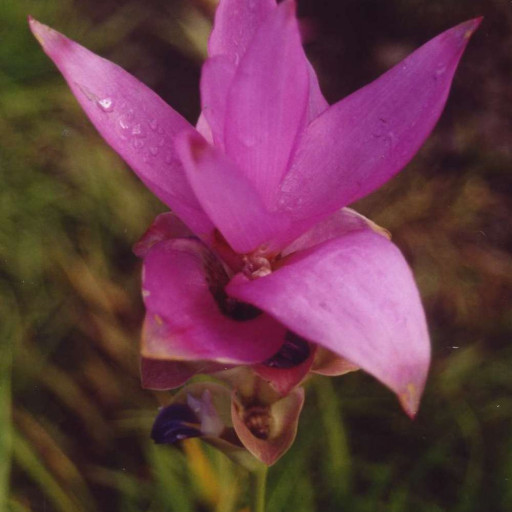
Plant Overview
Despite its common nickname, the Siam Tulip, this elegant beauty isn't a tulip at all—it is actually a proud member of the ginger family! Native to the tropical forests of Thailand and Cambodia, it brings a touch of exotic sophistication to any room or garden with its architectural "blooms" that seem to float above the foliage. It is the perfect choice for those who want a "living bouquet" that lasts much longer than cut flowers.
🔍 How to Identify
- 🌸 The "Flower" Bracts: The most striking feature is the upright spike of stiff, colorful bracts (modified leaves) that look like a tulip. They typically range from candy-pink and deep purple to snowy white.
- 🌿 Lance-Like Foliage: The leaves are long, narrow, and stiffly upright, resembling large blades of grass or lily leaves, often featuring a distinct midrib.
- 💜 Hidden True Flowers: If you look closely between the colorful bracts, you’ll find the actual tiny, delicate violet flowers peeking out—these are the plant's true reproductive blooms.
🏡 In Your Garden
- 💤 The Winter Vanishing Act: Don’t panic when your plant dies back to the soil in autumn! This species grows from rhizomes and requires a mandatory winter dormancy. It "sleeps" underground and will sprout again when the warmth returns in spring.
- ☁️ Humidity is Key: Because of its rainforest heritage, it craves high humidity. If the leaf tips start turning brown and crispy, it’s a sign the air is too dry; regular misting or a pebble tray can help mimic its tropical home.
- 💧 Thirsty but Careful: While it loves consistent moisture during the growing season, the rhizomes are prone to rot if the soil stays soggy. It needs "goldilocks" soil—rich and moist, but very well-draining.
⚠️ Safety & Toxicity
- 🟢 Status: Generally non-toxic and safe for homes.
- 🐾 Details: While not considered poisonous like true lilies, it is still an ornamental plant and not the culinary ginger you find in the kitchen. Ingesting large amounts may cause mild stomach upset in curious cats, dogs, or toddlers.
✨ Fun Fact
The genus name Curcuma is derived from the Arabic word "kurkum," which means saffron. While this specific variety is grown for its beauty, its close cousin, Curcuma longa, is the source of the bright orange spice, Turmeric!

Detailed Care Instructions
| Humidity | Normal |
| Lighting | Part Sun |
| Difficulty | Medium |
| Temperature | 18°C - 25°C |
| Hardiness Zones | 8A - 11B |
To successfully grow Curcuma Alismatifolia, also known as Siam Tulip or Hidden Cone Ginger, you can follow these steps:
- Climate and Location: These plants thrive in warm and tropical climates, ideally with temperatures between 60-85°F (15-29°C). Find a spot in your garden that receives partial shade, as direct sunlight can scorch the leaves.
- Soil Requirements: Choose a well-drained, fertile soil with slightly acidic to neutral pH (6-7). Enrich the soil with organic matter like compost or well-rotted manure to improve its moisture retention and nutrient content.
- Planting: Plant your rhizomes or tubers in early spring, after the last frost date. Dig a hole that is slightly larger than the rhizome, ensuring it is placed at a depth of 1-2 inches (2.5-5 cm) below the soil surface. Space multiple plants at least 1-2 feet (30-60 cm) apart to allow for their growth.
- Watering: Keep the soil consistently moist but avoid waterlogging. Water the plant regularly, especially during dry spells or when the top inch (2.5 cm) of soil feels dry. Applying mulch around the plants can help retain moisture.
- Fertilizing: Feed the plant with a balanced, slow-release fertilizer every two to three months during the growing season. Alternatively, you can use a liquid fertilizer diluted according to the package instructions. This will provide essential nutrients for healthy growth.
- Pruning: After the foliage dies back in fall, you can cut the spent stems back to ground level. This will tidy up the plant and prepare it for the following season's growth.
- Pests and Diseases: Curcuma Alismatifolia is generally resistant to most pests and diseases. However, keep an eye out for aphids, spider mites, or slugs/snails. If necessary, use organic insecticides or natural remedies to control them.
By following these guidelines, you can cultivate and enjoy the beautiful blooms of Curcuma Alismatifolia in your garden.

Place in a window with dappled sun or a spot in the middle of a room. Or directly in a window facing west or east.

To water this plant, it is recommended to ensure that the soil is slightly moist. The frequency of watering will depend on the environmental conditions and the size of the pot. It is essential to avoid overwatering as this can lead to root rot and other fungal diseases. A good way to check if it needs watering is by checking the soil with a moisture meter or by poking your finger about an inch deep into the soil. If it feels dry, it is time to water it. It is also important to use room temperature or lukewarm water to avoid shocking the roots and rinse away any accumulated salts. It is ideal to water in the morning to allow the plant to dry out during the day and prevent fungal growth.
First, prepare a well-draining potting soil mix with a balanced fertilizer. Make sure it has good drainage holes at the bottom of the pot.
During the growing season, feed the plant every two weeks with a liquid fertilizer. Dilute the fertilizer to half the recommended amount and water the plant thoroughly after fertilizing.
Avoid fertilizing during the dormant season or when the plant is not actively growing. Over-fertilizing can lead to root damage or burn the leaves, so always follow the recommended dosages and application instructions.
Curcuma Alismatifolia plant prefers well-drained, loamy soil that is high in organic matter, with a pH between 5.5 and 6.5. It is important that the soil retains moisture but doesn't get waterlogged as this can harm the plant. The addition of compost or peat moss can improve soil texture and fertility. Ideally, the soil should be rich in nutrients such as nitrogen, phosphorus and potassium, to support healthy growth. It's important to avoid using heavy, clay soils or soils that are prone to becoming compacted, as this can inhibit the plant's root growth and overall health. Regular fertilizing is recommended to ensure the plant receives the appropriate nutrients.
To propagate this plant, you will need to carefully dig up the rhizomes, which are underground stems that produce the plant's roots and shoots. Take care not to damage the existing plant when digging up the rhizomes.
Once you have the rhizomes, select healthy and plump ones for propagation. Cut the rhizome into smaller pieces, making sure each piece contains at least one bud. These pieces will be used to grow new plants.
Prepare a potting mix by combining equal parts peat moss, perlite, and sand. Plant the rhizome pieces in the potting mix, making sure they are buried no more than 2-3 inches deep.
Water the newly planted rhizomes, and place them in a brightly lit area, but out of direct sunlight. Keep the soil moist and warm, and new shoots will emerge in a few weeks.
Once the new plants have developed a few leaves, they can be transplanted into larger pots or directly into the ground. They will continue to grow and produce new rhizomes, creating more plants over time.
Common pests of the siam tulip include Scale insect, mealybugs, spider mites, aphids, thrips. Make a habit of checking your siam tulip frequently for pests so that any infestations can be caught and managed early.








