Plant Overview
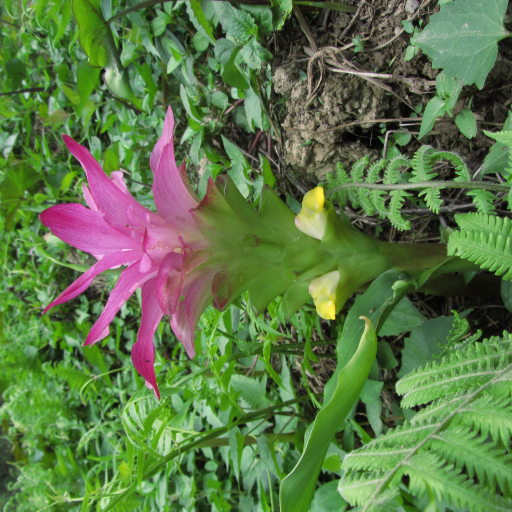
Known as "Wild Turmeric" or "Kasturi Manjal," this stunning perennial is the fragrant, exotic cousin of the common kitchen turmeric. Native to the lush forests of South Asia, it is celebrated more for its beauty and skincare benefits than its flavor. In a garden, it acts as a dramatic centerpiece, offering a tropical "jungle" vibe with its oversized leaves and ethereal, cone-shaped flowers.
🔍 How to Identify
- 🌿 The Foliage: It features large, broad, lance-shaped leaves that can grow up to two feet long. Many varieties display a striking deep purple or maroon stripe running down the center vein (midrib).
- 🌸 The Bloom: A spectacular "hidden" flower. Before the leaves fully unfurl, a thick spike emerges from the ground topped with vibrant pink or purple bracts, housing smaller, delicate yellow flowers within.
- 🥔 The Rhizome: The underground roots are thick and fleshy. When broken, they reveal a creamy yellow interior and release a powerful, camphor-like aroma that is much more floral than culinary turmeric.
🏡 In Your Garden
- 💤 The Sleeping Giant: This plant follows a strict seasonal cycle. It goes completely dormant in the winter, meaning the leaves will wither and disappear. It is vital to stop watering almost entirely during this phase to prevent the "sleeping" rhizomes from rotting in cold, wet soil.
- 🌦️ The Forest Floor Effect: To keep those massive leaves from scorching, mimic its natural habitat with dappled sunlight and high humidity. It is a "heavy feeder" that loves rich, organic soil—think of it as a hungry guest that needs plenty of compost to produce those giant leaves.
⚠️ Safety & Toxicity
- ✅ Human Safety: Widely used in traditional medicine and cosmetics. It is famous for being "non-staining" on human skin compared to regular turmeric, making it a favorite for natural face masks.
- 🐾 Pets & Kids: While not classified as a major toxin, the concentrated oils in the rhizome can cause mild stomach upset or drooling if chewed on by curious cats or dogs.
- 🧴 Skin Sensitivity: Always perform a patch test if using the root topically, as the potent essential oils can occasionally cause redness in people with very sensitive skin.
✨ Fun Fact
In many South Asian cultures, Curcuma aromatica is a staple in bridal beauty rituals. It is believed to give the skin a "celestial glow" for the wedding day, and because it lacks the intense yellow dye of cooking turmeric, the bride doesn't have to worry about staining her gown!

Detailed Care Instructions
To grow Curcuma Aromatica, also known as wild turmeric or Vanaharidra, you can follow these steps:
- Choose a suitable location: Curcuma Aromatica requires bright, indirect sunlight. Select a location with partial shade or filtered light.
- Soil preparation: Prepare well-draining soil rich in organic matter. The soil should be loamy and slightly acidic.
- Planting: Purchase or obtain rhizomes of Curcuma Aromatica. Plant them in the soil about 2-3 inches deep with the bud pointing upwards.
- Watering: Keep the soil consistently moist but avoid over-watering. Water the plants regularly, especially during the growing season. However, ensure that the soil does not become waterlogged as this can lead to root rot.
- Fertilization: Apply a balanced organic fertilizer during the growing season, following the instructions on the packaging. This will help promote healthy growth and flowering.
- Mulching: Apply a layer of organic mulch around the plants to help retain moisture, control weeds, and provide additional nutrients as it breaks down.
- Temperature and humidity: Curcuma Aromatica prefers warm temperatures between 65-85°F (18-29°C). It thrives in humid conditions, so increase humidity by misting the leaves or placing a tray of water nearby.
- Pests and diseases: Monitor your plants for any signs of pests or diseases, such as aphids or fungal infections. If identified, treat the issue promptly with appropriate organic insecticides or fungicides.
- Dormancy period: Curcuma Aromatica goes dormant during winter. Reduce watering during this period and store the rhizomes in a cool, dry place until spring.
- Propagation: After the plant has completed its growth cycle and goes dormant, you can separate the rhizomes and propagate new plants. Ensure each rhizome has a bud for successful propagation.
Remember to provide regular care, ample water, and a suitable environment for healthy growth. Patience is key as Curcuma Aromatica may take several months to establish before producing vibrant flowers.

Place in a bright room that is sun drenched almost all day. Or directly in a south-facing window.

To water this plant, make sure the soil is dry approximately 2-3 inches below the surface before watering. Use room temperature water and water the plant from the base, being careful not to get water on the leaves or stem. Do not let the plant sit in standing water, as this can lead to root rot. Water every 2-3 days, adjusting the frequency and amount based on the temperature and humidity in the plant's environment.
- Use a well-draining soil mix containing organic fertilizers for the Curcuma Aromatica plant.
- During the growing season from spring to fall, it is advisable to feed the plant once a month with a balanced, slow-release fertilizer.
- The fertilizer should be watered in after application, and the soil should be kept lightly moistened.
- To encourage better growth and increase the number of blooms, you can apply a soluble liquid fertilizer once a fortnight when the plant is actively growing.
- The fertilizer should be dissolved in water, then poured into the soil around the plant's base.
- Avoid over-fertilizing the Curcuma Aromatica plant as this can cause stunted growth, burnt leaves, and ultimately damage the plant's health.
Curcuma Aromatica plant should be potted in well-draining soil that is rich in organic matter. Avoid using soil that is heavy and compacted as it can lead to waterlogging and root rot. A good potting mix for this plant should contain a mixture of loam, sand, and peat moss or coconut coir.
It's important to keep the soil moist but not waterlogged. Make sure that the pot has drainage holes to prevent water from pooling in the soil. Fertilize regularly with a balanced fertilizer to promote healthy growth and flowering.
Additionally, Curcuma Aromatica plants prefer partial shade and warm temperatures. They thrive in humid conditions, so it's a good idea to place a tray of water near the plant to increase the humidity levels. With proper care and the right soil, this plant will produce beautiful flowers and foliage.
To propagate this plant, you will need to start by selecting a healthy and mature plant that has enough rhizomes. You should then carefully remove the plant from the soil or substrate, taking care not to damage the rhizomes in the process.
Once you have removed the plant, you should then separate the individual rhizomes from the main root system. This can be done by gently pulling the rhizomes apart or by using a sharp knife or scissors to cut them into smaller pieces.
After separating the rhizomes, you should then plant them in a suitable substrate, such as a potting mix or organic compost. The substrate should be kept moist but not too wet, and the newly planted rhizomes should be placed in a warm and protected location until they establish themselves.
Over time, the newly planted rhizomes will grow and produce new shoots and leaves, eventually forming a new plant. With the right care and attention, this plant can be propagated successfully and grown into a beautiful and healthy specimen that will provide many years of enjoyment.








