Plant Overview
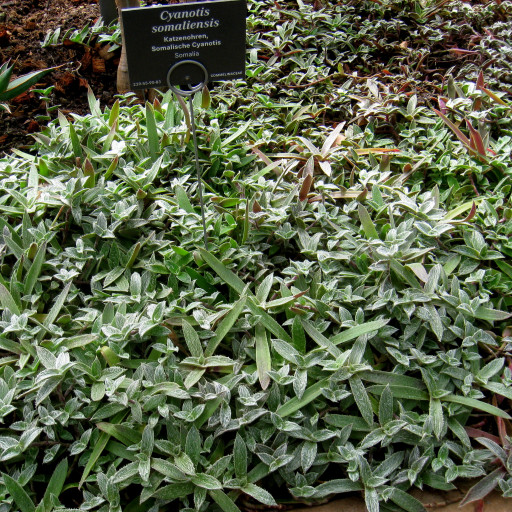
Affectionately known as "Pussy Ears" or "Furry Kittens," Cyanotis somaliensis is a charming succulent-like perennial hailing from the rocky terrains of Somalia. This plant is a favorite among indoor gardeners for its incredibly soft, velvet-like texture and its low-growing, trailing habit. Its endearing appearance makes it feel more like a pet than a plant, inviting everyone who sees it to give its leaves a gentle pet.
🔍 How to Identify
- 🐱 Fuzzy Foliage: The most striking feature is the dense covering of soft, white, silvery hairs (cilia) that fringe the edges and surface of the vibrant green leaves.
- 🌿 Leaf Shape: The leaves are succulent, lance-shaped, and arranged in a neat, overlapping pattern along creeping stems.
- 🌸 Small Blooms: It produces tiny, three-petaled flowers that are usually bright blue or violet, featuring prominently fuzzy yellow-tipped stamens that look like little explosions of color.
🏡 In Your Garden
- 💧 Hairs and Humidity: Because the leaves are so hairy, they are prone to trapping water, which can lead to rot. It is best to water the soil directly rather than overhead, and avoid misting these "furry kittens."
- 🧗 Growth Habit: This plant has a natural creeping tendency. While it stays low to the ground in the wild, it is a spectacular choice for hanging baskets where its soft stems can gracefully spill over the sides.
- ☀️ Light Sensitivity: It thrives in bright, indirect light. If the plant becomes "leggy" (stretching out with large gaps between leaves), it is likely whispering for a bit more sunshine to stay compact and plush.
⚠️ Safety & Toxicity
- 🟢 Safe Status: Cyanotis somaliensis is generally considered non-toxic to humans and common household pets.
- 🧤 Skin Sensitivity: While not poisonous, the fine hairs can occasionally cause very mild skin irritation for people with highly sensitive skin. It is always a good idea to keep an eye on curious pets who might find the "furry" texture a bit too interesting to chew on.
✨ Fun Fact
Despite its delicate, kitten-like appearance, this plant belongs to the Commelinaceae family, making it a close relative of the hardy "Wandering Dude" (Tradescantia) and the common Spiderwort!

Detailed Care Instructions
| Soil Ph | Mildly Alkaline To Mildly Acidic |
| Humidity | Normal |
| Lighting | Full Sun |
| Toxicity | Toxic |
| Soil Type | Enriched And Ordinary Soil |
| Bloom Time | Late Spring To Early Fall |
| Difficulty | Medium |
| Plant Type | Perennial Succulent |
| Mature Size | Grows Up To 8 Inches Tall And 24 Inches Wide |
| Native Area | South Africa |
| Temperature | 18°C - 30°C |
| Sun Exposure | Bright, Indirect Sunlight |
| Hardiness Zones | 11 |
To grow Cyanotis Somaliensis, also known as the Pussy Ears plant or Furry Kittens plant, you can follow these steps:
- Climate and light: This plant thrives in warm temperatures between 65-80°F (18-27°C). It requires bright, indirect sunlight for at least four to six hours a day. Ensure it is not exposed to direct sunlight as it may burn the leaves.
- Soil and container: Use well-draining soil mixtures, such as a combination of regular potting soil, perlite, and sand. Choose a container with drainage holes to prevent water logging.
- Watering: Allow the top 1-2 inches (2.5-5 cm) of soil to dry out before watering. This plant prefers slightly moist soil, but avoid overwatering that can lead to root rot. Water thoroughly, allowing excess water to drain out of the pot.
- Humidity: Maintain a moderate level of humidity around the plant. You can mist the leaves with water periodically or use a humidifier nearby.
- Fertilization: Feed your Cyanotis Somaliensis plant with a balanced, water-soluble fertilizer once a month during the growing season (spring and summer). Follow the instructions on the fertilizer packaging for the correct dosage.
- Pruning: Trim back any yellow or dead leaves to maintain the plant's appearance and overall health. Pinching back the tips of the stems can encourage bushier growth.
- Propagation: You can propagate the Cyanotis Somaliensis plant through stem cuttings. Take a cutting from a healthy stem, remove the leaves from the lower part, and place it in a well-draining potting mix. Keep the soil slightly moist until roots develop.
- Repotting: As the plant grows, you may need to repot it into a slightly larger container to provide ample room for root growth. Usually, repotting is required every 1-2 years.
By following these guidelines, you should be able to grow and care for your Cyanotis Somaliensis plant successfully.

Place in a bright room that is sun drenched almost all day. Or directly in a south-facing window.

To water this plant, you should ensure that the soil is completely dry before watering it. You can stick your finger about an inch deep into the soil to check for moisture. When watering, do not pour water on the leaves or stems of the plant as this can cause rotting. Instead, water the soil slowly and evenly until water starts to drain out of the bottom. Make sure to allow any excess water to drain away completely and never let the plant sit in standing water. It's also important to use room temperature or lukewarm water when watering, as this plant does not like cold water. Finally, adjust your watering schedule according to the plant's needs - you may need to water more or less frequently depending on factors such as temperature and humidity.
To fertilize this plant, use a well-balanced, water-soluble fertilizer. Dilute the fertilizer to half strength and apply it to the soil every two weeks during the growing season. Do not fertilize during the dormant period. Keep the soil moist but not waterlogged, and avoid letting water sit in the saucer. The plant prefers bright, indirect sunlight.
The ideal soil for the Cyanotis Somaliensis plant is one that is well-draining and has a sandy texture. It should also be rich in organic matter and have a pH level that is slightly acidic. Additionally, the soil should be lightweight to prevent compaction, which could harm the delicate roots of the plant. Other important considerations include the presence of adequate nutrients and micronutrients, as well as good aeration and moisture retention. When selecting soil for this plant, it is important to avoid soils that are heavy or have a high clay content, as they will not provide the necessary drainage and aeration for healthy growth. Overall, a high-quality, well-draining potting mix that is specifically formulated for indoor or container plants is often the best option for growing Cyanotis Somaliensis successfully.
To propagate this plant, you will need to take stem cuttings during the growing season. Cut a 4-6 inch section of healthy stem with several leaves attached. Remove the leaves from the bottom 2 inches of the stem and dip the cut end in rooting hormone. Plant the cutting in a well-draining soil mix and water thoroughly. Keep the soil moist and place in a bright, warm location with indirect sunlight. After a few weeks, new growth should emerge, indicating successful propagation.
Common pests of the pussy ears include Mealybugs, thrips. Make a habit of checking your pussy ears frequently for pests so that any infestations can be caught and managed early.








