Plant Overview
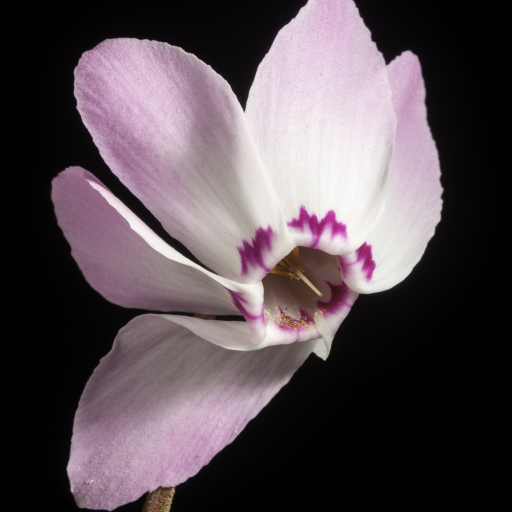
Commonly known as the Lebanon Cyclamen, this rare mountain gem is a true survivor with a dramatic history. Once feared to be extinct for nearly half a century, it was rediscovered in the 1960s clinging to the rocky cliffs of Lebanon. Today, it is cherished by collectors for its unusually large, spicy-scented flowers that look like tiny pink butterflies hovering over a carpet of marbled velvet.
🔍 How to Identify
- 🌸 The Bloom: Unlike the common florist's cyclamen, these flowers are a delicate peachy-pink that fades to white, featuring a distinct magenta "M-shaped" mark at the base of each reflexed petal.
- 🍃 Patterned Foliage: The leaves are broadly heart-shaped with wavy edges, boasting a rich green center framed by a striking silver or greyish-white marbled pattern.
- 👃 Spicy Scent: One of its most identifying features is its fragrance; it emits a soft, peppery-sweet aroma that is much stronger than most other wild cyclamen species.
🏡 In Your Garden
- ⛰️ The Mountain Connection: Because it originates from limestone crevices, this plant demands exceptional drainage. If its "feet" stay wet, the central tuber will rot quickly. It thrives best in rock gardens or specialized alpine pots.
- 😴 Summer Slumber: This plant follows a Mediterranean rhythm. It goes completely dormant in the summer, losing its leaves to hide from the heat. Do not panic and overwater during this stage; it isn't dead, just resting!
- 🍂 Leaf Mold Lover: It prefers a "woodland" soil style—think gritty compost mixed with plenty of leaf mold to mimic the forest floors of its native habitat.
⚠️ Safety & Toxicity
- 🚫 Toxicity Status: Toxic to humans and pets.
- 🐾 Pet Warning: Like all members of the Cyclamen genus, the tubers contain saponins. If ingested by dogs or cats, it can cause severe drooling, vomiting, and heart rhythm issues. Keep this "hidden" tuber away from curious diggers.
- 👶 Child Safety: While the flowers are beautiful, they should not be consumed. Skin irritation can also occur in sensitive individuals when handling the tubers.
✨ Fun Fact
The Lebanon Cyclamen is a "Lazarus species." It was first described by scientists in 1895 but wasn't seen again in the wild for 71 years, leading the world to believe it had vanished forever until a small population was found hiding in the mountains northeast of Beirut in 1966.

Detailed Care Instructions
Here are some steps you can follow to successfully grow Cyclamen libanoticum:
- Select a suitable planting location: Cyclamen libanoticum prefers to grow in part shade to full shade. Choose a location with well-draining soil that is rich in organic matter.
- Planting: Plant the tubers of the Cyclamen libanoticum in the soil during the dormant period, which is typically in summer or early fall. Place the tubers in the soil with the top slightly exposed.
- Watering: Water the plant regularly but avoid over-watering, as excessive moisture can cause the tubers to rot. Keep the soil moist but not soaking wet. During the growing season, reduce watering when the plant stops blooming and goes dormant.
- Fertilizing: Apply a balanced, water-soluble fertilizer every two to four weeks during the growing season. Follow the package instructions for the correct dosage.
- Temperature and Humidity: Cyclamen libanoticum prefers cool temperatures between 50-68°F (10-20°C). Avoid placing the plant in direct sunlight or near heat sources like radiators or fireplaces. Maintain moderate humidity levels by placing a tray of water near the plant or misting it occasionally.
- Pruning: Remove any dead or yellowing leaves to maintain the plant's appearance. Be careful not to damage the tubers when pruning.
- Pests and diseases: Keep an eye out for common pests like aphids, spider mites, and mealybugs. Treat infestations promptly with insecticidal soap or horticultural oil. Watch out for diseases like gray mold or Botrytis, which can be prevented by providing good air circulation and avoiding over-watering.
- Dormant period: Cyclamen libanoticum goes dormant in late spring or early summer. During this period, reduce watering and allow the plant to rest. Move the plant to a cool and dark location until new growth appears.
By following these care instructions, you can successfully grow Cyclamen libanoticum and enjoy its beautiful flowers.

Place in a window with dappled sun or a spot in the middle of a room. Or directly in a window facing west or east.

Cyclamen libanoticum is a perennial plant belonging to the Primulaceae family, native to Lebanon and certain regions in the Middle East. To properly water this plant, it is important to follow a few specific guidelines:
1. Soil condition: Cyclamen libanoticum prefers well-drained soil that is slightly acidic, with a pH level ranging from 5.5 to 6.5.
2. Watering frequency: This plant requires regular watering to keep the soil moist, but it is crucial to avoid overwatering. Overwatering can lead to root rot and other issues. A general rule of thumb is to water the plant thoroughly whenever the top inch of soil feels dry to the touch.
3. Watering method: It is recommended to water Cyclamen libanoticum from the bottom rather than from above. Place the potted plant in a tray filled with water, allowing the roots to absorb moisture through the drainage holes in the bottom of the pot. Leave the plant in the tray for about 15-20 minutes, then remove it and allow any excess water to drain away.
4. Avoiding wet foliage: When watering the plant from the bottom, make sure to avoid getting water on the leaves and flowers. Wet foliage can increase the risk of fungal diseases, so it is best to direct the water towards the base of the plant.
5. Avoiding stagnant water: Ensure that the pot has proper drainage holes to prevent water from accumulating at the bottom. Stagnant water can lead to root rot and cause damage to the plant.
6. Environmental factors: Consider factors such as temperature, humidity, and light levels when determining the watering schedule. Higher temperatures and lower humidity levels may require more frequent watering, while cooler temperatures and higher humidity levels may necessitate less frequent watering.
Remember, every plant's watering needs may vary slightly, so it is important to observe the plant's behavior and adjust watering accordingly. Monitoring the plant's moisture level and the overall health of the foliage will help determine the appropriate watering frequency for Cyclamen libanoticum.
To fertilize Cyclamen Libanoticum, follow these instructions:
- Choose a balanced, water-soluble fertilizer formulated for flowering houseplants. Look for one with a nutrient ratio of 10-10-10 or similar.
- Dilute the fertilizer according to the package instructions. In general, a recommended dilution is 1/4 teaspoon of fertilizer per gallon of water.
- Water the plant thoroughly before applying the fertilizer. It is important to moisten the soil to prevent fertilizer burn and ensure proper absorption.
- Pour the diluted fertilizer solution onto the soil, avoiding direct contact with the plant's leaves and flowers. Make sure to distribute the solution evenly across the surface of the soil.
- Repeat this fertilizing process every 2-4 weeks during the plant's active growth period, typically from spring to fall. Reduce or halt fertilization during its dormancy period in winter.
- Monitor the plant's response to the fertilizer. If you notice any signs of overfertilization, such as yellowing leaves or burned tips, dilute the fertilizer further or reduce the frequency of application.
Remember to always follow the specific fertilizer instructions and individual plant needs may vary.
Cyclamen Libanoticum is a species of flowering plant that requires specific soil conditions to grow and thrive. The ideal soil for this plant is well-draining and slightly acidic in nature. It should be rich in organic matter, such as compost or leaf mold, which helps promote healthy root development.
The soil should also have a good water-holding capacity without becoming waterlogged, as excessive moisture can lead to root rot and other diseases. Adding perlite or sand to the soil mixture can improve drainage and prevent waterlogging.
Additionally, the soil should be loose and friable to allow for proper aeration and root penetration. It should not be too compacted, as this can hinder the plant's growth and affect its overall health.
To create the ideal soil mix for Cyclamen Libanoticum, you can combine equal parts of peat moss, sand or perlite, and a good quality potting mix or garden soil. Mixing these components thoroughly will provide a well-balanced soil that meets the plant's requirements.
Regularly check the soil moisture level by inserting your finger about an inch into the soil. Water the plant only when the top inch of soil feels dry to the touch. Overwatering should be avoided, as it can lead to root rot and eventual plant death.
Taking care of the soil pH is also important for the optimal growth of Cyclamen Libanoticum. The pH level should ideally be around 6.0 to 7.5, slightly acidic to neutral. This can be checked using a soil testing kit and adjusted accordingly using amendments if necessary.
Practicing good soil management, such as regular fertilization and seasonal soil amendments, will further enhance the plant's growth and overall health. Use a balanced fertilizer designed for flowering plants, applied according to the manufacturer's instructions.
In summary, the ideal soil for Cyclamen Libanoticum should be well-draining, slightly acidic, rich in organic matter, and loose in texture. Monitoring and maintaining proper soil moisture, pH, and nutrient levels will contribute to the healthy growth and longevity of this plant.
Cyclamen Libanoticum is a perennial plant native to the mountainous regions of Lebanon. Here is a detailed guide on how to propagate this plant without disclosing its common names:
- Selecting a healthy plant: Choose a mature Cyclamen Libanoticum plant that is free from any diseases or pests. Ensuring a healthy parent plant is essential for successful propagation.
- Timing: Propagation is typically done in the spring or early summer when the plant is actively growing and producing new shoots.
- Gather necessary tools: Prepare a clean and sharp knife or pair of pruning shears, a clean container with drainage holes, and a well-draining potting mix.
- Preparing the parent plant: Gently dig around the base of the plant to expose the tuberous roots. Be careful not to damage the roots or stem. Choose a healthy and robust tuber for propagation.
- Division: Once the tuber is exposed, carefully separate it from the parent plant using the sharp knife or pruning shears. Make sure that each division has at least one healthy growing point or bud.
- Potting: Fill the clean container with a well-draining potting mix, leaving some space at the top for watering. Place the divided tubers into the potting mix, burying them slightly, and ensuring that the growing points are facing upwards.
- Watering: Water the newly potted divisions thoroughly, ensuring that the potting mix is evenly moist. Avoid overwatering, as excessive moisture can cause rotting.
- Placement: Place the container in a warm and bright location with indirect sunlight. Avoid exposing the plant to direct sunlight, as it can scorch the foliage.
- Maintaining humidity: To increase humidity around the newly potted divisions, you can cover the container with a plastic bag or place it inside a propagator. This will help retain moisture and promote successful root development.
- Regular care: Keep a close eye on the potted divisions, ensuring that the potting mix remains evenly moist but not overly saturated. Mist the foliage occasionally to maintain humidity. Avoid letting the plant sit in standing water, as it can lead to root rot.
- Root development: After a few weeks, new roots should start developing from the tuberous divisions. This indicates successful propagation. At this point, you can remove the plastic bag or propagator and continue regular care.
- Transplanting: Once the new divisions have established a robust root system and are actively growing, they can be transplanted into individual pots with well-draining soil. Gradually acclimate the plants to their final growing location, which should provide bright, indirect sunlight.
Remember, Cyclamen Libanoticum propagation may require patience and careful attention to detail. It's important to provide the right growing conditions and proper care to ensure the success of your propagated plants.








