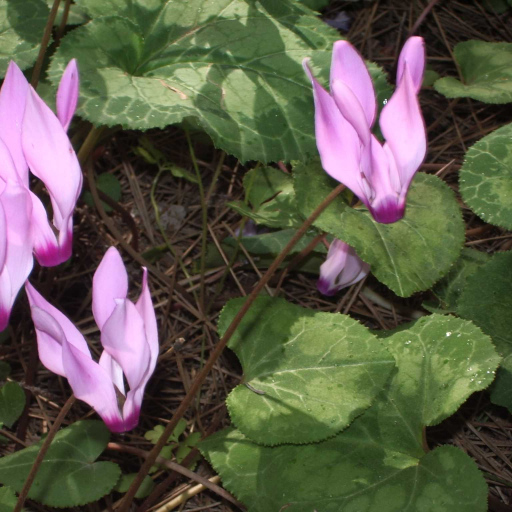
Plant Overview
Often called the "Persian Violet" or "Sowbread," the Cyclamen is a winter-blooming gem that defies the frost. Its unique flowers look like colorful butterflies caught in mid-flight, perched atop a canopy of silver-marbled leaves. Though they appear delicate, these Mediterranean natives are rugged survivors that have been a staple of folklore and royal gardens for centuries.
🔍 How to Identify
- 🌸 Reflexed Petals: The flowers grow on slender stems with petals that curve sharply upward and backward, giving the blossoms an "inside-out" or wind-swept appearance.
- 🍃 Marbled Foliage: The thick, heart-shaped leaves are dark green but feature intricate, silvery-white "frosting" patterns that are unique to almost every variety.
- 🥔 The Tuber: Beneath the soil, the plant grows from a thick, brown, potato-like tuber. This is the plant's energy reservoir for its summer "sleep."
🏡 In Your Garden
- ❄️ Cool Weather Lovers: Unlike most tropical houseplants, Cyclamen despise the heat. They thrive in "Goldilocks" temperatures (50-65°F) and are one of the few plants that will bloom indoors during the darkest days of winter.
- 💧 Bottom-Watering Nuance: They are highly susceptible to "crown rot." To keep them healthy, never pour water directly into the center of the leaves; instead, let the pot sit in a tray of water for 15 minutes so the roots can drink from the bottom up.
- 😴 The Summer Nap: Many people throw Cyclamen away when the leaves turn yellow in spring, thinking they’ve killed it. In reality, the plant is just entering a natural dormancy to survive the summer heat. Simply stop watering and let it rest in a dark spot until autumn.
⚠️ Safety & Toxicity
- 🚫 Toxic Status: Cyclamen is considered toxic to both humans and pets (cats, dogs, and horses).
- ⚠️ The Danger Zone: While the leaves can cause irritation, the highest concentration of the toxin "cyclamin" is found in the tuber. Ingestion can lead to severe gastrointestinal upset, heart rhythm issues, or seizures. Always keep these plants on high shelves away from curious pets.
✨ Fun Fact
The common name "Sowbread" dates back centuries to when people noticed that wild pigs in Europe would dig up and feast on the tubers. Remarkably, while the tubers are toxic to humans and many other animals, pigs can eat them without any ill effects!

Detailed Care Instructions
Growing Cyclamen Spp. plants can be a rewarding and enjoyable experience. Here are some steps to help you grow Cyclamen successfully:
- Choose a suitable location: Cyclamen plants prefer bright, indirect light. Place them near a window or a spot with filtered sunlight.
- Select the right soil: Use a well-draining potting mix for Cyclamen plants. The soil should be light, airy, and rich in organic matter. You can also add some perlite or sand to improve drainage.
- Planting: Cyclamen tubers should be planted just below the soil surface. Place the tuber with the top slightly above the soil level to prevent rot. Space the tubers about 4-6 inches apart.
- Watering: Cyclamen plants prefer moist soil but not overly wet. Water the plants thoroughly, allowing the water to drain out of the pot. Avoid letting the plant sit in standing water as this can cause root rot. Allow the top inch of the soil to dry out between waterings.
- Temperature and humidity: Cyclamen plants prefer cool temperatures, ideally between 55-63°F (13-17°C). Keep them away from heat sources like radiators or fireplaces. Additionally, these plants thrive in humid conditions. Consider placing a tray of water near the plants or using a humidifier to increase humidity levels.
- Fertilizing: Feed Cyclamen plants every two weeks during active growth with a balanced liquid fertilizer. Dilute the fertilizer to half the recommended strength to avoid overfertilization.
- Pruning: Remove any dead or yellowing leaves from the plant. This will promote airflow and prevent the spread of diseases.
- Dormancy: Cyclamen plants naturally go into a dormancy period. During this time, the leaves may yellow and die back. Reduce watering and stop fertilizing when the plant enters dormancy. Place it in a cool, dark location for a few months until new growth appears.
- Pests and diseases: Cyclamen can be susceptible to pests like aphids, spider mites, and cyclamen mites. Monitor your plants regularly and use appropriate organic or chemical remedies if necessary.
By following these guidelines, you should be able to grow Cyclamen Spp. plants successfully and enjoy their beautiful blooms. Remember to provide proper care, and your plants will reward you with their vibrant and colorful flowers.
Watering requirements for this type of plant vary depending on the time of year. During its growing season, the plant will require moderate watering, making sure the soil stays moist but not too saturated. In the winter, the plant goes through a dormant phase, so less frequent watering is needed. It is important not to let the soil dry out completely, as this can cause stress to the plant.
To water effectively, use room temperature water and aim to water the soil directly at the base of the plant, avoiding getting water on the leaves or flowers. Overwatering can lead to root rot, so it's best to water deeply but not too often. If the leaves start to turn yellow, this can be a sign of overwatering.
If the plant is potted, make sure there are drainage holes at the bottom of the pot to prevent water from accumulating. If the plant is in a garden bed, add organic matter to improve soil drainage and reduce the risk of waterlogging.
Taking care to water correctly will help your Cyclamen Spp. thrive and produce beautiful flowers.
To fertilize the Cyclamen Spp. plant, use a balanced fertilizer with a ratio of 1:1:1, or one with elevated phosphorus levels, in the growing season, i.e., from spring to fall. Use a low-nitrogen dosage to stimulate bloom development. Moreover, avoid over-fertilizing, which can damage the plant, resulting in yellow growth or leaf drop. Additionally, ensure that the soil is well-drained before fertilizing, and water the plant after the process. Lastly, never fertilize during the plant's dormant period, typically in summer to winter.
Cyclamen Spp. plants prefer well-draining soil that is rich in organic matter. A pH of 6.0 to 7.0 is ideal for these plants. The soil should be loose and loamy in texture, allowing for good air circulation and water drainage. A mixture of equal parts peat moss, perlite, and vermiculite is a good choice for Cyclamen Spp. plants. Additionally, the soil should be kept moist but not soggy, as excessive moisture can lead to root rot and other problems. Finally, it's important to fertilize these plants regularly with a balanced fertilizer formulated for acid-loving plants.
One way to propagate this plant is by dividing its tubers. Carefully remove the plant from its pot and gently shake off excess soil to expose the tubers. Use a sharp, clean knife to cut them into smaller sections, making sure each section has at least one growing point. Plant the sections into new pots filled with well-draining soil, and water thoroughly.
Another method for propagation is by collecting and planting its seeds. Once the plant has finished blooming, seed pods will begin to form. When they turn from green to brown, carefully remove them from the plant and allow them to dry out for a few days. Once dry, gently crush the pods to release the small, black seeds. Sow the seeds into a shallow tray or pot filled with a moist, well-draining soil mix, and keep the soil consistently moist until the seeds germinate. Once the seedlings have a few leaves, gently transplant them into individual pots.







