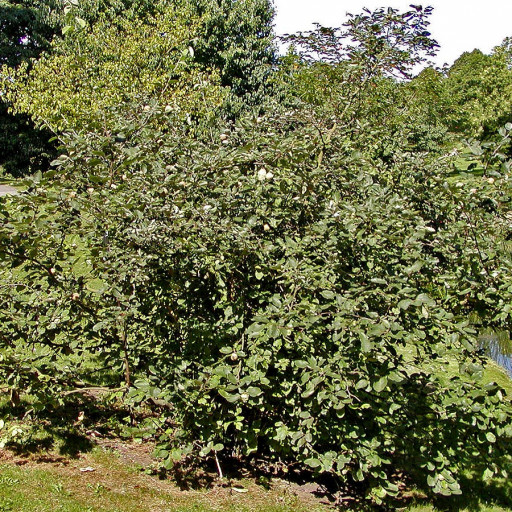
Plant Overview
Often called the "Golden Apple" of antiquity, the Quince (Cydonia oblonga) is a gnarled, enchanting tree that bridges the gap between a shrub and a small orchard tree. While it looks like a cross between a pear and an apple, its intense, floral fragrance is entirely unique, often filling an entire room with the scent of pineapple and vanilla. In ancient Greece, it was a sacred symbol of Aphrodite, representing love, marriage, and fertility.
🔍 How to Identify
- 🍐 The Fruit: Lumpy, pear-shaped, and covered in a fine, grey-tan fuzz (tomentum) that rubs off to reveal a brilliant lemon-yellow skin.
- 🌸 The Blooms: Unlike apples that grow in clusters, Quince produces large, solitary, five-petaled flowers that are white or pale pink, appearing in late spring.
- 🍃 The Foliage: Broad, oval leaves with a dull green upper surface and a distinctively velvety, silver-white underside.
- 🌳 The Form: A naturally crooked or "zig-zag" growth habit that gives the tree a beautiful, architectural silhouette even in winter.
🏡 In Your Garden
- 💧 Soil & Moisture: Quince loves deep, fertile soil that retains moisture. It is surprisingly tolerant of wet feet compared to other fruit trees, making it a great choice for heavier garden spots where apples might struggle.
- ✂️ Low Maintenance Shaping: It hates heavy-handed pruning. Because it fruit-bears on the tips of the current year’s growth, over-pruning will drastically reduce your harvest. Let its twisted, characterful branches develop naturally.
- 🍎 Harvest Patience: The fruit is rock-hard and extremely astringent when raw. It requires "bletting" (ripening until soft) or, more commonly, slow cooking to transform its pale flesh into a beautiful, ruby-red jelly or paste.
⚠️ Safety & Toxicity
- ✅ Status: Edible and safe (cooked).
- 🐾 Details: The fruit pulp is perfectly safe for humans and pets. However, like apples and pears, the seeds contain amygdalin, which can release cyanide if chewed in large quantities. Always core the fruit before processing.
✨ Fun Fact
In the original Greek myths, the "Golden Apple" given by Paris to Aphrodite—which indirectly started the Trojan War—was almost certainly a Quince, as oranges and modern apples were not yet common in the region!

Detailed Care Instructions
Here are some steps you can follow to successfully grow a Cydonia oblonga plant, commonly known as quince:
- Choose a variety: There are different varieties of quince available, so choose one that suits your climate and desired taste.
- Site selection: Quince plants prefer a sunny location with well-draining soil. Ensure that the selected spot has good air circulation.
- Soil preparation: Quinces grow best in fertile, loamy soil. Prior to planting, amend the soil with organic matter such as compost or well-rotted manure to improve its fertility and drainage.
- Planting: The best time to plant quince is in late winter or early spring. Dig a hole twice as wide and as deep as the plant's rootball. Place the plant in the hole, backfill with soil, and gently firm it around the plant. Space multiple quince plants at least 10-15 feet apart.
- Watering: After planting, water the plant thoroughly. Quinces should be irrigated regularly, especially during dry spells. Ensure the soil stays consistently moist, but avoid overwatering as it can lead to root rot.
- Fertilization: Apply a balanced, slow-release fertilizer in early spring, following the package instructions. Repeat monthly during the growing season until late summer.
- Pruning: Quinces respond well to pruning, which should be done in late winter or early spring before the new growth begins. Remove any dead, damaged, or crossing branches. Also, thin out the branches to allow better air circulation.
- Pest and disease control: Quinces can be susceptible to a few pests like aphids, caterpillars, or scale insects. Regularly inspect the plant and apply appropriate pest control measures if necessary. Quinces can also be prone to diseases like fire blight or fungal infections. Corrective measures include pruning affected branches, providing good air circulation, and using appropriate fungicides.
- Harvesting: Quinces are typically harvested in late autumn when they have turned yellow. Harvest the fruits by twisting them gently off the tree.
By following these guidelines, you can successfully grow Cydonia oblonga plants and enjoy their delicious fruits.

Place in a window with dappled sun or a spot in the middle of a room. Or directly in a window facing west or east.

To properly water the plant, you must typically take into account factors such as the size and age of the plant, as well as its location and environment. When watering, make sure to give the plant enough water to penetrate the root zone, but also avoid over-watering which could damage roots. It is best to water the plant during the cooler parts of the day, such as early morning or late evening, to reduce water loss to evaporation. It is also important to avoid getting water on the leaves and stems, as this can lead to disease or insect issues. Additionally, make sure to use appropriate watering tools, like watering cans or hoses with slow release nozzles to avoid damaging the soil around the roots.
To properly fertilize this plant, apply a balanced, slow-release fertilizer in the early spring and again in the early summer. Follow package instructions for dosage and mode of application. Avoid fertilizing during periods of drought or heat stress. Consider adding organic matter to the soil to improve nutrient availability and water retention. Monitor the plant for nutrient deficiencies and adjust fertilization accordingly.
When cultivating Cydonia Oblonga plant, it is essential to use a well-draining soil with good water retention capacity. The soil should be moderately fertile, containing organic matter and a pH level between 5.5 to 7.5. The soil texture should be light, aerated, and loamy. It is advisable to avoid using heavy clay or sandy soils, which retain either too little or too much water. The Cydonia Oblonga plant thrives on soils with a good balance of micronutrients, such as potassium, calcium, and magnesium. Additionally, using fertilizers rich in phosphorus can help in promoting root formation and overall plant growth. It is vital to ensure the soil is well-drained to avoid water-logged conditions, which can lead to root rot and stunt the plant's growth.
Propagation of the plant species with the scientific name Cydonia Oblonga can be carried out through several methods. One such method is through softwood stem cuttings from the parent plant. The cuttings need to be taken from a healthy mature plant during the growing season, between spring to late summer. The stem cutting should be about 6-8 inches long and should have at least four nodes. The lower leaves of the cutting should be removed, and the cutting should be dipped in rooting hormone powder before planting it in a pot filled with moist soil. The plant should be placed in a warm, bright spot, and it may take several weeks for it to root and start growing. Another method of propagating the Cydonia Oblonga plant is through seed germination. The seeds should be extracted from the fruit of a mature tree and cleaned before planting them in a pot filled with moist soil. The pot should be placed in a sunny spot, and the soil should be kept consistently moist until the seeds germinate. Once the seedlings have established themselves, they can be transplanted into larger pots or directly into the ground.
Common pests of the quince include Aphids, larvae. Make a habit of checking your quince frequently for pests so that any infestations can be caught and managed early.








