Plant Overview
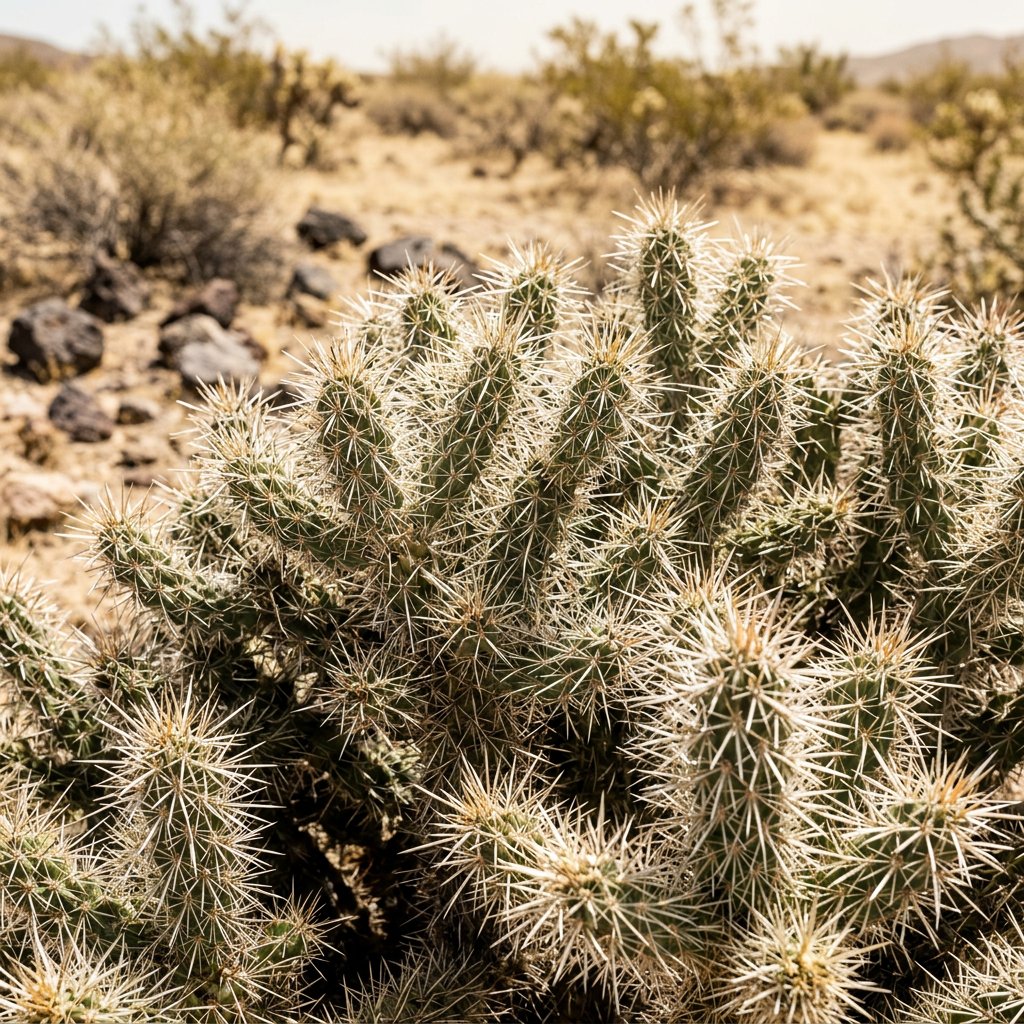
Often called the "Teddy Bear Cholla," this cactus looks surprisingly soft and fuzzy from a distance, shimmering with a silvery-gold halo in the desert sun. Don't let the name fool you, though—this Southwestern icon is one of the most formidable plants in the Sonoran Desert. Its other nickname, the "Jumping Cholla," comes from its uncanny ability to detach its segments and "leap" onto anything that brushes past.
🔍 How to Identify
- 🌵 Dense Spines: The plant is almost entirely obscured by a thick forest of silvery-yellow spines that create a glowing, translucent appearance when backlit.
- 📏 Segmented Stems: It grows in distinct, cylindrical joints or segments that are roughly the size of a human finger or a small cucumber.
- 🎨 Dark Trunk: As the plant ages, the lower segments die off and turn a dark, charcoal-black color, creating a stark contrast with the bright, straw-colored upper growth.
🏡 In Your Garden
- ☀️ Sun Worshiper: This cactus requires the most intense light possible; in low-light indoor settings, it will quickly lose its signature "fuzzy" density and become weak.
- 🏜️ Drainage is Non-Negotiable: Because it evolved in rocky, arid soils, its roots will rot almost instantly in standard potting soil. Use a gritty, mineral-heavy mix with plenty of pumice or perlite.
- 🚶 Strategic Placement: Never plant this near a walkway, driveway, or anywhere a pet might wander. Because the segments detach with the slightest touch, they are notorious for "hitching a ride" on shoes and skin.
⚠️ Safety & Toxicity
- 🚫 Physical Hazard: While not chemically poisonous, the Teddy Bear Cholla is physically dangerous. The spines are microscopically barbed, making them incredibly painful to remove once they hook into the skin.
- 🐾 Pet & Child Warning: High risk. Curious dogs or children can easily end up with a segment stuck to their face or paws. If a segment attaches, do not use your hands to pull it off—use a comb to "flick" it away.
✨ Fun Fact
The Teddy Bear Cholla doesn’t rely much on seeds to spread. Instead, it clones itself through "hitchhiking." The segments break off easily so they can stick to the fur of passing animals, eventually falling off in a new location to take root and grow into a brand-new cactus.

Detailed Care Instructions
To grow Cylindropuntia Bigelovii, commonly known as Teddy Bear Cholla or Jumping Cholla, follow these steps:
- Choose the right location: This plant prefers a full sun location with well-draining soil. Ensure that the area has enough space for the plant to expand as it matures.
- Obtain a healthy plant: Purchase a healthy Cylindropuntia Bigelovii plant from a reputable nursery or garden center. Make sure the plant is disease-free and has no signs of damage or stress.
- Prepare the soil: Cylindropuntia Bigelovii prefers sandy or rocky soil with good drainage. Amend the soil if necessary, by adding compost or perlite to improve drainage and fertility.
- Dig a hole: Dig a planting hole that is slightly wider and deeper than the nursery container or root ball of the plant.
- Plant the cactus: Gently remove the plant from the nursery container and place it in the hole, ensuring that the crown of the plant (where the stem meets the roots) is level with or slightly above the soil surface. Backfill the hole with soil, pressing it firmly around the roots to eliminate air pockets.
- Watering: Initially, water the plant thoroughly to help it establish its roots. Afterward, reduce watering frequency as Cylindropuntia Bigelovii is drought-tolerant. Water only when the soil is dry several inches below the surface.
- Mulching: Apply a layer of organic mulch, such as wood chips or straw, around the base of the plant. Mulching helps to retain soil moisture and regulate root temperature.
- Pruning: Minimal pruning is required for this plant. Use gloves and long-handled tongs when handling Cylindropuntia Bigelovii due to the spines. Remove any dead or damaged stems as needed.
- Fertilization: Cylindropuntia Bigelovii is adapted to nutrient-poor environments and does not require regular fertilization. However, you can apply a slow-release cactus fertilizer once or twice a year during the growing season to encourage healthy growth.
- Winter care: In colder climates, protect the plant from frost or freezing temperatures by covering it or moving it indoors. Cylindropuntia Bigelovii can tolerate brief periods of cold, but prolonged exposure to freezing temperatures can damage the plant.
Remember to always check local regulations and restrictions regarding the planting and cultivation of native plants, as they can vary by region.

Place in a bright room that is sun drenched almost all day. Or directly in a south-facing window.

To water this particular plant, you should first assess the soil moisture by touching the soil with your finger. If the top inch of soil feels dry, then it is time to water the plant. When watering, ensure that you do not get water on the leaves or stem of the plant as this can lead to rot. Instead, water the soil around the base of the plant until the soil is moistened throughout the root zone. Avoid over-watering the plant as this can lead to root rot and other issues. It is also recommended to water the plant deeply but infrequently rather than giving it small amounts of water frequently. Finally, check the watering needs of the plant based on the current season and adjust your watering schedule accordingly.
To fertilize this type of plant, use a slow-release fertilizer with equal amounts of nitrogen, phosphorus, and potassium. Apply the fertilizer in small amounts around the base of the plant during its active growing season. It is important not to over-fertilize as this may cause damage to the plant. Additionally, make sure the soil is well-draining and water appropriately to avoid nutrient runoff.
The recommended soil for the Cylindropuntia Bigelovii plant is a well-draining soil mixture that contains a blend of sand, perlite, and pumice. The pH level of the soil should be slightly acidic to neutral, with a range of 6.0 to 7.0. The soil should be porous and allow for air circulation around the roots, which will help prevent root rot. It is also important to avoid using heavy clay soils or soils that retain too much moisture, as this can lead to fungal growth and other issues. When planting the Cylindropuntia Bigelovii plant, it is recommended to amend the soil with a balanced fertilizer to promote healthy growth and ensure that the plant has access to essential nutrients.
The best way to propagate this particular plant is by taking cuttings from the parent plant. First, select a healthy and mature stem that is at least 6 inches long. Using a sharp, sterile knife or scissors, cut the stem at a 45-degree angle to avoid crushing the tissue.
Next, remove the leaves from the bottom 2-3 inches of the stem and allow the cuttings to dry and callus over for 2-3 days in a dry and sunny location. This will prevent the cuttings from rotting when planted.
Once the cuttings have callused over, they can be planted in a well-draining soil mix. Make a hole in the soil with a pencil or other thin object and gently insert the cutting into the hole, making sure that the bottom of the stem is in contact with the soil.
Water the cuttings lightly and place them in a bright, sunny location. In a few weeks, new roots will begin to form and the cutting will begin to grow.
It's important to note that these plants have sharp spines that can cause injury, so care should be taken when handling them. Also, make sure to use gloves and protective eyewear when pruning or handling these plants.
Common pests of the teddy-bear cholla include Scale insect, mealybugs, spider mites. Make a habit of checking your teddy-bear cholla frequently for pests so that any infestations can be caught and managed early.








