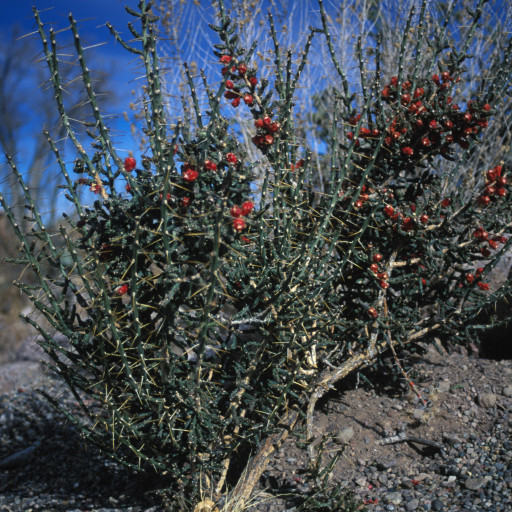
Plant Overview
Known affectionately as the Desert Christmas Cactus or Tasajillo, this slender cactus adds a splash of festive color to the arid landscapes of the American Southwest. While it looks like a tangled thicket of dry sticks for most of the year, it transforms in late autumn when it becomes laden with bright, berry-like red fruits. It is a resilient survivor, often found hiding under "nurse trees" like Mesquite to escape the harshest midday sun.
🔍 How to Identify
- 🌵 Stem Structure: Unlike the thick pads of a Prickly Pear, this cactus features extremely thin, pencil-like cylindrical stems that grow in a sprawling, shrubby habit.
- 🦴 The Spines: Each areole typically sports a single, long spine (up to 2 inches) covered in a translucent, papery sheath that can shimmer in the sunlight.
- 🍒 Winter Fruits: Its most defining feature is the small, egg-shaped fruit that turns a brilliant scarlet red in winter, mimicking the look of traditional Christmas ornaments.
🏡 In Your Garden
- ☀️ Master of Neglect: This plant thrives on "tough love." Because it has evolved to survive in some of the harshest deserts on Earth, it requires very little water and thrives in poor, rocky soil.
- 🏜️ Drainage is Vital: The primary reason this cactus fails in home gardens is "wet feet." It hates sitting in damp soil, which can lead to rapid root rot. Always use a gritty, cactus-specific potting mix and a container with plenty of holes.
⚠️ Safety & Toxicity
- 🛑 The "Hitchhiker" Effect: Like its larger Cholla cousins, the segments of this plant break off easily and "latch" onto clothing or fur. The spines have microscopic barbs that make them incredibly painful and difficult to remove once they hook into the skin.
- 🐾 Pet & Child Safety: This is not a "pet-friendly" plant. Due to the barbed spines, it should be placed in the back of a garden bed or in a restricted area where curious paws or tiny hands cannot make contact.
✨ Fun Fact
The red fruits are actually edible and have been used by various indigenous groups for centuries. However, they are often nicknamed "Tasajillo" (little chili) not because they are spicy, but because their bright red shape resembles a small pepper!

Detailed Care Instructions
To grow a Cylindropuntia leptocaulis plant, also known as the Christmas Cholla or Pencil Cholla, follow these steps:
- Obtain a healthy plant: Purchase a Cylindropuntia leptocaulis plant from a reputable nursery or obtain a cutting from an existing plant. Make sure the plant or cutting is healthy, with no signs of disease or damage.
- Choose the right location: These plants thrive in full sunlight, so find a spot in your garden or outdoor space that receives at least six hours of direct sunlight per day. They are also adapted to desert climates and can tolerate hot weather, but they can also survive in areas with some winter cold.
- Prepare the soil: Cylindropuntia leptocaulis plants prefer well-draining soil to avoid root rot. Amend the soil in the planting area by adding coarse sand or perlite to improve drainage.
- Planting time: Plant your Cylindropuntia leptocaulis in the spring, after the last frost has passed. Dig a hole that is slightly larger than the root ball of the plant.
- Planting the cutting: If you are using a cutting, allow it to callus for a few days before planting. Push the cutting about an inch into the soil, making sure it is stable and upright. If using a potted plant, gently loosen the roots before placing it in the hole.
- Watering: After planting, water the plant thoroughly to settle the soil. However, be careful not to overwater, as excessive moisture can lead to root rot. Allow the soil to dry out slightly in between waterings. Water sparingly in winter when the plant is dormant.
- Fertilizing: Cylindropuntia leptocaulis plants do not require much fertilization. Apply a balanced, slow-release cactus fertilizer in spring and early summer, following the instructions on the package.
- Care: Once established, Cylindropuntia leptocaulis plants are relatively low-maintenance. They are drought-tolerant and do not require frequent watering. However, keep an eye out for signs of dehydration and water as needed. Protect the plant from excessive frost during winter, especially if you live in a colder climate.
- Pruning: Prune dead or damaged segments in late winter or early spring to maintain a tidy appearance and promote healthy growth.
By following these steps, you can enjoy the unique and striking Cylindropuntia leptocaulis plant in your garden or outdoor space.

Place in a bright room that is sun drenched almost all day. Or directly in a south-facing window.

Cylindropuntia Leptocaulis is a type of plant that belongs to the cactus family. It is native to North America and is popular among gardeners and xeriscape enthusiasts due to its unique appearance and low maintenance requirements. When it comes to watering this plant, there are a few things to keep in mind.
Firstly, it is important to note that Cylindropuntia Leptocaulis is a drought-tolerant plant, which means that it can survive long periods of time without water. However, this does not mean that it should be completely neglected. Like all plants, it does require some amount of water to thrive.
The best way to water Cylindropuntia Leptocaulis is to do so sparingly and infrequently. This means that you should only water the plant when the soil has become completely dry. To check the soil moisture level, insert your finger into the soil to a depth of about 1 inch. If the soil feels moist, hold off on watering for a few more days. If it feels dry, it is time to water the plant.
When watering Cylindropuntia Leptocaulis, it is important to use a watering can or hose with a spray nozzle to avoid overwatering the plant. Start by applying a small amount of water to the soil around the base of the plant, being careful not to get any water on the leaves or stems. Allow the water to be absorbed by the soil before adding more. Avoid watering the plant more than once a week, as this can lead to root rot and other problems.
In addition to proper watering, it is also important to provide Cylindropuntia Leptocaulis with well-draining soil and ample sunlight. This will help the plant to grow strong and healthy, even in harsh conditions. With the right care and attention, this unique cactus is sure to thrive and add beauty to any landscape.
To fertilize this type of plant, it is recommended to use a balanced fertilizer with equal parts nitrogen, phosphorus, and potassium. Apply the fertilizer every two to three weeks during the growing season, which is typically from spring to fall. Be sure to dilute the fertilizer to half strength before applying it to avoid over-fertilization, which can damage the plant. Water the plant thoroughly before applying the fertilizer to prevent the roots from burning. Finally, avoid fertilizing during the winter months, as the plant is dormant and does not require nutrients.
The best type of soil to use with this plant is a well-draining soil that is slightly acidic to neutral with a pH level between 6.0 and 7.0. It thrives in sandy or rocky desert soils that are rich in minerals. It is important to avoid soil mixtures that are heavy or retain moisture, as this plant is susceptible to rotting. A good mixture includes coarse sand, gritty soil, and pebbles. Additionally, if you are planting this in a container, make sure it has drainage holes to ensure excess water can drain out and not sit in the soil.
To propagate this plant, select a healthy stem segment and cut it at a 45-degree angle using a sharp, disinfected knife. Allow the cutting to dry and callus over for 2-3 days in a dry, shaded spot. Plant the cutting in well-draining cactus or succulent soil mix. Keep the soil moist but not waterlogged, and provide bright, indirect sunlight. After a few weeks, the cutting should begin to produce roots and a new plant will start to grow.
Common pests of the christmas cactus include Scale insect, mealybugs, spider mites. Make a habit of checking your christmas cactus frequently for pests so that any infestations can be caught and managed early.








