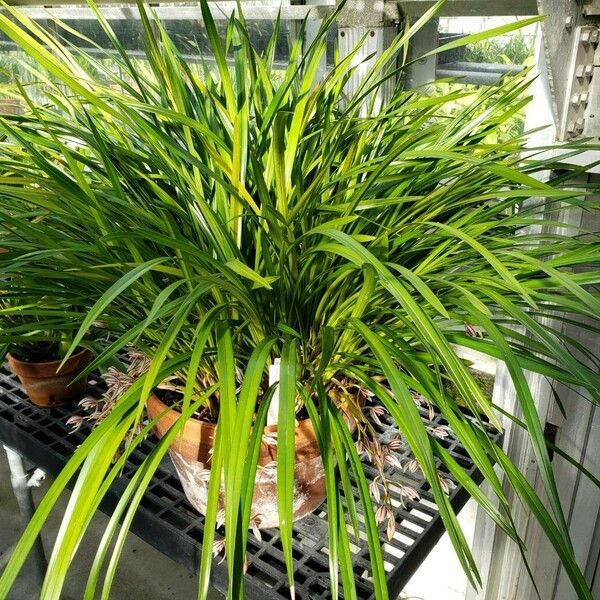
Plant Overview
Often called the Phoenix Orchid, Cymbidium dayanum is an elegant mountain dweller native to the high-altitude forests of Southeast Asia. It is celebrated for its dramatic, arching flower spikes that spill out of the foliage like a floral waterfall. Unlike the stiff, upright orchids often found in shops, this species embraces a graceful, drooping silhouette that makes it a centerpiece for hanging baskets.
🔍 How to Identify
- 🌸 The "Racing Stripe": Each creamy-white or pale-yellow petal features a bold, dark burgundy or purplish-red line running straight down the center, giving the bloom a striking, graphic look.
- 🍃 Grass-like Foliage: The leaves are remarkably thin, long, and leathery. To the untrained eye, the plant looks more like a clump of ornamental forest grass than a typical orchid until it blooms.
- 📉 Pendulous Spikes: The flowers grow on "pendulous" inflorescences—meaning they naturally hang downwards. A single spike can hold up to 15 individual, star-shaped blossoms.
🏡 In Your Garden
- 🌬️ Breathable Roots: In the wild, this orchid is an epiphyte (living on trees) or a lithophyte (living on rocks). It absolutely hates "wet feet." In a home setting, it requires a very chunky orchid bark mix or a slatted wooden basket to ensure the roots stay airy.
- ⛅ The Cool Signal: This species is a "cool-to-intermediate" grower. To trigger those beautiful striped blooms, the plant often needs a noticeable dip in nighttime temperatures during the autumn—a signal from nature that the flowering season has arrived.
⚠️ Safety & Toxicity
- 🌿 Safe Status: Cymbidium dayanum is generally considered non-toxic to humans and common household pets like cats and dogs.
- 🐾 Pet Precaution: While it isn't poisonous, the long, swaying, grass-like leaves are irresistible to cats. If your feline friend decides to treat it like a snack, it may cause mild stomach upset or vomiting simply due to the fibrous texture of the leaves.
✨ Fun Fact
This orchid was named in the 19th century after John Day, a famous British orchid hunter and illustrator. He was so dedicated to these plants that he produced over 50 "scrapbooks" containing thousands of detailed paintings of the orchids he discovered and grew.

Detailed Care Instructions

Place in a window with dappled sun or a spot in the middle of a room. Or directly in a window facing west or east.

Some plants require more regular watering than others, which should be done every few days. It's critical to maintain the soil moist all of the time. The water requirements of the same plant placed in pots with varying sizes will differ. Because the water in the smaller pot evaporates faster than the water in the larger pot, it will require more watering. Regardless of pot size, the surface should constantly be maintained moist.







