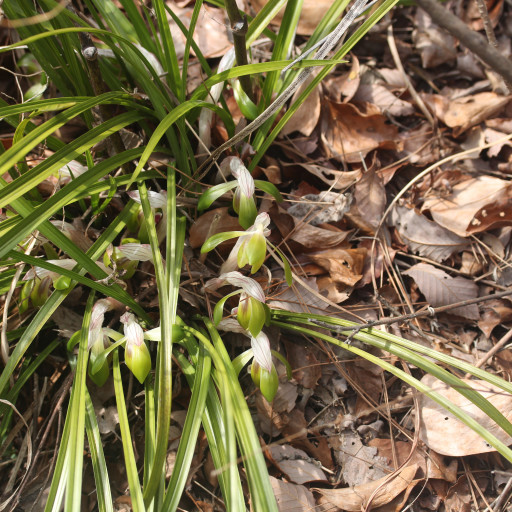
Plant Overview
Known as the "Spring Orchid" or Chun Lan, Cymbidium goeringii is a crown jewel of East Asian horticulture. Unlike its flashy tropical cousins, this orchid is prized for its understated elegance and a hauntingly sweet fragrance that can fill an entire room. In traditional Chinese art, it represents the "Noble Orchid," symbolizing humility and integrity because it blooms in the quiet solitude of early spring.
🔍 How to Identify
- 🌿 Slender Foliage: The leaves are thin, leathery, and grass-like, arching gracefully to create a dense green mound even when the plant is not in bloom.
- 🌸 Solitary Blooms: Unlike many orchids that produce long sprays of flowers, this species typically produces just one (rarely two) nodding flowers per short stalk.
- 🎨 Subtle Palette: The petals are usually muted greens or creamy yellows, featuring a distinctively curled white "lip" (labellum) often decorated with dark red or purple spots.
🏡 In Your Garden
- ❄️ The Need for Chill: This orchid is a temperate species that requires a "vernalization" period. It needs a few weeks of cool (but not freezing) night temperatures in winter to trigger its spring flower buds; without this cold rest, it may never bloom.
- 🪨 Breathable Roots: Being semi-terrestrial, it hates "wet feet." It thrives in a very airy, gritty substrate—often a mix of pumice, bark, and baked clay—to mimic the well-drained mountain slopes of its native Japan and China.
⚠️ Safety & Toxicity
- ✅ Pet & Human Safe: Cymbidium goeringii is widely considered non-toxic to cats, dogs, and humans.
- 🌱 Sap Sensitivity: While not poisonous, the sap from crushed stems or roots can occasionally cause mild skin irritation for people with highly sensitive skin. It is always best to wash your hands after a heavy pruning session.
✨ Fun Fact
🎨 The Four Gentlemen: In East Asian culture, this orchid is one of the "Four Gentlemen" (alongside Bamboo, Plum Blossom, and Chrysanthemum). It represents Spring and is celebrated for its "refined scent," which is said to be noticeable only to those with a calm and virtuous mind.

Detailed Care Instructions
To grow Cymbidium goeringii, also known as the Chinese Ground Orchid, follow these steps:
- Select a suitable location: Choose a location that receives partial shade to full shade. Avoid direct sunlight as it can scorch the leaves.
- Provide appropriate temperature: Cymbidium goeringii prefers cool to moderate temperatures, between 50°F to 70°F (10°C to 21°C) during the day and slightly cooler at night.
- Use a well-draining potting mix: Orchid-specific potting mixes are available in garden centers. Make sure the mix allows for good drainage to prevent root rot.
- Transplant carefully: If you start with a potted Cymbidium goeringii, gently remove the plant from its current pot and carefully transfer it to a larger orchid pot. Do not damage the roots.
- Water properly: Water the plant thoroughly, allowing the excess water to drain out of the pot. Cymbidium goeringii prefers being kept slightly moist, especially during the growing season. Avoid overwatering, as it can lead to rot.
- Fertilize regularly: Use a balanced orchid fertilizer according to the instructions provided. Apply it every two weeks during the growing season (spring and summer) and once a month during fall and winter.
- Maintain humidity: Cymbidium goeringii appreciates higher humidity levels. Place a tray with water near the plant or use a humidifier, especially during drier months.
- Watch for pests: Keep an eye out for common orchid pests such as aphids, scale insects, and spider mites. Inspect the plants regularly and take appropriate measures to prevent infestation or treat any existing pest problems.
- Provide proper ventilation: Good airflow is essential for Cymbidium goeringii. This helps prevent fungal diseases and keeps the plant healthy. Open windows or use fans to promote air circulation.
- Repot periodically: As the plant grows, it may eventually outgrow its pot. Repotting should be done every two to three years or when the pot becomes overcrowded with roots.
- Prune judiciously: Remove any dead or decaying leaves or spent flower spikes to keep the plant healthy and promote new growth.
Remember, growing Cymbidium goeringii requires patience as it can take several years to reach blooming maturity. With proper care and attention to its specific needs, you can enjoy the beautiful flowers and lovely foliage of this orchid species.

Place in a window with dappled sun or a spot in the middle of a room. Or directly in a window facing west or east.

First, it is important to note that Cymbidium Goeringii plant has unique water requirements compared to other plants. When watering this plant, it is recommended to use room temperature water, as cold water can shock the roots and cause damage.
To water this plant, start by checking the soil moisture level. The soil should be moist but not waterlogged. If the top inch of soil feels dry to the touch, it is time to water.
Fill a watering can with room temperature water and slowly pour it over the soil until it starts to drain out the bottom of the pot. Be careful not to water the leaves or flowers, as this can cause damage or lead to fungal growth.
After watering, allow the excess water to drain and then empty the saucer underneath the pot. Cymbidium Goeringii plant prefers to dry out slightly between waterings, so avoid overwatering or leaving the plant in standing water.
It is also important to note that the watering frequency may vary depending on the humidity and temperature conditions in your location, so always check the soil moisture before watering.
For optimal growth and flowering, provide regular fertilization to your orchid plant. During the active growing period, feed once every two weeks with a balanced fertilizer high in nitrogen, phosphorus, and potassium. During the dormant period, reduce frequency to once every four weeks. Avoid over-fertilization, as this can cause damage to the roots and leaves. Dilute the fertilizer according to the manufacturer’s instructions and apply it to the soil around the base of the plant. Make sure to water thoroughly after fertilizing to avoid salt build-up.
For best results, it is recommended to use a well-draining soil mixture when planting Cymbidium Goeringii. This can be achieved by using a mix of organic materials such as coconut husk chips, bark, and perlite. The soil should be slightly acidic with a pH range between 5.5 to 6.5. It is important to ensure that the soil is not too compact and allows for good airflow to the roots. Planting in a shallow pot can also help with drainage and prevent waterlogging of the soil.
To propagate this particular orchid plant, one can use the division method. When the plant has reached a size where it outgrows its pot, carefully remove it from the pot and gently separate the roots and rhizomes.
The rhizomes are the horizontal stems that extend underground, and these should have at least two new growth points, or pseudobulbs, attached to them. Carefully cut the rhizome so that each section has its own set of roots and at least two pseudobulbs.
Each new plant should then be repotted in a well-draining orchid mix and placed in a location with bright but filtered light. It's important to avoid watering the newly potted plants for at least a week to allow for any damaged roots to heal.
Propagation can also be done through the collection of its seeds, but this process requires a sterile environment and can be challenging for home gardeners.
Common pests of the goering's cymbidium include Scale insect, mealybugs, spider mites, thrips. Make a habit of checking your goering's cymbidium frequently for pests so that any infestations can be caught and managed early.








