Plant Overview
Often called the Sword-Leaf Cymbidium, this elegant terrestrial orchid is a hidden gem native to the shaded forest floors of Southern Asia and the Himalayas. Unlike its giant, showy cousins often seen in floral arrangements, Cymbidium lancifolium offers a more delicate, sophisticated beauty that prizes subtlety over size. It is a favorite among orchid enthusiasts who appreciate its grass-like charm and its ability to thrive in cooler, dappled environments.
🔍 How to Identify
- 🍃 The Foliage: True to its name, the leaves are "lanceolate"—shaped like the head of a lance or sword. They are much wider and shorter than the long, strap-like leaves of typical Cymbidiums, giving it a lush, tropical appearance even when not in bloom.
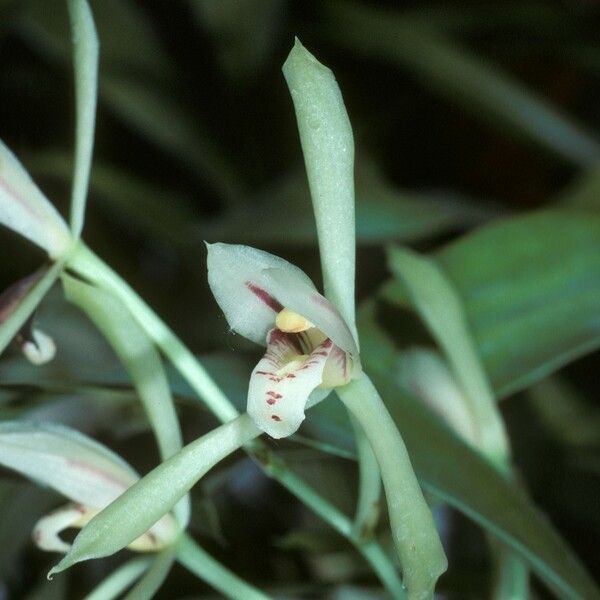
- 🌸 The Blooms: It produces upright flower spikes that carry small, star-shaped blossoms. These flowers are usually a creamy white or pale apple-green, featuring a striking "lip" (labellum) heavily speckled with deep maroon or purple "tiger" stripes.
- 🥔 The Base: If you look closely at the soil line, you will see small, spindle-shaped pseudobulbs. These fleshy stems act as water storage tanks, helping the plant survive during brief dry spells in the wild.
🏡 In Your Garden
- 🌱 Terrestrial Roots: Unlike many orchids that grow on trees (epiphytes), this species is terrestrial. It requires a "forest floor" potting mix—think chunky peat, leaf mold, and fine bark. It hates "heavy" garden soil, which can suffocate its thick, fleshy roots.
- 🌡️ The Cold Snap: This orchid is a "cool-grower." To trigger those beautiful spotted flowers, the plant often needs a distinct drop in temperature during the autumn nights. If kept in a room that stays the same temperature year-round, it may stubbornly refuse to bloom.
⚠️ Safety & Toxicity
- 🛡️ Safe Status: Cymbidium lancifolium is generally considered non-toxic and safe for home environments. It does not possess any known irritants or poisons.
- 🐾 Pet Friendly: This plant is non-toxic to cats and dogs. However, because orchids have sensitive root systems and unique potting media, it's best to keep it out of reach to prevent your pets from "digging" or snacking, which can lead to mild digestive upset.
✨ Fun Fact
In traditional Chinese culture, orchids like the Cymbidium lancifolium are known as one of the "Four Gentlemen," representing nobility and integrity. Because this specific orchid grows in the deep shade of valleys, it is often used as a poetic symbol for a scholar who remains virtuous even when no one is watching.

Detailed Care Instructions








