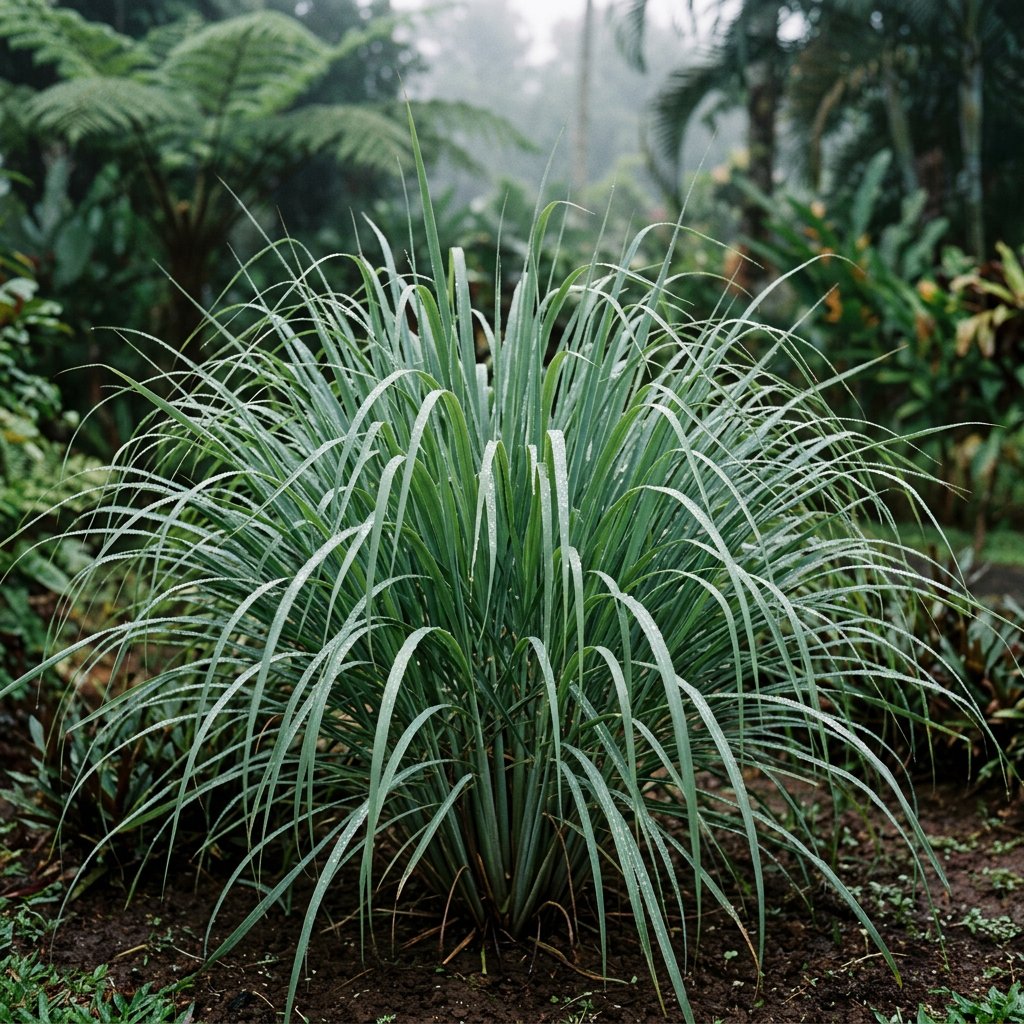
Plant Overview
Known commonly as Java Citronella, this aromatic powerhouse is the primary source of the world’s most famous natural mosquito repellent. Originally from Indonesia, it forms impressive, dense clumps of ribbon-like leaves that release a refreshing, lemony scent whenever they are brushed or crushed. It is a favorite for patio gardeners looking to reclaim their outdoor spaces from unwanted buzzing guests during the summer months.
🔍 How to Identify
- 🌾 Growth Habit: This is a perennial "bunchgrass" that grows in large, dense architectural clumps, often reaching up to 5 or 6 feet in height and width in ideal conditions.
- 🍃 The Foliage: The leaves are long, strap-shaped, and arching. They feature a distinct mid-rib and have a slightly rough, almost "saw-toothed" texture along the edges.
- 🎨 Stem Color: A key identifier is the base of the plant; the leaf sheaths on Java Citronella often display a striking reddish or purplish tint, which distinguishes it from its cousin, culinary Lemongrass.
🏡 In Your Garden
- ☀️ Sun & Space: Because it originates from the tropics, this grass craves intense sunlight and high humidity. It is a fast grower that needs plenty of "elbow room" to expand, so avoid crowding it with smaller, delicate perennials.
- 🌡️ Cold Sensitivity: This plant is strictly tropical and has no tolerance for frost. If you live in a temperate zone, you must treat it as an annual or grow it in a large, wheeled container that can be moved into a greenhouse or bright sunroom before the first freeze.
- ✂️ The "Why" of Pruning: Regular trimming isn't just for looks; cutting back the older outer leaves encourages the plant to produce fresh, oil-rich new growth, which is where the highest concentration of its insect-repelling scent lives.
⚠️ Safety & Toxicity
- 🐾 Toxic to Pets: Citronella grass is considered toxic to dogs, cats, and horses. If ingested, the essential oils can cause severe digestive upset, and in large quantities, it can lead to more serious neurological issues.
- 🧤 Skin Irritation: While the scent is pleasant to most, the concentrated oils in the leaves can cause mild skin irritation or "contact dermatitis" in sensitive individuals. It is wise to wear gloves when performing a heavy seasonal prune.
✨ Fun Fact
While it smells like a lemon, Cymbopogon winterianus is actually the "superior" citronella. It contains nearly double the amount of citronellal compared to the common "Ceylon" variety, making it the global gold standard for high-quality essential oils used in fine perfumes and bio-pesticides.

Detailed Care Instructions
Here are some steps to help you grow Cymbopogon winterianus, also known as lemongrass:
- Choose a suitable location: Lemongrass plants require at least six hours of direct sunlight per day. Select a spot in your garden that receives ample sunlight and has well-draining soil.
- Purchase lemongrass stalks: Buy fresh lemongrass stalks from a local market or grocery store. Choose stalks with healthy green tops and roots.
- Prepare the stalks: Trim off the tops of the lemongrass stalks, leaving about 6 inches of the bottom part with roots. Remove any dry or damaged leaves from the stem.
- Rooting the stalks: Place the trimmed stalks in a container filled with water. Place the container in a warm, sunny location. Change the water every few days. Within 1-2 weeks, the roots should start to grow.
- Planting in the ground: Once the roots are well established (about 2-3 inches long), prepare the planting area by loosening the soil and removing any weeds. Dig a hole slightly larger than the root ball of the lemongrass plant.
- Transplanting: Gently remove the lemongrass stalk from the water and carefully place it into the hole, making sure the roots are covered with soil. Space the plants about 2-3 feet apart.
- Watering: Water the lemongrass plant thoroughly immediately after planting. Afterward, water the plant regularly, ensuring the soil remains moist but not waterlogged.
- Fertilization: Apply a balanced organic fertilizer once a month during the growing season to promote healthy growth.
- Pruning: To encourage bushier growth, trim off any brown or withered leaves periodically. Harvesting the outer grass blades can also help in promoting new growth.
- Winter care: In colder climates, lemongrass is often grown as an annual or brought indoors during the winter. If you choose to overwinter your lemongrass plant indoors, place it in a pot and keep it in a sunny location. Reduce watering during this time, as the plant will be in a dormant state.
Following these steps should help you successfully grow Cymbopogon winterianus and enjoy the aromatic benefits of lemongrass in your garden.

Place in a bright room that is sun drenched almost all day. Or directly in a south-facing window.

When watering the plant, ensure that the soil is moist but not waterlogged. It is important to water the plant deeply once a week, rather than giving it small amounts of water every other day. Wait until the top inch of soil is dry before watering again. When watering, avoid getting water on the leaves and instead focus on watering the soil around the plant. Use room temperature water and avoid using hard water or water that has been treated with a water softener, as this can damage the plant. Additionally, if the plant is grown in a container, ensure that there are adequate drainage holes to avoid waterlogging the roots.
- Choose a balanced fertilizer with an N-P-K ratio of 10-10-10 or 12-12-12.
- Apply fertilizer once every two months during the growing season (spring and summer).
- Dilute the fertilizer in water according to the package instructions.
- Water the plant thoroughly before applying the fertilizer.
- Apply the diluted fertilizer solution around the base of the plant, avoiding getting any on the leaves.
- Use caution not to over-fertilize, as this can harm the plant. Follow the package instructions carefully.
For optimal growth, it is recommended to use well-draining soil that is rich in organic matter. The soil should have a pH level between 4.5 to 8.0. Sandy loam or loamy soil is ideal for this plant. It is important to ensure that the soil is moist but not waterlogged, as excess water can cause root rot. Adding perlite or vermiculite to the soil can help improve drainage and aeration. Furthermore, using a slow-release fertilizer can provide essential nutrients to the plant for healthy growth.
To propagate this plant, you would need to first identify a healthy mature plant from which to take the cuttings. Using a clean and sharp pair of scissors or garden shears, take a stem cutting of about 4-6 inches in length from the parent plant. Ensure that the cutting has at least one node, which is where the leaves emerge from the stem.
Next, remove the lower leaves from the cutting, leaving only a few small leaves at the top. This will help reduce water loss and encourage the production of new roots. Dip the cut end of the stem into a rooting hormone powder, and then plant it into a pot filled with well-draining potting soil. Water the cutting thoroughly and place it in a warm, bright location, but out of direct sunlight.
Keep the soil moist, but not waterlogged, by watering the cutting regularly, and misting it occasionally to increase humidity around the leaves. Within a few weeks, the cutting should begin to form new roots and start producing new growth.
Once the new growth has become established, you can transplant the young plant into a larger container or directly into the garden, taking care to avoid damaging the new roots. With proper care and maintenance, your new Cymbopogon Winterianus plant should continue to grow and produce fragrant leaves for years to come.








