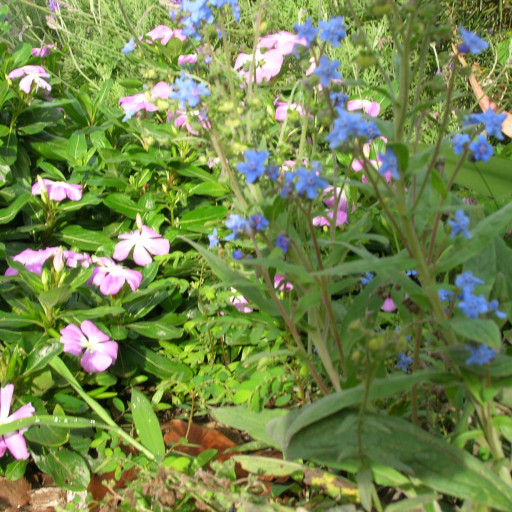
Plant Overview
Often called the Chinese Forget-Me-Not, this charming wildflower is a staple in cottage gardens for its ability to produce a "sea of blue." While it looks delicate, it is a hardy traveler originally hailing from the mountain slopes of Southwest China. It has earned a reputation as a reliable, low-maintenance beauty that fills the gaps in a garden with an intensity of color that few other plants can match.
🔍 How to Identify
- 🌸 Electric Blooms: Clusters of small, five-petaled flowers that are famous for their "true blue" pigment, though you may occasionally find soft pink or white varieties.
- 👅 "Hound’s Tongue" Foliage: Its leaves are long, lance-shaped, and covered in fine, soft hairs. This velvety texture is what gave the genus its name, Cynoglossum, which literally translates to "dog’s tongue."
- 🌱 Sturdy Stature: Unlike the low-creeping common Forget-Me-Not, this species grows upright, reaching between 18 and 24 inches in height with a branched, bushy habit.
🏡 In Your Garden
- 🦋 Pollinator Paradise: If you want to support local biodiversity, this plant is a must-have. It is a magnetic nectar source for honeybees, bumblebees, and various butterfly species.
- 🚜 Taproot Sensitivity: This plant develops a deep taproot quite quickly. Because of this, it "hates" being transplanted. For the best results, sow the seeds directly into the soil rather than starting them in pots.
- ♻️ The Self-Sowing Cycle: While technically a hardy annual or biennial, it acts like a perennial because it drops seeds so successfully. You’ll likely see new "volunteers" popping up every spring in the same spot.
⚠️ Safety & Toxicity
- 🐾 Toxic if Ingested: Cynoglossum amabile contains pyrrolizidine alkaloids. These compounds can cause liver distress if eaten in large quantities.
- 🧤 Pet & Skin Caution: Keep an eye on curious pets (especially dogs and horses) to ensure they don't graze on the foliage. Some gardeners with sensitive skin may also experience mild itching from the bristly hairs on the stems and leaves.
✨ Fun Fact
The seeds of the Chinese Forget-Me-Not are nature’s version of Velcro! Each tiny seed is covered in microscopic hooks called "glochidia," designed to hitch a ride on the fur of passing animals or the socks of hikers to find a new place to grow.

Detailed Care Instructions
| Humidity | Normal |
| Lighting | Full Sun |
| Difficulty | Medium |
| Hibernation | Cold Period |
| Temperature | Min 15°C |
| Hardiness Zones | 2 - 10 |
To grow Cynoglossum amabile, also known as Chinese Forget-Me-Not, follow these steps:
- Location: Find a sunny location in your garden that receives at least 6-8 hours of direct sunlight per day. Cynoglossum amabile prefers full sun but can tolerate partial shade.
- Soil: Prepare well-draining soil by adding organic matter like compost or well-rotted manure. The soil should be slightly acidic to neutral (pH 6-7).
- Seeds: Purchase Cynoglossum amabile seeds from a reputable source or collect them from mature plants. Sow the seeds directly into the ground after the last frost in spring or start them indoors 6-8 weeks before the last frost.
- Sowing: Prepare the soil by loosening it with a rake or hand fork. Sow the seeds superficially, just lightly covering them with a thin layer of soil or grit. Space each seed about 6-12 inches apart.
- Watering: Keep the soil consistently moist but not waterlogged, especially during the germination period. Water regularly, providing enough moisture for the plants to thrive.
- Mulching: Apply a thin layer of mulch, such as straw or wood chips, around the base of the plants. Mulch helps retain soil moisture, prevent weed growth, and regulate soil temperature.
- Maintenance: Keep the area weed-free and remove any competing plants. When the seedlings are about 2-3 inches tall, thin them out to maintain proper spacing between plants.
- Support: Cynoglossum amabile plants can become floppy as they grow. Providing support, such as using stakes or a trellis, can help keep them upright.
- Fertilization: Apply a slow-release balanced fertilizer once a month during the growing season to promote healthy growth and blooming.
- Deadheading: Remove faded flowers regularly to encourage more blooms and prolong flowering.
- Pest and disease control: Cynoglossum amabile is generally resistant to pests and diseases. However, watch out for slugs and snails, which may be attracted to the young plants. Pick them off by hand or use organic pest control methods if necessary.
- Harvesting seeds: If you wish to collect seeds for future planting, allow some flowers to mature fully and develop seed pods. Harvest the seed pods when they turn brown and start to split open. Remove the seeds from the pods and store them in a cool, dry place until you're ready to plant them.
By following these steps, you can successfully grow Cynoglossum amabile in your garden and enjoy its beautiful blue flowers throughout the growing season.

Place in a bright room that is sun drenched almost all day. Or directly in a south-facing window.

To water this plant, make sure to thoroughly soak the soil around its base, being careful not to get water on the leaves or flowers. Allow the soil to dry slightly between waterings, and avoid overwatering as this can cause root rot. Use lukewarm water and avoid using cold water, as sudden temperature changes can stress the plant. Consider using a watering can with a narrow spout to direct water precisely where needed. Make sure the container or planting area has good drainage to prevent water from accumulating and drowning the roots.
- Start by preparing a well-draining soil mix with organic matter.
- When planting, space them at least 10-12 inches apart to allow for proper root development.
- Use a balanced fertilizer with equal amounts of nitrogen, phosphorus, and potassium.
- Apply the fertilizer once a month during the growing season.
- Water the plants regularly and deeply, avoiding over-watering which can lead to root rot.
- Mulch around the base of the plant to retain moisture and suppress weeds.
- Remove any dead or yellowing leaves to promote healthy growth.
- Prune off spent flowers to encourage more blooms and prevent the plant from going to seed too quickly.
- Keep an eye out for pests and diseases, and treat accordingly if necessary.
- Enjoy the beautiful flowers produced by this wonderful plant.
The ideal soil for Cynoglossum Amabile plants should be well-drained and airy, with a slightly acidic to neutral pH level between 6.0 and 7.5. It should also be rich in organic matter and nutrients, such as compost or aged manure, to support healthy growth and blooming. The soil texture should be loamy or sandy, with a moderate moisture-retention capacity to prevent waterlogging and root rot. Additionally, the soil should be free from contaminants, such as pesticides or herbicides, that can harm the plant's health and viability.
Cynoglossum Amabile is a flowering plant species that can be propagated through several methods, including seed propagation, stem cutting, and root division. The most common method of propagation for this plant is through the use of seeds.
To propagate Cynoglossum Amabile from seeds, you should start by collecting mature seeds from an existing plant. You can do this by waiting until the flowers on the plant have withered and the seeds have ripened. Once the seeds are ready, carefully remove them from the plant and store them in a cool, dry location until you are ready to plant them.
To plant the seeds, prepare a planting medium using well-draining soil and compost. Moisten the soil slightly and then sprinkle the seeds on the surface, pressing them lightly into the soil. Cover the seeds with a thin layer of soil and water gently to settle the soil around the seeds.
The seeds of Cynoglossum Amabile typically germinate within two to three weeks, so you should see signs of growth soon after planting. Ensure that the soil remains slightly moist during the germination period, but be careful not to overwater the seeds, as this can lead to rotting.
Once the seedlings have developed several sets of leaves, you can transplant them into larger containers or directly into the ground. When transplanting, be sure to handle the fragile seedlings with care to avoid damaging their root systems. Provide the transplanted seedlings with water and sun as needed, and monitor their growth to ensure healthy development.
While seed propagation is the most common method of propagating Cynoglossum Amabile, the plant can also be propagated through stem cutting. This method requires taking a stem cutting from a healthy, established plant and placing it in a rooting hormone before planting it in soil and watering it in. The cutting will develop roots and grow into a new, healthy plant over time.








