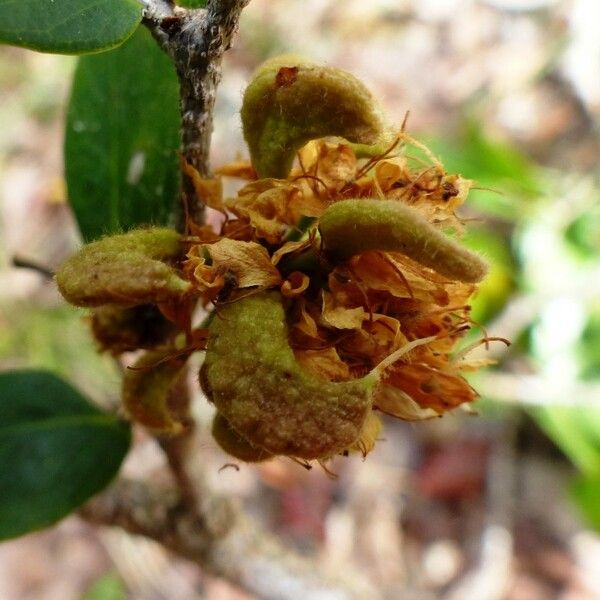
Plant Overview
Often referred to as the Shingle Tree or Balitbitan, Cynometra ramiflora is a botanical showstopper famous for its dramatic "handkerchief" leaves. Native to the coastal forests and riverbanks of Southeast Asia and the Pacific, this tree creates a stunning visual spectacle when new growth emerges, appearing as though dozens of silken white tassels have been draped over its branches. In folklore, these hanging pale leaves are often compared to ghosts or drying laundry caught in the canopy.
🔍 How to Identify
- 🍃 The "Handkerchief" Growth: The most striking feature is the new foliage. Young leaves emerge in limp, pendulous clusters that are almost pure white or pale pink, gradually turning dark green and leathery as they mature.
- 🌿 Asymmetrical Leaflets: If you look closely at a mature leaf, you’ll notice the leaflets are unequal at the base—one side is wider than the other—a classic "Cynometra" trait.
- 🥔 Wrinkled Pods: The fruit is a thick, woody, and brown pod with a rough, scurfy surface. It looks somewhat like a shriveled, oversized bean or a small piece of ginger.
🏡 In Your Garden
- 💧 A Thirst for Moisture: Because its natural habitat is near mangroves and rivers, this tree thrives in high humidity and damp soil. It is an excellent choice for "wet feet" areas of a garden where other trees might struggle with root rot.
- 🌊 Salt Tolerance: If you live near the coast, the Shingle Tree is a champion. It can withstand salty breezes and occasional brackish water, making it a rugged but beautiful choice for seaside landscaping.
- 🌳 Slow and Steady: It is a slow-growing species. While it won’t take over your yard overnight, it forms a dense, rounded crown that provides deep, cooling shade once established.
⚠️ Safety & Toxicity
- ✅ Generally Safe: Cynometra ramiflora is not known to be toxic to humans or common household pets like cats and dogs.
- 🧤 Garden Maintenance: While safe, the woody pods are quite hard and heavy when they fall; be mindful of where you plant it if you have walkways or parked cars nearby. As with any ornamental plant, the seeds inside the pods are not meant for consumption.
✨ Fun Fact
The genus name Cynometra comes from the Greek words for "dog" and "womb," a quirky reference to the shape of the seed pods, which early botanists thought resembled a dog’s uterus!

Detailed Care Instructions
To grow a Cynometra ramiflora plant, also known as the Namnam tree or dwarf cinnabar tree, follow these steps:
- Climate: Ensure that you live in a suitable climate for this plant. Cynometra ramiflora grows best in tropical and subtropical regions.
- Sunlight: Choose a planting location that receives full sun. This plant needs at least 6 hours of direct sunlight per day.
- Soil: The plant prefers well-draining soil. If your soil is heavy clay or compacted, consider improving it by adding organic matter such as compost or well-rotted manure.
- Watering: Regularly water the plant, especially during the growing season. Keep the soil moist, but not waterlogged. Reduce watering in winter when the plant goes into dormancy.
- Propagation: Cynometra ramiflora can be propagated through seeds or cuttings. Seeds should be soaked in water for 24 hours before planting. Cuttings should be taken from young shoots and placed in a well-draining potting mix.
- Planting: Dig a hole slightly larger than the pot or root ball of the plant. Place the plant in the hole, backfill with soil, and gently firm it around the roots. Water thoroughly after planting.
- Fertilizer: Use a slow-release or organic fertilizer during the growing season to provide nutrients. Follow the manufacturer's instructions for application rates.
- Pruning: Prune the plant to maintain its shape and remove any dead, damaged, or overgrown branches. Prune in early spring before new growth starts.
- Pests and diseases: Keep an eye out for any pests or diseases. Common pests include mealybugs and scale insects. Address any issues promptly and use appropriate treatments if necessary.
- Mulching: Apply a layer of organic mulch around the base of the plant to help retain moisture, suppress weeds, and moderate soil temperature.
Remember to be patient, as it may take some time for your Cynometra ramiflora plant to establish and start growing.

Place in a bright room that is sun drenched almost all day. Or directly in a south-facing window.

Watering this particular plant can be done by checking the moisture level of the soil around it regularly. It is best to water the plant thoroughly until the water runs out of the bottom of the pot. However, it is important to avoid overwatering as it can lead to root rot. It is recommended to water the plant once or twice a week depending on the humidity level and temperature of the surrounding environment. It is also important to ensure that the water is not stagnant and does not accumulate around the base of the plant as it can attract insects and pests.
To properly fertilize this plant, it is recommended to use a balanced fertilizer with equal amounts of nitrogen, phosphorus, and potassium. Fertilize once a month during the growing season, which is spring and summer. To avoid burning the plant's roots, dilute the fertilizer by half with water before applying. Also, ensure that the soil is moist before applying fertilizer. Avoid fertilizing during the winter months when the plant typically goes dormant.
For optimal growth of the Cynometra Ramiflora plant, it is recommended to use a well-draining soil mix that is rich in organic matter. The soil should have a pH level between 5.5 to 7.5. A mix of sand, loam, and organic compost can be used in equal proportions to make the ideal soil mix for this plant. The soil should be deep enough to accommodate the plant's root system. The soil should also retain moisture without becoming waterlogged. Additionally, it is important to ensure that the soil is free from any contaminants or pollutants that may harm the plant's growth.
To propagate this plant, first obtain healthy stem cuttings from a mature plant. Cut the stems at a 45-degree angle, making sure to include at least two nodes on each cutting. Remove any leaves from the bottom node, leaving only a few leaves on the top node. Dip the cut end of each cutting into rooting hormone powder to improve its chances of rooting.
Prepare a rooting medium by mixing equal parts peat moss and perlite or vermiculite. Moisten the mixture and pack it firmly into a small container such as a pot or tray with drainage holes. Make holes in the rooting medium with a pencil or similar object that is wider than the stem cutting.
Insert the stem cuttings into the holes and gently press the rooting medium around them. Water the container and cover it with a clear plastic bag to create a humidity tent. Place the container in indirect sunlight or under fluorescent lights, maintaining a temperature of 70-75°F (21-24°C) and high humidity.
Check the cuttings every few days for signs of growth or disease. If the rooting medium begins to dry out, mist it with water or add water to the tray. After about six weeks, gently pull on the stem cutting to feel for roots. If the cutting resists, it has likely rooted and can be transplanted into its own pot using a well-draining soil mix.








