Plant Overview
Often called the Broadleaf Umbrella Sedge or Dwarf Umbrella Papyrus, this charming South African native looks like a collection of miniature palm trees captured in a single pot. It is a favorite among indoor gardeners for its "Jungle Look" and its ability to thrive in those tricky, damp corners where other plants might rot. While its relatives were used to make ancient Egyptian paper, this smaller cousin is content simply being the star of your terrarium or pond edge.
🔍 How to Identify
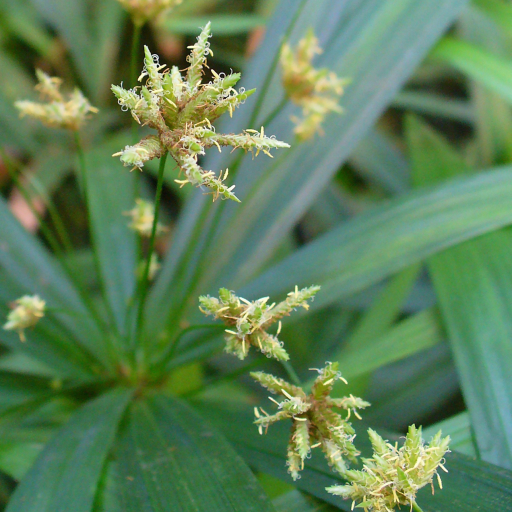
- 🌿 Leaf Arrangement: The vibrant green leaves radiate from the top of the stems in a perfect circle, mimicking the ribs of an open umbrella.
- 📐 Triangular Stems: True to the "Sedges have edges" rule, if you roll the stem between your fingers, you’ll feel its distinct three-sided, triangular shape.
- 🌼 Central Flowers: In the very center of the "umbrella," it produces small, starburst-like clusters of pale green to brownish spikelets that add a delicate texture.
🏡 In Your Garden
- 💧 Thirsty Roots: Unlike most houseplants that fear "wet feet," this sedge thrives in boggy conditions. It is nearly impossible to overwater, making it a perfect choice for beginners who tend to be a bit heavy-handed with the watering can.
- 🌤️ Dappled Light: While it loves a tropical feel, it prefers filtered light. In the wild, it grows on forest floors or near stream banks, so keep it away from harsh, direct afternoon sun which can bleach its lush green foliage.
- 🪴 Container Control: It spreads via underground rhizomes. In a garden bed, it can become quite enthusiastic; keeping it in a pot or a lined water feature helps manage its spread.
⚠️ Safety & Toxicity
- 🐾 Pet Friendly: Good news for animal lovers! Cyperus albostriatus is generally considered non-toxic to cats and dogs.
- ✂️ Mechanical Irritation: While not chemically toxic, the leaves have slightly rough, "saw-toothed" edges. If a pet (especially a cat) decides to chew on it, the physical texture might cause a mild upset stomach or small "paper cuts" on the tongue.
✨ Fun Fact
This plant has a "magic trick" for propagation. If you cut off one of the leafy "umbrellas" (with a bit of stem), trim the leaves halfway, and place it upside down in a glass of water, it will sprout new roots and stems from the center of the old leaves!

Detailed Care Instructions
To grow Cyperus Albostriatus, also known as Variegated Umbrella Sedge, you can follow these steps:
- Light requirements: Place the plant in a location that receives bright, indirect light. Avoid exposing it to direct sunlight, as it can scorch the leaves.
- Temperature: Cyperus Albostriatus thrives in temperatures between 65°F to 75°F (18°C to 24°C). Make sure to keep it in a room with a consistent temperature.
- Watering: Keep the soil evenly moist but not soggy. Water the plant whenever the top inch of the soil feels dry. However, avoid overwatering as it can lead to root rot. Use a well-draining potting mix.
- Humidity: This plant prefers high humidity levels. You can increase humidity by placing the pot on a tray filled with water and pebbles or using a humidifier.
- Fertilizer: Feed the plant with a balanced liquid fertilizer every month during the growing season (spring and summer). Follow the instructions on the fertilizer package for proper dilution and application.
- Pruning: Trim any yellow or brown leaves regularly to maintain the plant's appearance and overall health. You can also trim back any overgrown or leggy stems to encourage bushier growth.
- Repotting: As the plant grows, you may need to repot it every 1-2 years to provide it with fresh soil and space for root expansion. Choose a pot that is slightly larger than the current one, and repot during the spring.
- Propagation: Cyperus Albostriatus can be propagated through division. To do this, carefully separate the plant into smaller sections, making sure each division has roots attached. Plant these divisions in separate pots, keeping the soil moist until new growth emerges.
By following these guidelines, you should be able to successfully grow Cyperus Albostriatus. Remember to monitor the plant for any signs of pests or diseases and take appropriate measures if needed.

Place in a dark room with little light, like a dark bedroom or a spot far away from a window or directly in a north-facing window.

To water this plant, it is important to soak the soil thoroughly until water drains out from the bottom of the pot. After watering, allow the top inch of soil to dry out before watering again. This plant prefers consistently moist soil, but avoid overwatering as this can lead to root rot. It is also beneficial to mist the leaves regularly to increase humidity and prevent leaf tips from drying out. Finally, use room temperature water, and if possible, collect rainwater or allow tap water to sit out for a few hours to avoid shocking the plant with cold or chlorinated water.
- Choose a well-draining pot or garden bed for your plant.
- Mix a balanced fertilizer with equal parts of nitrogen, phosphorus, and potassium.
- Follow the fertilizer package instructions for how much to use based on the size of your pot or garden bed.
- Apply the fertilizer evenly around the plant or in the soil, taking care not to get it on the leaves.
- Water the plant thoroughly to help the fertilizer reach the roots.
- Repeat this fertilizing process every two to three months during the growing season.
Note: Cyperus Albostriatus plant (also known as Umbrella Plant or Dwarf Papyrus) requires adequate light, water, and humidity to thrive. Make sure to keep the soil moist but not waterlogged, and provide some shade during the hottest parts of the day.
The ideal soil for growing this plant should have good drainage and be rich in organic matter. It should have a slightly acidic to neutral pH level of 6.0 to 7.0. A combination of peat moss, sand, and perlite can be used to create a well-draining soil mix. The plant also prefers to be kept moist, but not waterlogged. Adding a slow-release fertilizer to the soil mix can provide the necessary nutrients for healthy growth. It is important to avoid using heavy, clay soils that can retain too much moisture and lead to root rot.
To propagate this plant, you will need to carefully separate the smaller plantlets that grow around the base of the adult plant. Use a sharp, clean knife or pruning shears to gently cut these plantlets away from the main plant, making sure to leave a small section of the root system attached.
Once you have separated the plantlets, you can either plant them directly in soil or propagate them in water until they develop a new root system. If you choose to propagate them in water, place the plantlets in a jar or vase filled with clean water and change the water frequently to prevent bacterial growth.
After a few weeks, you should see new roots developing on the plantlets. Once the roots are a few inches long, you can transplant the plantlets into pots filled with a well-draining soil mix. Keep the new plants in a warm, bright location and water them regularly until they are established.
As the plants grow, they may need to be repotted into larger containers to accommodate their expanding root systems. With proper care, your new Cyperus Albostriatus plants should thrive and grow into mature, healthy specimens.








