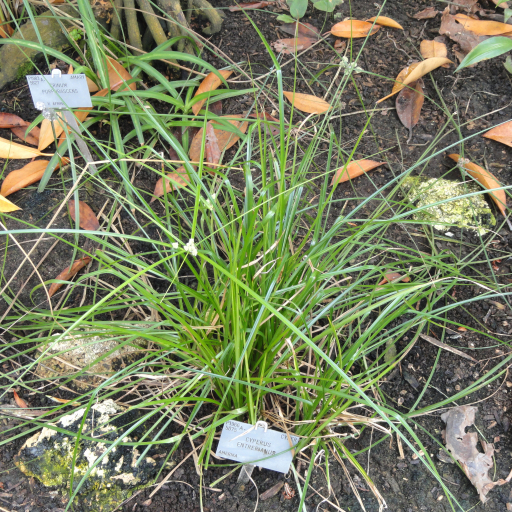
Plant Overview
Known as the Deeprooted Sedge, Cyperus entrerianus is a master of the wetlands. Originally hailing from the marshlands of South America, this robust perennial has earned a reputation as a formidable colonizer. It is often admired for its lush, architectural greenery, though it is frequently viewed as a stubborn invader in gardens and pastures due to its incredible resilience.
🔍 How to Identify
- 📐 Triangular Stems: Following the old botanical rhyme "sedges have edges," this plant features a distinctly three-sided, solid stem that feels sharp and sturdy to the touch.
- ☁️ Cloud-like Clusters: The flower heads appear as dense, globose (roundish) clusters of spikelets. They start a pale greenish-white and transition to a dusty tan or cocoa brown as they mature.
- 🌿 Deeply Grooved Leaves: The leaves are bright, glossy green and feature a prominent "V" or "U" shaped groove running down the center, which helps funnel rainwater directly toward the roots.
🏡 In Your Garden
- 💧 The Water Magnet: This sedge is almost always found in "feet-wet" conditions. If it pops up in your yard, it is a living indicator of a low spot with poor drainage or a high water table.
- ⛏️ A Tenacious Tenant: As its name suggests, the root system is incredibly deep and fibrous. If you try to pull it up by hand, the leaves often snap off while the woody base remains, allowing the plant to regenerate almost instantly.
- 🌾 Competitive Nature: In a garden setting, it can quickly out-compete ornamental grasses. It spreads through both a creeping root system (rhizomes) and a massive amount of wind-dispersed seeds.
⚠️ Safety & Toxicity
- ✅ Low Risk: Cyperus entrerianus is generally considered non-toxic to humans, cats, and dogs.
- ✂️ Physical Irritant: While not chemically toxic, the leaf blades are quite stiff and have microscopic serrations. Handling the plant without gloves can sometimes lead to minor "grass cuts" or skin irritation.
✨ Fun Fact
A single, healthy Deeprooted Sedge plant is a seed factory, capable of producing up to one million seeds in a single growing season! This helps explain why it can transform a small puddle into a massive colony in just a few years.

Detailed Care Instructions
To grow Cyperus entrerianus, also known as Umbrella Palm or Umbrella Sedge, you can follow these steps:
- Obtaining seeds or plant: You can purchase seeds or a young plant from a nursery or online store. Alternatively, if you have access to a mature plant, you can propagate it by dividing the rhizomes.
- Pot selection: Choose a pot that is at least 8-10 inches deep with drainage holes to facilitate proper water drainage. The plant prefers slightly acidic soil.
- Soil preparation: Fill the pot with a well-draining potting mix, such as a mixture of peat moss, perlite, and sand. A soil mix rich in organic matter is beneficial for the plant's growth.
- Planting: If planting from seeds, sow them on the soil surface and lightly press them down. If using a young plant, bury its roots about an inch below the soil surface.
- Watering: Keep the soil evenly moist, but not waterlogged. Umbrella Palm prefers growing in moist conditions, so it's important to provide enough water. Water the plant when the top inch of soil feels dry. However, avoid overwatering, as this can lead to root rot.
- Light requirements: Place the pot in a spot with bright, indirect sunlight. Umbrella Palm thrives in a warm environment with temperatures ranging from 60-80°F (15-27°C).
- Humidity: These plants appreciate high humidity levels. You can increase humidity by placing the pot on a tray filled with water and pebbles or misting the leaves regularly.
- Fertilization: During the growing season (spring to summer), feed the plant with a balanced liquid fertilizer once a month. Dilute the fertilizer to half the recommended strength mentioned on the label.
- Growth and maintenance: The plant will produce long, grass-like leaves from the base, which will grow vertically and form an umbrella-like shape. Trim any yellow or damaged leaves as needed to keep the plant looking healthy.
- Repotting: As the plant grows, you may need to repot it into a larger container every 2-3 years. This will give the roots more space to grow.
With proper care, Cyperus entrerianus can grow into an attractive and lush indoor plant, bringing a touch of greenery to your home or office.

Place in a bright room that is sun drenched almost all day. Or directly in a south-facing window.

Cyperus entrerianus is a plant that thrives in moist conditions and requires regular watering to ensure its well-being. Here are some detailed instructions on how to water this plant effectively:
1. Assess the moisture level: Before watering, check the moisture level of the soil by inserting your finger about an inch deep into the soil. If it feels dry, it's time to water your Cyperus entrerianus.
2. Choose the right water source: Ideally, use room temperature, filtered water or rainwater to keep the plant healthy. Avoid using water that contains high levels of chlorine or other chemicals, as it can harm the plant.
3. Watering technique: In order to ensure that the water reaches the plant's roots effectively, use the technique called "bottom watering." Fill a tray or saucer with water and place the plant pot on top of it. Allow the water to be absorbed by the plant through the drainage holes in the pot's bottom. This promotes the plant's root development and avoids the risk of overwatering.
4. Water frequency: Cyperus entrerianus plants appreciate consistently moist soil, but be cautious not to overwater. Water the plant once the top inch of soil has dried out. The frequency of watering may vary depending on factors such as the surrounding temperature and humidity levels.
5. Ensure proper drainage: It's crucial to have adequate drainage in the plant's pot to prevent waterlogging. Make sure that the pot has drainage holes at the bottom to allow excess water to escape. This helps prevent root rot and related issues.
6. Mist the foliage: In addition to bottom watering, another recommended way to provide moisture to the Cyperus entrerianus plant is by misting the foliage. This mimics the plant's natural habitat, as it primarily grows in swampy and wet environments. Use a spray bottle to gently mist the leaves, particularly during dry periods or when the air is dry indoors.
7. Observe for signs of watering needs: Regularly monitor the plant for signs of thirst, such as drooping leaves or yellowing. Adjust your watering frequency accordingly but remember to strike a balance to avoid overwatering or underwatering.
By following these guidelines, you can provide appropriate and effective watering care for your Cyperus entrerianus plant, supporting its growth and overall health.
To fertilize Cyperus Entrerianus, use a balanced, water-soluble fertilizer that has equal parts of nitrogen (N), phosphorus (P), and potassium (K). Dilute the fertilizer according to the package instructions or mix it at a ratio of 1 tablespoon of fertilizer per gallon of water.
Apply the fertilizer to the plant's soil once every two to four weeks during the growing season, which is typically spring and summer. Ensure that the soil is damp before application to prevent any damage to the plant's roots.
Avoid over-fertilizing, as it can lead to burns or damage the plant. Always water the plant after fertilizing to distribute the nutrients evenly and prevent any potential fertilizer burn. Additionally, regularly check the plant for signs of nutrient deficiency or excess, such as yellowing or wilting leaves, and adjust the fertilization accordingly.
Cyperus Entrerianus plants typically thrive in well-draining soil that has a moderate to high organic content. The ideal soil for this plant is one that retains moisture well without becoming waterlogged or overly compacted. It is important to ensure that the soil is not heavy or clayey, as this can lead to poor drainage and root rot.
A recommended soil mixture for Cyperus Entrerianus may include a combination of garden soil, peat moss, and perlite or coarse sand. The garden soil provides essential nutrients and stability, while peat moss helps to retain moisture and improve the texture of the soil. The perlite or coarse sand aids in drainage and prevents waterlogging.
Maintaining the soil pH within the slightly acidic to slightly alkaline range (pH 6.0-7.5) is beneficial for Cyperus Entrerianus plants. Regularly testing the soil's pH using a commercial testing kit can help ensure that the plant is receiving an optimal nutrient uptake.
Overall, creating a well-draining soil mixture with adequate moisture retention and proper pH levels will provide an ideal growing environment for Cyperus Entrerianus plants, ensuring they thrive and flourish.
Cyperus entrerianus is a plant that can be propagated through various methods, including division, seeds, and cuttings. Here's a detailed explanation of each propagation technique:
- Division:
To propagate Cyperus entrerianus through division, first, identify a mature and healthy plant. Start by gently removing the plant from its container or digging it up from the garden. Then, carefully separate the clumps of roots into individual sections, ensuring that each section has sufficient roots and foliage. Trim any damaged or tattered foliage to reduce stress on the plant. Next, prepare a separate container with well-draining soil or select a new planting spot in the garden. Dig a hole wide enough to accommodate the roots and gently place the divided section in the hole, ensuring the roots are adequately covered with soil. Firmly press the soil around the plant and water thoroughly. Place the newly propagated Cyperus entrerianus in a location with appropriate sunlight and moisture levels, and ensure it receives regular care and maintenance.
- Seeds:
Propagating Cyperus entrerianus from seeds is another viable option. Start by obtaining fresh seeds from a reliable source. Fill a small container or seedling tray with well-draining soil or a seed starting mix. Sow the seeds evenly across the surface of the soil and gently press them down to ensure proper contact with the soil. Avoid burying the seeds too deep. Mist the soil surface with water until it is evenly moist. Cover the container with a plastic dome or place it in a plastic bag to create a greenhouse-like environment, retaining warmth and moisture. Place the container in a well-lit area but away from direct sunlight. Maintain consistent moisture levels by misting the soil whenever it starts to dry out. Germination typically occurs within 2-4 weeks. Once the seedlings have developed a few sets of leaves, they can be transplanted into individual pots or planted directly into the garden. Ensure proper care, including watering, fertilizing, and protecting from extreme weather conditions, to promote healthy growth.
- Cuttings:
Cyperus entrerianus can also be propagated from stem cuttings. Start by selecting a healthy plant with robust stems. Using a sterilized cutting tool, take a cutting from the parent plant, making sure it is about 4-6 inches long. Remove any leaves from the lower half of the cutting. Fill a small container with well-draining soil or a mix of soil and perlite. Create a hole in the soil using a dibber or pencil and gently insert the cutting into the hole. Firmly press the soil around the cutting to secure it. Water the soil thoroughly and place the container in a well-lit area, avoiding direct sunlight. Maintain consistent moisture levels by misting the cutting whenever the soil starts to dry out. Within a few weeks, roots should start to develop. Once the roots are well-established, the rooted cutting can be transplanted into a larger container or planted in the garden, providing it with appropriate care to ensure successful growth and development.








