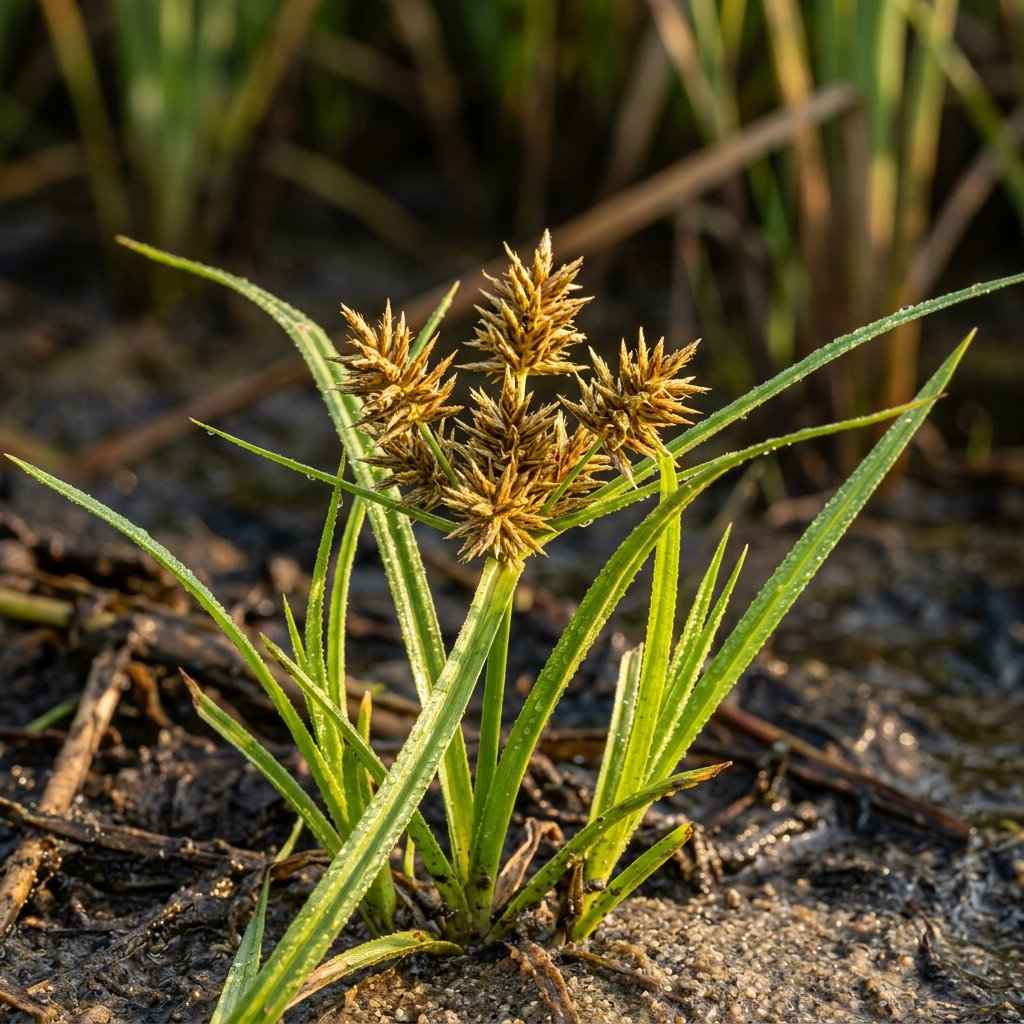
Plant Overview
Known as the "Tiger Nut" to foodies and "Yellow Nutsedge" to frustrated gardeners, Cyperus esculentus is a plant of dual identities. While many battle it as a persistent weed in their lawns, it has been cultivated for millennia for its delicious, marble-sized underground tubers. In Spain, these "nuts" are the star ingredient in the creamy, refreshing drink known as Horchata de Chufa.
🔍 How to Identify
- 📐 The Triangular Stem: Like all true sedges, it follows the rule "sedges have edges." If you roll the stem between your fingers, you will feel a distinct three-sided, triangular shape.
- 🌿 Waxy Foliage: The leaves are thick, stiff, and V-shaped in cross-section. They have a shiny, yellowish-green tint that often stands out against the darker green of regular lawn grass.
- 🌾 Golden Seed Heads: In mid-to-late summer, the plant produces spiked flower clusters that look like golden-brown umbrellas sitting atop a long stalk.
🏡 In Your Garden
- 💧 Moisture Seeker: This plant is a biological indicator of "wet feet." It thrives in poorly drained soil or areas where water tends to collect after a storm.
- 🚀 The "Nut" Problem: The reason it is so hard to eradicate is its network of underground rhizomes and tubers (the nuts). If you pull the plant but leave the tuber behind, a new shoot will emerge almost immediately.
- ☀️ Sun Lover: While it can tolerate some shade, it reaches its full, aggressive height in bright, direct sunlight, often outgrowing surrounding grasses.
⚠️ Safety & Toxicity
- ✅ Safe & Edible: The tubers are entirely safe for human consumption and are packed with fiber, iron, and healthy fats. They taste like a cross between an almond and a coconut.
- 🐾 Pet Friendly: There is no known toxicity for cats or dogs. However, like any fibrous plant, if a pet decides to snack on the tough leaves, it might cause mild stomach upset or vomiting.
✨ Fun Fact
Cyperus esculentus is one of the oldest cultivated plants in human history. Archaeologists have discovered dried tiger nuts in Egyptian sarcophagi dating back 6,000 years, as they were so highly prized that the deceased wanted to take them into the afterlife!

Detailed Care Instructions
| Humidity | Dry |
| Lighting | Full Sun |
| Difficulty | Medium |
| Hibernation | Cold Period |
| Hardiness Zones | 8 - 10 |
To grow Cyperus esculentus, also known as tiger nuts or chufa, you can follow these steps:
- Choose a suitable location: Tiger nuts prefer moist soil, so choose a location with well-draining soil that can retain some moisture. It can be grown both in containers or in garden beds.
- Obtain tiger nut tubers: Purchase tiger nut tubers from a reputable supplier or find them from a garden center. Tubers are the edible parts that you plant to grow the plant.
- Planting: Plant the tubers about 3-4 inches deep in the ground or in containers. Ensure that the pointed end faces upwards when planting. Space the tubers about 8-12 inches apart to allow for proper growth.
- Watering: Water the plant regularly to keep the soil moist. Avoid overwatering, as it may cause the tubers to rot. Once established, tiger nuts are tolerant of drought conditions.
- Sunlight: Cyperus esculentus plants thrive in full sun or partial shade. Ensure that they receive at least 6-8 hours of sunlight a day.
- Fertilizing: Fertilize the plants with a balanced organic fertilizer during the growing season, following the instructions on the product packaging. This will help promote healthy growth and tuber development.
- Weed control: Keep the area around the plants free of weeds as they can compete for nutrients and water. Mulching can help suppress weed growth.
- Harvesting: Tiger nuts are ready to harvest when the leaves start turning yellow, usually after 6-9 months. To harvest, dig up the tubers carefully using a garden fork or shovel. Clean off the soil and allow the tubers to dry in a well-ventilated area for a few weeks.
- Storage: Once dry, store the tiger nuts in a cool, dry place in a breathable container. They can be used in various culinary applications or planted as seed for the next growing season.
Remember to check for any specific regional cultivation practices or climatic requirements, as they may vary depending on your location.

Place in a bright room that is sun drenched almost all day. Or directly in a south-facing window.

To water this plant, the soil must be kept constantly moist but not waterlogged. It is best to water deeply so that the water reaches the roots, and then allow the soil to dry out somewhat before watering again. It is important to ensure that the plant is not sitting in standing water, as this can lead to root rot. The frequency of watering will depend on factors such as the temperature, humidity, and size of the plant, so it is important to monitor the soil frequently to determine when it needs more water.
To fertilize this plant, begin by selecting a water-soluble fertilizer that is high in nitrogen and phosphorus. Mix the fertilizer according to the package instructions, and apply it to the soil once per month during the growing season. Be careful not to over-fertilize, as this plant is sensitive to excessive amounts of nutrients. Additionally, it is important to water the plant regularly and maintain consistent soil moisture levels to support healthy growth.
The ideal type of soil to use for growing Cyperus Esculentus is a well-draining loam soil with a pH level of 5.5-7.5. The soil should be rich in organic matter, such as compost or humus, and should be kept moist at all times. It is important to avoid compacted soil, which can prevent the roots from growing properly, and to ensure that there is sufficient air circulation around the plant. The soil should also be free of any contaminants or pollutants that may negatively affect the health of the plant.
To propagate this plant, first, locate mature plants that have produced rhizomes. These rhizomes should be dug up carefully and separated into sections, making sure each section has at least one sprout or shoot.
Next, prepare a well-draining potting mix consisting of a combination of soil, sand, and compost. Then, plant the separated sections of rhizomes into the potting mix, making sure the sprouts are facing upwards and covered with soil.
Water the newly planted rhizomes regularly, keeping the soil moist but not overly wet. Within a few weeks, new shoots should emerge from the soil, indicating successful propagation.
As the plants grow, be sure to keep them in a warm and sunny location, and continue to water regularly. Once established, they can be fertilized with a balanced fertilizer to encourage healthy growth and productivity.








