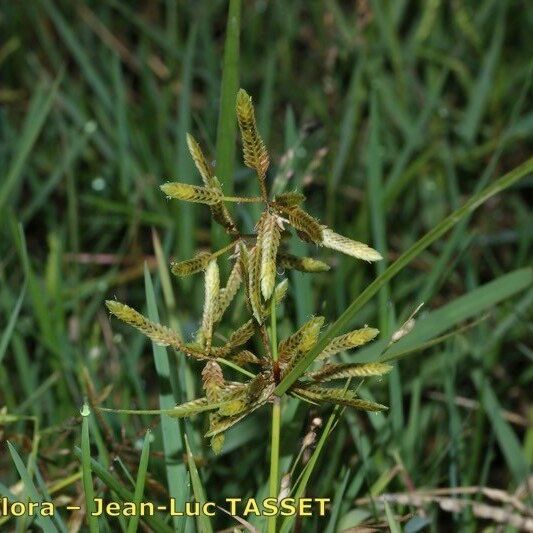
Plant Overview
Often called the Yellow Flatsedge, this delicate member of the sedge family is a moisture-loving gem frequently found hugging the edges of ponds or damp meadows. Its golden-hued flower clusters catch the sunlight beautifully, making it a favorite for naturalistic rain gardens. While it might look like a simple grass at first glance, its sturdy, triangular stems and "golden" personality set it apart.
🔍 How to Identify
- 📐 The "Sedge" Edge: True to the botanical rhyme "Sedges have edges," its stems are distinctly triangular in cross-section. If you roll the stem between your fingers, you’ll feel three distinct corners.
- 🌼 Golden Spikelets: It produces branched clusters of tiny, flattened spikelets. These start as a pale green but mature into a warm, yellowish-tan or golden hue, giving the plant its name.
- 🍃 Tufted Habit: The plant grows in neat, dense clumps (tussocks) with long, slender leaves that radiate from the base, often looking like a miniature green fountain.
🏡 In Your Garden
- 💧 Thirst for Moisture: This isn't a plant for a dry rockery; it thrives in "wet feet" conditions. It is an ideal candidate for the boggy margins of a backyard pond or that low-lying spot in your yard that stays damp after rain.
- ☀️ Light & Soil: While it can tolerate partial shade, it produces its most vibrant yellow flower heads when it basks in full sun. It prefers sandy or muddy substrates that mimic its natural riverbank habitat.
- 🌱 Natural Filter: In a water garden, this sedge acts as a natural bio-filter, helping to absorb excess nutrients from the water and providing a hiding spot for small amphibians.
⚠️ Safety & Toxicity
- ✅ Safe Status: Cyperus flavidus is generally considered non-toxic to humans, dogs, and cats. It is a safe choice for families with curious pets.
- 🔪 Physical Caution: Be mindful of the leaf edges. Like many sedges, the blades can be slightly sharp and may cause minor skin irritation or "paper cuts" if you run your hand quickly along the foliage.
✨ Fun Fact
The Cyperus genus includes the famous Cyperus papyrus, the plant used by ancient Egyptians to create the world's first paper! While the Yellow Flatsedge is much smaller and grows in many parts of the world, it is a close cousin to the plant that helped record human history.

Detailed Care Instructions

Place in a bright room that is sun drenched almost all day. Or directly in a south-facing window.

Some plants require more regular watering than others, which should be done every few days. It's critical to maintain the soil moist all of the time. The water requirements of the same plant placed in pots with varying sizes will differ. Because the water in the smaller pot evaporates faster than the water in the larger pot, it will require more watering. Regardless of pot size, the surface should constantly be maintained moist.








