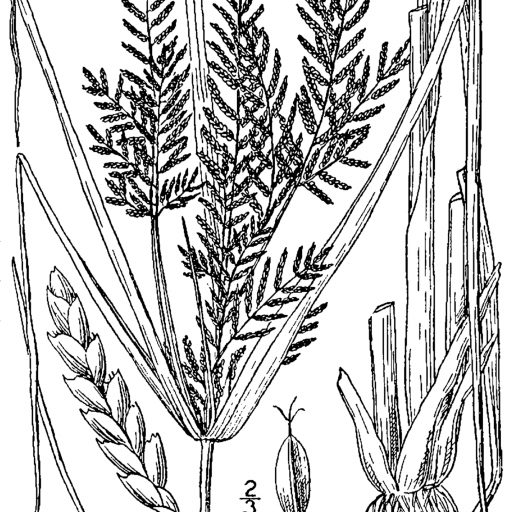
Plant Overview
Often called the Rice Flatsedge, Cyperus iria is a slender, golden-green traveler that has hitched rides across the globe from its native Asian wetlands. To some, it’s a stubborn weed that competes with rice crops, but to the keen observer, its architectural, umbrella-like structure makes it a fascinating example of botanical geometry. It is a master of moisture, signaling the presence of hidden water or poorly drained soil wherever it pops up.
🔍 How to Identify
- 📐 Triangular Stems: Like most sedges, if you roll the stem between your fingers, you’ll feel three distinct, sharp edges—remember the classic botanist's rhyme: "Sedges have edges!"
- 🌼 Golden Seed Heads: The flowers appear as flattened, yellowish-green clusters (spikelets) that look like tiny, overlapping scales or feathers radiating from the center.
- 🌂 Umbrella Canopy: At the very top of the stem, three to seven long leafy "bracts" fan out horizontally, framing the flower clusters like the ribs of an umbrella.
🏡 In Your Garden
- 💧 The "Wet Feet" Indicator: If you find this plant thriving in your yard, it is a clear sign of high moisture or compacted soil. It loves boggy conditions where most ornamental plants would suffer from root rot.
- 🌱 A Prolific Self-Seeder: This plant is an annual that puts all its energy into reproduction. A single plant can produce thousands of seeds, meaning it can quickly colonize a damp flower bed or pond edge if left unchecked.
- 🌾 Submerged Management: If you appreciate its structural look but fear its spread, it is best kept in a container or a submerged pot. This allows you to enjoy the "mini-papyrus" aesthetic without it taking over your entire lawn.
⚠️ Safety & Toxicity
- ✅ Non-Toxic Status: Cyperus iria is not known to be poisonous to humans, cats, or dogs. It is generally safe to have around the home.
- ✂️ Physical Caution: While not chemically toxic, the leaves and stems are fibrous and can have slightly rough edges. Small children or pets who try to chew on the tough leaves might experience mild mouth irritation or an upset stomach from the fiber.
✨ Fun Fact
In many cultures, this "weed" is actually a traditional resource! In India and parts of Southeast Asia, it has been used in folk medicine to treat fevers, and its tough fibers are sometimes woven into simple mats or used as emergency fodder for cattle when grass is scarce.

Detailed Care Instructions
To grow Cyperus Iria, commonly known as umbrella sedge or umbrella palm, follow these steps:
- Choose the right conditions: Cyperus Iria thrives in warm, tropical or subtropical climates. It requires full to partial sunlight and grows well in moist, well-draining soil. It can also tolerate wet conditions, making it suitable for growing in ponds or water gardens.
- Acquire seeds or mature plants: You can start growing Cyperus Iria from seeds or purchase mature plants from a local nursery. Seeds can be obtained from online retailers or harvested from mature plants.
- Preparing the soil: If growing in containers, use a well-draining potting mix or a mixture of equal parts soil, sand, and peat moss. If planting in the ground, ensure the soil is well-drained and amend it with organic matter to improve fertility.
- Planting seeds or transplants:
- Seeds: Sow the seeds in a seed tray or directly in a pot or garden bed. Cover the seeds with a thin layer of soil or vermiculite, as they require light to germinate. Keep the soil moist until germination, which typically takes 7-21 days.
- Transplants: Dig a small hole slightly larger than the root ball of the plant. Place the plant in the hole, ensuring the crown is at or slightly above the soil level. Backfill the hole and gently firm the soil around the roots.
- Seeds: Sow the seeds in a seed tray or directly in a pot or garden bed. Cover the seeds with a thin layer of soil or vermiculite, as they require light to germinate. Keep the soil moist until germination, which typically takes 7-21 days.
- Watering: Keep the soil consistently moist, but avoid overwatering, as it may cause root rot. Ensure proper drainage so that the roots do not sit in waterlogged soil.
- Fertilization: Apply a balanced, slow-release fertilizer to the soil during the growing season to promote healthy growth. Follow the package instructions for the appropriate dosage.
- Pruning: Remove any yellow or dead leaves as needed. Trim back the plant if it becomes overgrown or crowded.
- Pests and diseases: Cyperus Iria is generally resistant to pests and diseases. However, keep an eye out for common issues like aphids, spider mites, or fungus gnats. Use organic or chemical pest control methods if necessary.
- Propagation: Cyperus Iria can be propagated through division. Lift the plant from the soil and carefully separate the clumps into smaller sections, ensuring each division has a healthy root system. Replant the divisions in suitable soil or pots.
- Overwintering: In colder climates, you may need to bring the plant indoors during winter or protect it with a frost blanket to prevent damage from freezing temperatures.
By following these steps, you can successfully grow Cyperus Iria and enjoy its attractive foliage in your garden or water feature.

Place in a bright room that is sun drenched almost all day. Or directly in a south-facing window.

Cyperus iria is a type of plant that requires frequent watering to thrive. When watering this plant, it is important to avoid overwatering, as it can lead to root rot and other issues. The best way to water Cyperus iria is to ensure that the soil is always slightly moist, but not saturated.
To achieve this, you should water the plant every few days, depending on the humidity levels and the amount of light that it receives. Use a watering can or a hose with a gentle flow of water to avoid disturbing the soil or splashing water on the leaves.
If you are unsure about how much water to give your Cyperus iria plant, you can also check the soil moisture level by inserting your finger into the soil. If it feels dry to the touch, it is time to water the plant. On the other hand, if the soil feels too wet, you should reduce the frequency of watering.
In addition to regular watering, you should also make sure that your Cyperus iria plant is planted in well-draining soil and that it receives adequate sunlight. With proper care, your Cyperus iria plant can thrive and add beauty to your home or garden.
To fertilize this plant, use a balanced fertilizer with equal parts nitrogen, phosphorus, and potassium. Apply the fertilizer every two weeks during the growing season, starting in early spring and continuing through late summer. Dilute the fertilizer according to the instructions on the package and water the plant thoroughly after applying. Avoid getting fertilizer on the leaves or stems.
Cyperus iria is a plant that prefers well-drained soil that is consistently moist. It grows best in soil that is rich in organic matter and has a pH of 6.0 to 7.5. A soil mixture that contains a blend of peat moss, vermiculite, and perlite can provide a suitable growing medium for Cyperus iria. It is important to avoid using heavy clay soils that can become waterlogged and prevent proper drainage. Additionally, Cyperus iria requires ample sunlight to thrive and should be planted in a location that receives at least six hours of direct sunlight each day.
Propagating the Cyperus Iria plant can be done through division. The first step is to dig up the mature plant and divide the rhizomes that are attached to the plant's roots. Cut through the rhizomes using a sharp knife, ensuring that each division has at least one stem and a healthy root system. The new divisions should be replanted in a location with similar growing conditions as the parent plant. Ensure that the soil is moist and well-draining, and that the newly propagated plants receive enough sunlight and water to support their growth. With proper care, the Cyperus Iria plant should establish quickly, and begin to flourish.








