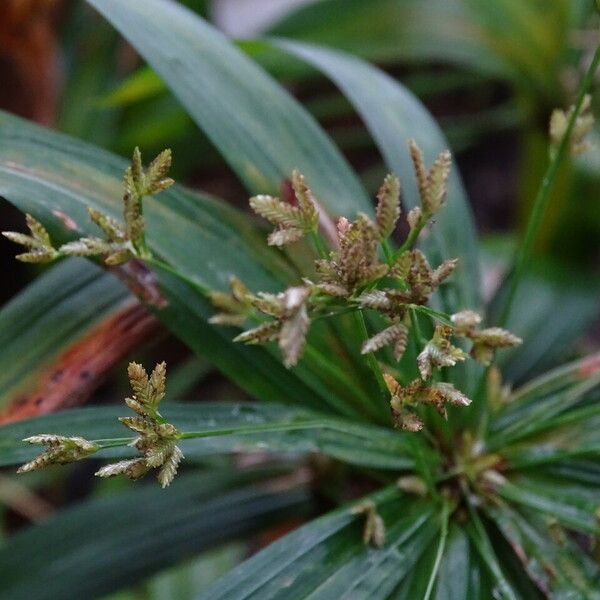
Plant Overview
Known as the "Whitehead Sedge" or "Short-leaf Spikesedge," this resilient little plant looks like a cluster of tiny white stars dropped into a field of green. While it is often mistaken for a common grass, it belongs to the ancient Sedge family, thriving in the damp, sun-drenched pockets of tropical regions. Whether you see it as a charming wildflower or a persistent garden visitor, its unique "golf ball" blooms are hard to miss.
🔍 How to Identify
- ⚪ The "White Ball": The most striking feature is its flower—a dense, snowy-white, spherical cluster that sits right at the tip of the stem.
- 📐 Triangular Stems: True to the "Sedges have edges" rule, the stems are distinctly three-sided. If you roll one between your fingers, you will feel the sharp angles.
- 🌿 The Three-Leaf Collar: Directly beneath the white flower head, three long, leaf-like bracts fan out horizontally, framing the bloom like a green tripod.
🏡 In Your Garden
- 💧 The Moisture Indicator: This plant is a natural moisture meter. If it suddenly appears in your lawn, it’s a sign that the soil is staying consistently wet or suffers from poor drainage.
- 🌱 Rhizome Traveler: It spreads via underground runners called rhizomes. While this makes it excellent for stabilizing soil in boggy areas, it can be quite "pushy" in a manicured garden, quickly forming thick mats if left unchecked.
⚠️ Safety & Toxicity
- ✅ Non-Toxic: Cyperus mindorensis is generally considered safe and non-toxic for humans, cats, and dogs.
- 🧤 Mechanical Irritation: While not poisonous, the leaves and stems can be somewhat stiff and sharp. Handling large quantities without gloves may result in minor "grass cuts" or skin irritation for those with sensitive skin.
✨ Fun Fact
In various Southeast Asian cultures, this plant isn't just a weed; it's a traditional remedy. The aromatic rhizomes are sometimes crushed and used in folk medicine to help reduce fevers or soothe skin stings!

Detailed Care Instructions

Place in a bright room that is sun drenched almost all day. Or directly in a south-facing window.

Some plants require more regular watering than others, which should be done every few days. It's critical to maintain the soil moist all of the time. The water requirements of the same plant placed in pots with varying sizes will differ. Because the water in the smaller pot evaporates faster than the water in the larger pot, it will require more watering. Regardless of pot size, the surface should constantly be maintained moist.








