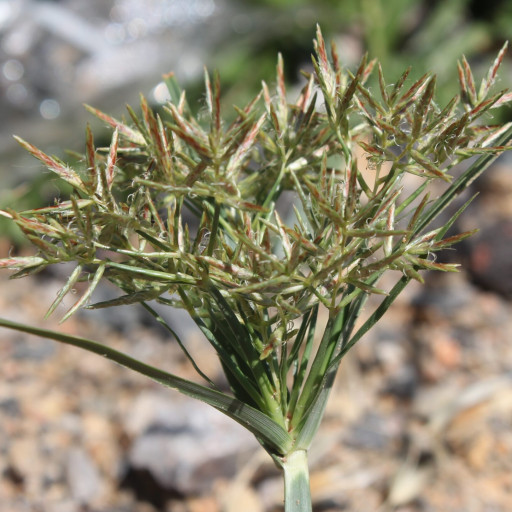
Plant Overview
Often dubbed the "world's worst weed," Nut Grass is more than just a garden nuisance. While it creates headaches for lawn enthusiasts across the globe, this resilient sedge has been used for centuries in traditional medicine for its aromatic tubers. It is a master of survival, capable of out-competing almost any other plant in its path through an invisible underground network.
🔍 How to Identify
- 📐 Triangular Stems: Like most sedges, the stem is solid and distinctly triangular in cross-section—remember the old rhyme: "Sedges have edges!"
- 🍃 Three-Ranked Leaves: The dark green, waxy leaves grow in sets of three from the base of the plant, tapering to a sharp point.
- 🪻 Purple Spikelets: The plant produces umbrella-like clusters of reddish-purple to brown flower heads that sit atop a long, leafless stalk.
🏡 In Your Garden
- 🥜 The Hidden "Nuts": The plant’s true strength lies underground. It develops chains of tubers (the "nuts") that store energy. If you pull the plant up and leave even one tiny tuber behind, it will quickly sprout into a new plant.
- 🧱 Hardy Invader: It thrives in compacted, poorly drained soil and can even pierce through thick landscape fabric or asphalt. Because it spreads via rhizomes and tubers rather than just seeds, it is notoriously difficult to eradicate without persistent management.
⚠️ Safety & Toxicity
- ✅ Safe Status: Cyperus rotundus is generally non-toxic to humans, dogs, and cats.
- 👅 Bitter Taste: While the tubers are edible and have been used in teas and traditional snacks, they are quite bitter and fibrous, making them unappealing to most curious pets or children.
- ✂️ Abrasive Foliage: The leaves can have slightly sharp edges that may cause minor skin irritation if handled roughly without gloves.
✨ Fun Fact
🏺 Ancient Scents: Despite its reputation as a pest today, archeologists have discovered that Ancient Egyptians used the fragrant tubers of Nut Grass to flavor their beer and as a base for primitive perfumes!

Detailed Care Instructions
| Humidity | High |
| Lighting | Full Sun |
| Difficulty | Medium |
| Hibernation | Cold Period |
To grow Cyperus Rotundus (also known as Nutgrass or Purple Nut Sedge), follow these steps:
- Obtain the plant: You can purchase Cyperus Rotundus from a nursery or garden center, or you can collect the rhizomes (underground stems) from an existing plant.
- Select a suitable location: Cyperus Rotundus thrives in full sun or partial shade. Choose a spot in your garden or plant it in a container.
- Prepare the soil: The plant prefers well-draining soil that is rich in organic matter. Add compost or aged manure to the soil to improve its fertility and drainage.
- Planting: If you have purchased a potted plant, simply dig a hole slightly larger than the root ball and place the plant in the hole. Fill in the gaps with soil, gently firming it around the plant. If you are using rhizomes, plant them about 2-3 inches deep in the soil, spacing them approximately 12-18 inches apart.
- Watering: Keep the soil evenly moist, especially during the first few weeks after planting to allow the plant to establish its roots. Once established, Cyperus Rotundus is relatively drought-tolerant and can handle periods of dryness.
- Fertilizing: You can apply a balanced, slow-release fertilizer during the growing season to provide nutrients to the plant. Follow the instructions on the fertilizer packaging for dosage and application frequency.
- Maintenance: Cyperus Rotundus can spread aggressively, so it is important to monitor its growth and prevent it from becoming invasive. Regularly remove any new shoots that emerge outside of the desired growing area to control its spread. It is recommended to grow it in a container or use barriers to prevent it from spreading into unwanted areas.
- Harvesting: If you wish to collect the plants for their edible parts or for medicinal purposes, wait until they have reached maturity. Harvest the rhizomes by gently digging them up from the soil, being careful not to damage the plant or surrounding roots.
Remember that Cyperus Rotundus can be invasive, so if you decide to grow it in the ground, keep an eye on its spread and manage it appropriately to prevent it from taking over the garden.

Place in a bright room that is sun drenched almost all day. Or directly in a south-facing window.

Cyperus Rotundus is a perennial plant that belongs to the family of Cyperaceae. To water this plant, the following steps can be taken:
1. Watering Frequency: Cyperus Rotundus thrives well in moist soil and requires frequent watering. The frequency of watering depends on weather conditions and soil type. It is essential to ensure the soil is always moist but not waterlogged.
2. Soil Type: The plant prefers well-drained soil that is rich in organic matter. Sandy soils tend to dry out faster compared to heavy soils. Therefore, sandy soils require more frequent watering than heavy soils.
3. Watering Technique: It is best to water Cyperus Rotundus in the early morning or late afternoon to avoid excessive evaporation. Direct the water flow towards the base of the plant to ensure water reaches the roots. Overhead watering can lead to fungal diseases.
4. Water Quantity: The quantity of water required will depend on the size of the plant and the surrounding weather conditions. In hot and dry weather, the plant may require more water than in cooler months.
5. Mulching: Applying a layer of mulch around the plant can help retain moisture in the soil and reduce watering frequency.
It is important to note that while Cyperus Rotundus prefers moist soil, overwatering can lead to root rot. Therefore, it is important to maintain a balance between water requirements and soil drainage.
The plant should be fertilized once a month during the growing season with a balanced fertilizer. The fertilizer should be diluted and applied to the soil around the base of the plant, taking care not to get any on the leaves or stems. Water the plant thoroughly after fertilizing. Avoid over-fertilizing as this can lead to excessive growth and potentially harm the plant.
The recommended soil type for the Cyperus Rotundus plant is a well-draining soil that is rich in nutrients. The pH level of the soil should be slightly acidic to neutral, between 5.5 and 7.5. The soil should be moist but not waterlogged, as the plant requires consistent moisture to thrive. A soil mixture containing a combination of peat moss, perlite, sand, and vermiculite is ideal for this plant. The plant should be potted in a container with drainage holes to prevent water stagnation and root rot. Regular fertilization with a balanced fertilizer is also recommended to ensure healthy growth and flowering.
To propagate this plant, you will need to carefully dig up the rhizomes (underground root system) and separate them into smaller pieces. Each piece should have a few healthy roots and at least one shoot or stem. Place these pieces into fresh potting soil, in a container with good drainage. Water the soil thoroughly, but be careful not to overwater. Place the container in a location with bright, indirect sunlight and keep the soil consistently moist. Within a few weeks, new shoots should start to emerge from the rhizomes. It's important to note that this plant can be invasive, so take care not to plant it in areas where it could spread uncontrollably.








