Plant Overview
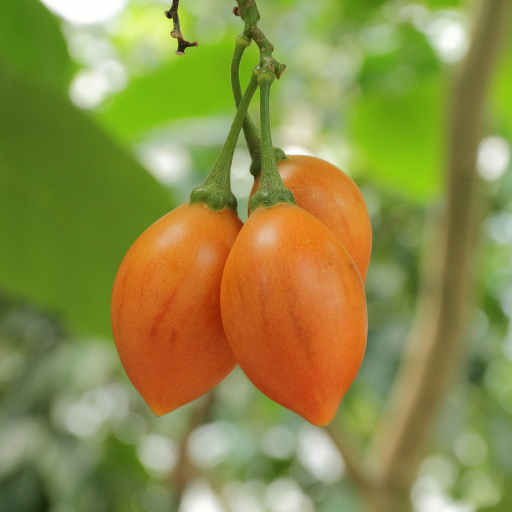
Known as the "Tree Tomato" or "Tamarillo," this vibrant South American native brings a splash of the Andes to your backyard. While it looks like a traditional tomato on steroids, it actually grows on a woody, fast-growing shrub that can reach heights of 15 feet. Its bold, heart-shaped leaves and colorful, egg-shaped fruits make it a favorite for gardeners looking for an exotic, edible centerpiece.
🔍 How to Identify
- 🍃 Lush Foliage: Large, heart-shaped leaves that are soft to the touch and can grow up to 10 inches long, giving the plant a distinct tropical appearance.
- 🌸 Fragrant Blooms: Small, star-shaped flowers that appear in clusters, ranging from pinkish-white to light blue, carrying a subtle, sweet scent.
- 🍅 The Fruit: Smooth, egg-shaped fruits that hang in clusters. Depending on the variety, they can be deep purple, blood red, or golden orange.
🏡 In Your Garden
- 🌬️ Wind Sensitivity: Because the branches are quite brittle and the leaves are so large, the Tamarillo needs a sheltered spot. A strong gust can easily snap a fruit-laden limb or shred its beautiful foliage.
- 💧 Shallow Roots: Unlike many trees, this plant has a very shallow root system. It dislikes "wet feet" but cannot tolerate drought; keeping the soil consistently moist but well-draining is the secret to a heavy harvest.
- 🍴 Heavy Feeder: To produce those succulent fruits, the Tamarillo requires plenty of organic matter. It thrives with regular mulching and compost to support its rapid growth spurts.
⚠️ Safety & Toxicity
- ✅ Fruit Status: The ripe fruit is perfectly safe and delicious for humans, often described as a cross between a tomato and a passionfruit.
- 🚫 Plant Parts: Like many members of the Nightshade family (Solanaceae), the leaves and stems are toxic if ingested and may cause digestive upset.
- 🐾 Pets & Kids: Keep curious pets and toddlers away from the foliage and unripe (green) fruits, as they contain solanine, which can be harmful in large quantities.
✨ Fun Fact
The name "Tamarillo" isn't actually a traditional South American name! It was invented in New Zealand in 1967 by the Tree Tomato Promotions Council to make the fruit sound more exotic and distinguish it from the common garden tomato for international export.

Detailed Care Instructions
To grow Cyphomandra Betacea plants, also known as tree tomatoes or tamarillo, follow these steps:
- Choose a suitable location: Tree tomatoes thrive in full sun but can tolerate partial shade. Select a spot that has well-drained soil, as they do not like to sit in water.
- Prepare the soil: Tree tomatoes prefer slightly acidic soil with a pH of around 5.5 to 7.0. Improve the soil's drainage by mixing organic matter like compost or well-rotted manure.
- Propagation: The tree tomato plant can be propagated from seeds or by using stem cuttings. If starting from seeds, sow them in a seed tray filled with moist soil. Cover the container with a plastic wrap to create a greenhouse effect, keeping the soil warm and moist until germination occurs. Transplant the seedlings into individual pots once they have developed a few leaves.
- Planting: Once the seedlings are ready for transplanting or if using stem cuttings, dig a hole slightly larger than the root ball and place the plant in the hole. Gently backfill the hole with soil and firm it around the base of the plant. Water thoroughly after planting.
- Watering: Tree tomatoes need regular watering, especially during dry spells. Water deeply every few days, ensuring the soil remains consistently moist but not waterlogged. Reduce watering during the winter months.
- Mulching and fertilizing: Add a layer of organic mulch around the base of the plant to help retain moisture and suppress weeds. Apply a balanced fertilizer every few months during the growing season to provide necessary nutrients.
- Pruning: Prune the branches to shape and maintain a bushy form. Remove any dead, damaged, or crossing branches to encourage healthy growth. Pruning also helps with pest control and improves airflow.
- Pest and disease control: Keep an eye out for common pests like aphids, whiteflies, and spider mites. Treat infestations with organic insecticidal soap or neem oil. Tree tomatoes may also be prone to fungal diseases like powdery mildew or leaf spot. Ensure good air circulation, avoid overwatering, and consider using fungicides if necessary.
- Support: As the tree tomato grows, provide support to help it withstand heavy winds or protect the branches from breaking under the weight of the fruit. Stakes or trellises can be used to offer support.
- Harvesting: Tree tomatoes typically produce fruit about 1-2 years after planting. The ripe fruit will turn from green to red or yellow, depending on the variety. Twist or cut the fruit off the plant when they are fully colored and slightly soft to the touch.
Remember to be patient, as tree tomatoes can take some time to establish and start fruiting. With proper care and attention, you can enjoy a bountiful harvest of delicious tree tomatoes.

Place in a bright room that is sun drenched almost all day. Or directly in a south-facing window.

To water a Cyphomandra Betacea plant, it is important to provide consistent and appropriate moisture levels to support its optimal growth and health. Here are some guidelines to follow:
1. Observe soil moisture: Check the soil regularly to determine its moisture content. Insert your finger about an inch deep into the soil around the plant to feel the moisture level. If the soil feels dry, it is time to water the plant.
2. Watering frequency: The watering frequency depends on various factors such as climate, season, and soil type. As a general rule, it is advisable to water Cyphomandra Betacea plants deeply around once or twice a week during dry periods, ensuring that the soil is evenly soaked.
3. Watering method: Use a watering can or garden hose to water the plant at the soil level. Avoid overhead watering, as it can lead to fungal diseases and wastage of water.
4. Watering duration: Water the plant until the soil is thoroughly moistened, allowing the excess water to drain. Ensure that water penetrates the root zone rather than just wetting the surface.
5. Mulching: Apply a layer of organic mulch, such as wood chips or straw, around the base of the plant to retain soil moisture. This helps prevent water evaporation and keeps the root zone adequately hydrated.
6. Adjust watering with seasons: During the plant's active growth phase, typically in spring and summer, water requirements may increase. Increase watering during these periods but reduce it in fall and winter when the plant's growth slows down.
7. Avoid overwatering: Although Cyphomandra Betacea plants require consistent moisture, it is crucial to avoid overwatering, as it can lead to root rot and other fungal diseases. Ensure that the soil is well-drained and does not become waterlogged.
8. Monitor hydration signs: Keep an eye out for signs of dehydration or overwatering. Drooping leaves, yellowing foliage, or wilting can indicate a lack of water, while yellowing leaves with soggy texture may indicate overwatering. Adjust your watering routine accordingly.
Remember that while these guidelines provide general care instructions, the watering needs may vary based on individual plant conditions and environmental factors. It's always advisable to observe your specific Cyphomandra Betacea plant for cues and adjust watering accordingly.
- Begin by preparing the soil before planting the Cyphomandra Betacea plant. Ensure that the soil is well-drained, loose, and rich in organic matter.
- Once the plant is established, apply a balanced slow-release fertilizer with NPK ratio around 10-10-10, according to the package instructions. This will provide essential nutrients for healthy growth.
- Fertilize the plant during the growing season, which is typically in spring and summer. Start fertilizing when new growth appears and continue regularly every 4-6 weeks.
- Avoid overfertilizing, as it can lead to excessive foliage growth at the expense of fruit production. Follow the recommended dosage on the fertilizer package to prevent nutrient imbalance.
- Apply the fertilizer evenly around the base of the plant, extending outwards to the drip line. Avoid direct contact with the stems to prevent burn or damage.
- After applying the fertilizer, water the plant thoroughly to ensure proper nutrient absorption into the soil.
- Monitor the plant's growth and appearance for signs of nutrient deficiency or excess. Adjust the fertilization frequency or dosage accordingly, if necessary.
- During the dormant period, generally in fall and winter, reduce or stop fertilizing as the plant's growth slows down. Resume regular fertilization in the following growing season.
Remember to refer to the plant-specific fertilization instructions provided on the fertilizer package for more accurate and detailed guidance.
Cyphomandra betacea, a perennial plant native to South America, thrives best in a specific type of soil composition. To ensure optimal growth and health, it is important to select the appropriate soil for this plant. The preferred soil for Cyphomandra betacea should have specific qualities and components that support its growth requirements.
Firstly, the ideal soil for this plant is well-draining, allowing excess water to flow away rather than accumulating around the roots. This ensures that the plant does not become waterlogged, which can lead to root rot or other fungal problems. Well-draining soil also prevents the formation of standing water, which may attract pests or diseases.
Furthermore, Cyphomandra betacea prefers soil that is slightly acidic to neutral. A pH range of 5.8 to 7.0 is generally recommended for optimal growth. This ensures that the plant can efficiently uptake nutrients from the soil, as certain macro and micronutrients become less available at extreme pH levels.
Additionally, the soil should be rich in organic matter. The presence of organic matter improves soil fertility, structure, and moisture retention abilities. Compost, well-rotted manure, or other organic materials can be incorporated into the soil to enhance its quality.
To promote healthy root development, the soil should be light and loose in texture. This allows for easy penetration of the roots and encourages their spread. The loose soil texture is also beneficial in retaining moisture without becoming compacted, ensuring adequate hydration for the plant.
Lastly, it is recommended to avoid using heavy clay soils for Cyphomandra betacea. Clay soils tend to retain excess moisture and can easily become compacted, making it difficult for the plant's roots to access sufficient water and nutrients.
By providing the appropriate soil conditions, including well-draining, slightly acidic soil rich in organic matter, and with a light and loose texture, you can create an ideal environment for the successful growth of Cyphomandra betacea.
Propagation of Cyphomandra betacea can be done through several methods including seeds, softwood cuttings, and air layering. Here is a detailed guide on each technique:
- Seed propagation:
- Collect ripe fruits from a mature and healthy Cyphomandra betacea plant.
- Scoop out the seeds from the fruit and wash them thoroughly to remove any pulp.
- Place the seeds in a container with water and let them sit for 24 hours. This will help improve germination rates.
- Prepare a seed tray or small pots with a well-draining potting mix.
- Sow the seeds on the surface of the soil and lightly press them in.
- Keep the soil consistently moist, but not waterlogged.
- Place the tray or pots in a warm and bright location, preferably with indirect sunlight.
- Germination may take anywhere from 2 to 4 weeks.
- Once the seedlings have developed true leaves and are large enough to handle, transplant them into individual pots.
- Collect ripe fruits from a mature and healthy Cyphomandra betacea plant.
- Softwood cuttings:
- Take softwood cuttings from a healthy Cyphomandra betacea plant in late spring or early summer.
- Choose a stem tip that is flexible and not woody.
- Cut a 4-6 inch section of the stem just below a leaf node.
- Remove the lower leaves, leaving a few at the top.
- Dip the cut end in rooting hormone powder to improve root development (optional).
- Insert the cutting into a pot filled with a well-draining rooting medium, such as a mixture of perlite and peat moss.
- Mist the cutting to keep the foliage hydrated and cover the pot with a plastic bag or use a propagation dome to create a humid environment.
- Place the pot in a warm location with indirect light.
- Check for root development after a few weeks by gently tugging the cutting. If there is resistance, roots have formed.
- Once roots appear, gradually acclimate the cutting to normal conditions and transplant it into a larger pot or the garden.
- Take softwood cuttings from a healthy Cyphomandra betacea plant in late spring or early summer.
- Air layering:
- Select a healthy stem on the Cyphomandra betacea plant that is approximately pencil-thick.
- Remove a section of bark about 6-8 inches below a leaf node, creating a 1-inch deep wound around the stem.
- Dust the wounded area with rooting hormone powder.
- Take a handful of moist sphagnum moss and wrap it around the wound.
- Cover the moss with a plastic bag, securing it tightly above and below the air layer.
- Make small holes in the plastic bag to allow for some airflow.
- Keep the moss consistently moist by misting it regularly.
- Roots should start to develop in 4-8 weeks.
- Once roots are well-established, cut the stem below the air layer and gently remove it from the parent plant.
- Plant the rooted stem in a pot or desired location in the garden.
Remember to provide the newly propagated Cyphomandra betacea plants with appropriate care, including regular watering, well-draining soil, and suitable sunlight conditions, to ensure their healthy growth and development.
- Select a healthy stem on the Cyphomandra betacea plant that is approximately pencil-thick.
Common pests of the tree tomato include Spider mites, aphids, larvae. Make a habit of checking your tree tomato frequently for pests so that any infestations can be caught and managed early.








