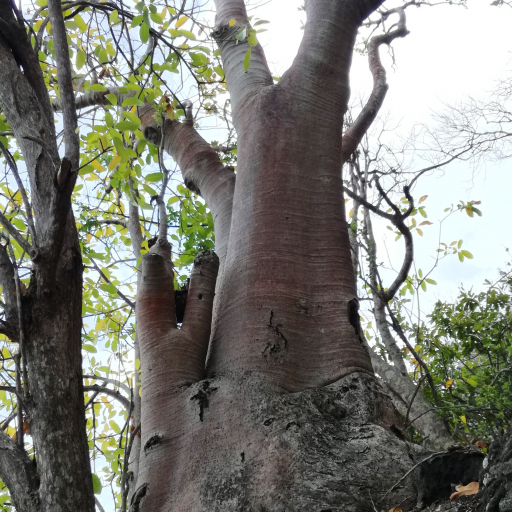
Plant Overview
Known as the Map-tree or Bois de Map, Cyphostemma mappia is a rare and striking succulent tree endemic to the island of Mauritius. It is often treated like a living sculpture by collectors due to its thick, swollen trunk and its ancient, prehistoric appearance. In its native habitat, it clings to life on rocky slopes, but in the home, it serves as a slow-growing, architectural centerpiece.
🔍 How to Identify
- 🐘 The Trunk: It features a thick, fleshy trunk (caudex) that stores water, often looking like a miniature baobab or a weathered piece of driftwood.
- 🍃 The Leaves: Its large, succulent leaves are heart-shaped or deeply lobed, often displaying prominent reddish veins that look like "map lines," giving the plant its common name.
- 🍇 The Fruit: During the growing season, it produces clusters of small, grape-like berries that turn from green to a vibrant red, though they are strictly for show.
🏡 In Your Garden
- 💧 Watering Nuance: Because it is a pachycaul (thick-stemmed) plant, it is extremely sensitive to "wet feet." It prefers a distinct dry period; watering during its dormant winter phase can easily lead to root rot.
- 🪴 Soil & Stability: This plant requires a very gritty, mineral-heavy cactus mix. It has a relatively shallow root system for its top-heavy weight, so choosing a heavy ceramic pot is essential to prevent it from tipping over as it grows.
⚠️ Safety & Toxicity
- 🚫 Status: Toxic if ingested / Skin irritant.
- 🐾 Details: Like many members of the grape family (Vitaceae), the sap contains calcium oxalate crystals. Touching the sap can cause skin irritation, and ingesting any part of the plant or berries can cause severe mouth swelling and stomach distress in pets and children.
✨ Fun Fact
Cyphostemma mappia is considered critically endangered in the wild. It once shared its habitat with the famous Dodo bird and giant tortoises; today, it is primarily kept alive through the efforts of botanical gardens and dedicated succulent enthusiasts.

Detailed Care Instructions








