Plant Overview
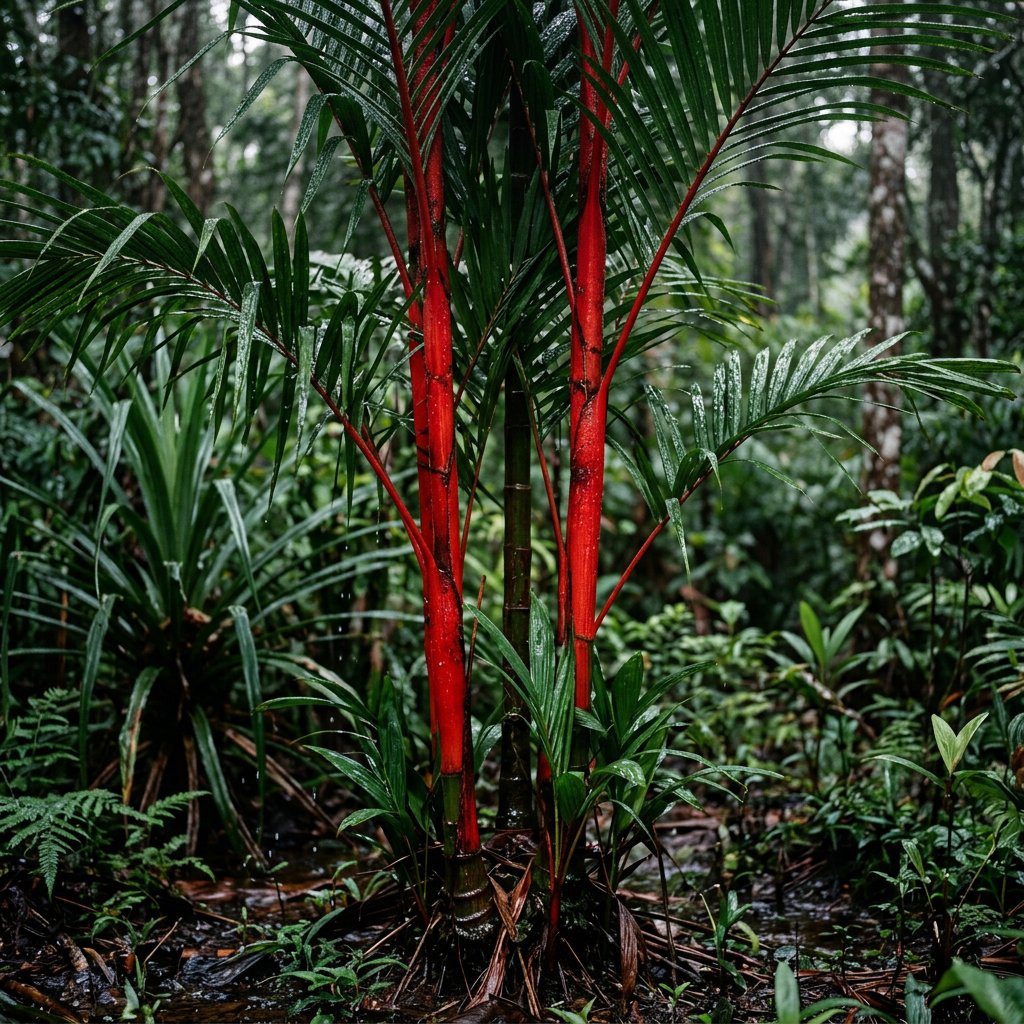
Known as the "Lipstick Palm" for its strikingly vibrant red crownshaft, Cyrtostachys renda is widely considered one of the most beautiful and exotic palms in the world. Originally found in the peat swamp forests of Malaysia, Thailand, and Indonesia, it brings a bold, neon "pop" to any tropical landscape. Because of its regal appearance and specific needs, it is often called the "Maharajah Palm," a title fitting for such a high-maintenance masterpiece.
🔍 How to Identify
- 💄 The Crownshaft: The most iconic feature is the brilliant, saturated scarlet color of the leaf sheaths, which look exactly like a tube of glossy lipstick or a stick of sealing wax.
- 🌿 Clumping Habit: Unlike many palms that grow a single trunk, this species is "suckering," meaning it grows multiple slender, bamboo-like trunks from a single base.
- 🍃 Feathered Fronds: The leaves are pinnate (feather-shaped) and grow in an upward, V-shaped arc, featuring deep green leaflets that contrast sharply against the red stems.
🏡 In Your Garden
- 💧 A Thirst for Swamps: Most palms need well-draining soil to avoid root rot, but the Lipstick Palm is the exception. Because it originates in peat swamps, it loves "wet feet" and can even grow near the edges of ponds or in boggy soil.
- 🌡️ The Cold Barrier: This plant is a true tropical "diva." It has zero tolerance for cold and will begin to suffer if temperatures drop below 50°F (10°C). It requires high humidity to keep its leaf tips from browning, making it a challenge for indoor growers without a dedicated greenhouse.
⚠️ Safety & Toxicity
- ✅ Non-Toxic: The Lipstick Palm is generally considered safe and non-toxic for both humans and common household pets like cats and dogs.
- 🧤 Physical Care: While not poisonous, the trunks are very smooth and delicate. Avoid tying anything to the red sections, as the "lipstick" layer can be easily scarred or damaged by physical friction.
✨ Fun Fact
📜 Its alternative name, the "Red Sealing Wax Palm," comes from its resemblance to the bright red wax used in the 17th century to seal royal decrees and important letters. In some cultures, planting one near the entrance of a home is believed to bring good luck and prosperity!

Detailed Care Instructions
| Color | Green |
| Soil Ph | Acidic, Neutral |
| Lighting | Full Sun |
| Toxicity | Non-Toxic |
| Soil Type | Loamy, Moist But Well-Drained |
| Bloom Time | Summer |
| Plant Type | Tree |
| Mature Size | 35 Ft. Tall, 20 Ft. Wide |
| Native Area | Asia |
| Sun Exposure | Full And Partial Sun |
| Hardiness Zones | 10-11 |
To grow Cyrtostachys Renda, also known as the Red Sealing Wax Palm, follow these steps:
- Climate and Sunlight: This plant thrives in warm tropical climates with high humidity. It requires direct sunlight for at least 4-6 hours a day. Ensure that the average temperature remains above 60°F (15°C).
- Soil: The Red Sealing Wax Palm prefers a well-draining soil mix that is rich in organic matter. Use a mixture of peat moss, perlite, and compost to create a fertile growing medium.
- Potting: If you live in a region with colder temperatures, it's best to keep the plant in a container so you can move it indoors during the winter. Choose a pot that is large enough to accommodate the plant's root system, and ensure it has drainage holes.
- Watering: Keep the soil consistently moist, but avoid overwatering. Ensure the pot has drainage holes to prevent waterlogging. During hotter months, the plant may require more frequent watering.
- Fertilization: Apply a balanced slow-release fertilizer once in early spring and once in mid-summer. Follow the manufacturer's instructions for appropriate dosage. Additionally, using a palm-specific fertilizer may benefit the plant's growth and overall health.
- Pruning: Remove any dead or damaged fronds regularly to maintain the plant's appearance and overall health. Avoid removing too many healthy fronds, as they support the plant's growth.
- Propagation: Red Sealing Wax Palm can be propagated through seeds or by transplanting offshoots. Seeds should be soaked in warm water for 24 hours before planting. Sow them in a seed-starting mix and keep them warm and moist until germination occurs, which may take several weeks. Offshoots can be carefully separated from the mother plant once they are large enough to survive on their own.
- Pests and Diseases: Keep an eye out for common palm pests, such as spider mites, scale insects, and mealybugs. Treat infestations with insecticidal soap or neem oil. Additionally, ensure good air circulation and avoid overwatering to prevent fungal diseases.
Remember that growing a Red Sealing Wax Palm may be a long-term commitment, as this palm tree can take several years to grow to its full height and develop a mature appearance. Proper care and attention will help ensure the success and vitality of your plant.

Place in a bright room that is sun drenched almost all day. Or directly in a south-facing window.

To water this plant, you should make sure to provide it with adequate moisture without allowing it to become waterlogged. Be sure to use well-draining soil and avoid overwatering. Allow the soil to dry out slightly between watering, but do not let it completely dry out. When watering, make sure to fully saturate the soil and let any excess water drain out of the pot. The frequency of watering will depend on the environment and season, so keep an eye on the soil moisture level and adjust accordingly.
To fertilize this plant, use a well-balanced liquid fertilizer with an NPK ratio of 10-10-10 or 20-20-20. Dilute the fertilizer to half strength and apply it to the soil around the base of the plant every two weeks during the growing season. Avoid fertilizing during the winter months when the plant is dormant. Be careful not to over-fertilize as this can cause damage to the roots and leaves of the plant.
Cyrtostachys Renda grows best in well-draining soil that is rich in organic matter and nutrients. A mix of peat moss, perlite, and vermiculite or sand is ideal for the plant, as it provides good drainage while retaining moisture for the roots. The pH of the soil should be slightly acidic, between 5.5 and 6.5. It is important to avoid using heavy or compact soil, which can restrict root growth and lead to plant stress and disease. Regular fertilization with a balanced NPK fertilizer can also help ensure the plant receives the nutrients it needs to thrive.
To propagate this plant, you will need to obtain fresh seeds from a mature and healthy plant. Once you have the seeds, prepare a well-draining potting mix and moisten it with water. Sow the seeds on the surface of the soil and cover them with a thin layer of the potting mix.
Cover the pot with plastic wrap or a clear plastic bag to create a greenhouse-like environment to keep the soil moist and warm. Place the pot in a warm and bright location, but not in direct sunlight. Keep the soil consistently moist, but not waterlogged.
Within 2-3 weeks, you should start to see sprouts emerge from the soil. Once the seedlings have grown true leaves and are a few inches tall, you can gently transplant them into individual pots with fresh potting mix. Keep the young plants in a warm and bright location and continue to water them regularly.
As the plants grow larger, you may need to repot them into larger containers to provide adequate space for their root systems. With proper care, your Cyrtostachys Renda plants will continue to thrive and eventually produce their vibrant red stems and fronds.
Common pests of the lipstick palm include Scale insect, mealybugs, spider mites. Make a habit of checking your lipstick palm frequently for pests so that any infestations can be caught and managed early.








