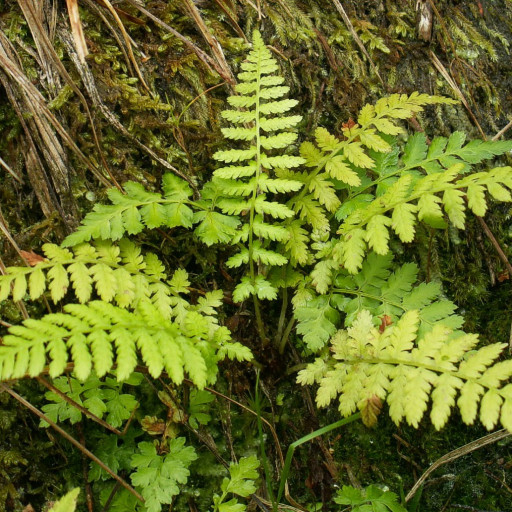
Plant Overview
Known affectionately as the Brittle Bladder Fern or Fragile Fern, this delicate species is a true world traveler, found on nearly every continent. Its nicknames come from its incredibly slender, breakable stems and the tiny, bladder-like covers that protect its spores. In Victorian times, during the height of "Pteridomania" (fern fever), this dainty plant was a prized find for rock gardeners looking to add a touch of lace to stone walls.
🔍 How to Identify
- 🌿 Lacy Fronds: The leaves are light green, highly divided, and almost translucent, giving the plant a feathery, "see-through" appearance.
- 🦴 Brittle Stems: The stalks (stipes) are thin, smooth, and transition from a dark brown at the base to a pale green near the leaves; they snap easily if handled roughly.
- 🎒 Bladder Sori: On the underside of the leaves, you’ll find tiny clusters of spores covered by a delicate, hood-like membrane that looks like a miniature bladder.
🏡 In Your Garden
- ⛰️ The Rock Dweller: Unlike many ferns that prefer deep soil, this species loves "lithophytic" life. It thrives in the cracks of limestone walls or rocky outcroppings where its roots can stay cool and moist.
- 💧 Moisture Consistency: While it is surprisingly hardy, it reacts to drought by going dormant and turning brown early. To keep it lush, mimic a misty cliffside by keeping the humidity high and the soil consistently damp but never waterlogged.
- 🏘️ Establishment: It dislikes being moved once its roots have tucked into a crevice. If you are planting it, choose its "forever home" carefully to avoid transplant shock.
⚠️ Safety & Toxicity
- ✅ Safe for Touch: This fern is non-toxic to humans and does not cause skin irritation upon contact.
- 🐾 Pet Safety: While generally considered safe and non-toxic for cats and dogs, many ferns contain enzymes (like thiaminase) that can interfere with B-vitamins if ingested in very large quantities. It’s best to keep it out of reach of curious nibblers.
✨ Fun Fact
The Brittle Bladder Fern is one of the most widely distributed ferns on the planet. It is so resilient that it can be found growing everywhere from the freezing Arctic Circle to the high-altitude peaks of the tropical Andes!

Detailed Care Instructions
| Humidity | High |
| Lighting | Part Sun |
| Difficulty | Hard |
| Temperature | 18°C - 24°C |
| Hardiness Zones | Min 3A |
To grow Cystopteris Fragilis plants, also known as fragile ferns, you can follow these steps:
- Location: Find a suitable location for your plant. Cystopteris Fragilis prefers partial shade to full shade, with moist soil conditions.
- Soil: The plant grows best in well-drained, humus-rich soil. Ensure the soil has good moisture retention capability.
- Planting: Dig a hole slightly larger than the root ball of the fern. Place the plant in the hole and backfill with soil, gently firming it around the roots. Leave the crown of the fern slightly above the soil to prevent rotting.
- Watering: Water the newly planted fern thoroughly after planting and keep the soil consistently moist. Water the fern regularly, especially during dry periods, but avoid overwatering which can lead to root rot.
- Mulching: Apply a layer of organic mulch around the base of the plant to help conserve moisture and suppress weed growth.
- Fertilizing: Cystopteris Fragilis plants generally do not require fertilization. However, you can apply a balanced, slow-release fertilizer once a year in early spring if you notice slow growth or poor foliage color.
- Pruning: Remove any dead or yellowing fronds to maintain the overall health and appearance of the plant. Pruning should be done in early spring before new growth emerges.
- Protection: Protect the fern from strong winds and extreme temperatures. If you experience harsh winters, consider providing some winter protection like a light layer of mulch or a temporary cover during freezing temperatures.
- Propagation: To propagate Cystopteris Fragilis, you can divide the plant in spring or early fall. Carefully dig up the plant, separate the root clumps, and replant them in suitable locations.
By following these guidelines, you can successfully grow and care for Cystopteris Fragilis plants in your garden.

Place in a window with dappled sun or a spot in the middle of a room. Or directly in a window facing west or east.

The best way to water this plant is to ensure that the soil it is planted in is kept consistently moist, but not soggy. It is important to avoid letting the soil dry out completely between watering, as this can cause damage to the delicate roots of the plant. When watering, use a gentle stream of water and avoid getting water on the leaves of the plant, as this can cause damage and encourage disease. Additionally, it is important to ensure that the plant is not overwatered, as this can lead to root rot and other issues. Overall, carefully monitoring the moisture levels of the soil and watering as necessary is the key to ensuring the health and growth of this plant.
To fertilize this plant, use a balanced fertilizer with equal amounts of nitrogen, phosphorus, and potassium. Apply the fertilizer in early spring before new growth appears. Use a slow-release fertilizer or a diluted liquid fertilizer. Do not over fertilize as it may cause damage to the plant. Follow the instructions on the fertilizer packaging for proper application and dosage.
The ideal soil for the plant should be a well-draining, moist soil that is rich in organic matter. The soil should have a pH level of 6.0 to 7.5 and should be moderately fertile. A mix of sand, peat moss, and compost can create the ideal soil for the plant. The plant prefers soil that is slightly acidic to neutral.
To propagate this plant, you will need to prepare a sterile potting mix and obtain spores from mature fronds. To collect spores, place a mature frond on a piece of paper and let it dry for a few days. Then, gently shake the frond over the paper to release the spores.
Next, sprinkle the spores over the sterile potting mix and cover the pot with a lid or plastic wrap to maintain humidity. The pot should be kept in a bright location but not exposed to direct sunlight.
After a few weeks, the spores will germinate and form tiny green plants. When these plants have grown to a suitable size, they can be transplanted into individual pots or directly into the ground.
It's important to note that spore propagation can be a slow process and may take several months to yield viable plants. Additionally, not all spores will germinate and some of the resulting plants may not survive.
Common pests of the brittle bladder fern include Mealybugs, spider mites, aphids. Make a habit of checking your brittle bladder fern frequently for pests so that any infestations can be caught and managed early.








