Plant Overview
Often found dotting the sun-drenched slopes of Central and Eastern Europe, the Austrian Broom is a resilient, golden-flowered shrub that brings a splash of wild sunshine to rocky terrains. Unlike its taller, more invasive cousins, this species stays relatively compact and is prized for its shimmering, silvery-green foliage. It is a "pioneer plant," known for being one of the first to colonize and heal damaged or poor soils.
🔍 How to Identify
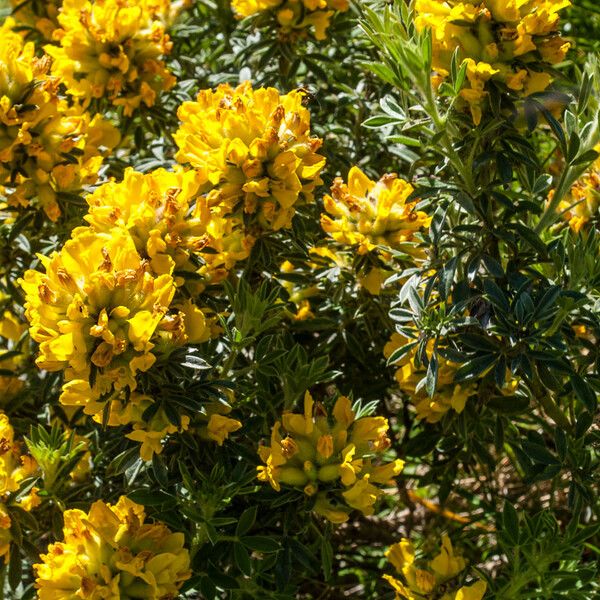
- 🌼 Flower Clusters: Unlike many brooms that grow flowers along the length of the branch, these bright yellow blossoms form tight, rounded "heads" specifically at the tips of the stems.
- 🍃 Silky Leaves: The small, three-part (trifoliate) leaves are covered in fine, pressed hairs, giving the plant a distinct grayish-silver sheen when the sun hits it.
- 🌿 Upright Stems: The branches are slender, woody at the base, and tend to grow in an upright, bushy mound that rarely exceeds three feet in height.
🏡 In Your Garden
- ☀️ Drought Warrior: This plant is a champion of xeriscaping. It thrives in "difficult" spots with poor, sandy, or rocky soil and can handle intense heat and wind without drooping.
- 🌱 The Taproot Rule: Austrian Broom develops a long, stubborn taproot very quickly. It hates having its "feet" disturbed, so choose its forever home carefully—transplanting it once it is established is rarely successful.
- 🐝 Pollinator Magnet: In late spring and summer, it becomes a buzzing hub for bees and butterflies, who are drawn to the nectar hidden within the pea-like flowers.
⚠️ Safety & Toxicity
- 🚫 Toxicity Status: Toxic if ingested. Like many members of the Cytisus genus, the plant contains alkaloids (such as cytisine) that can be harmful.
- 🐈 Pets and Kids: Ingesting the seeds or leaves can lead to nausea, vomiting, or a slowed heart rate. It is best kept in areas where curious pets or toddlers won't be tempted to "sample" the yellow flowers.
✨ Fun Fact
As a member of the Legume family, the Austrian Broom is a natural fertilizer! It has a symbiotic relationship with soil bacteria that allows it to "fix" nitrogen from the air and release it into the ground, improving the soil quality for every plant growing nearby.

Detailed Care Instructions
To ensure optimal growth and health of this particular plant species, it is recommended to water it deeply and thoroughly once weekly. The soil should be allowed to partially dry out between waterings to prevent over-saturation and root rot. It is important to water at the base of the plant rather than overhead, as wet foliage can lead to disease and pests. When watering, it is important to avoid wetting the leaves or flowers and to use a gentle steady flow of water. During periods of hot and dry weather, an increase in frequency of watering may be necessary.
Cytisus Austriacus requires a well-draining soil mix with a pH range of 6.5 to 7.5. It should be a mixture of organic matter such as compost, fertile loam, and sand. The soil should not be too heavy or soggy, as it can lead to root rot and affect the growth of the plant. It is also essential to add a slow-release fertilizer to the soil mix during planting to provide the plant with the necessary nutrients. Additionally, regular watering is necessary to maintain soil moisture, but overwatering should be avoided to prevent waterlogging and root rot.








