Plant Overview
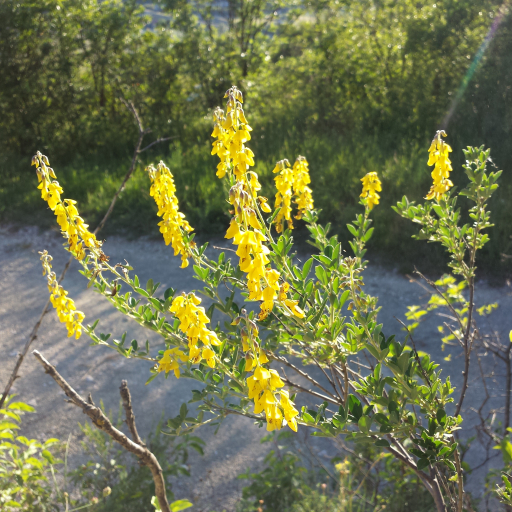
Often called the "Black Broom," this European native earns its somber name not from its live appearance, but from the way its foliage turns a dramatic charcoal black when dried. In the peak of summer, however, it is anything but dark, exploding into a vibrant display of upright golden spires. It is a hardy, sun-loving shrub that brings a wild, architectural beauty to rocky slopes and cottage gardens alike.
🔍 How to Identify
- 🌼 The Blooms: Long, slender spikes (racemes) of bright yellow, pea-like flowers. Unlike many other broom species, these flowers point strictly upwards toward the sun.
- 🍃 The Foliage: Small, clover-like leaves consisting of three oval leaflets. They are a deep, muted green and often have a slightly fuzzy texture on the underside.
- 🌿 Growth Habit: A deciduous shrub with a neat, mounded shape. It typically reaches about 3 to 5 feet in height, maintaining an airy and elegant silhouette.
🏡 In Your Garden
- 🏜️ Soil Preferences: This plant is a "tough love" species. It thrives in poor, sandy, or rocky soils and actually dislikes being over-fertilized, which can make the stems weak and floppy.
- 📍 The "Forever" Home: Like many members of the broom family, it develops a deep taproot very quickly. This makes it incredibly drought-tolerant but means it hates being moved. Transplanting an established Black Broom is rarely successful.
- ✂️ Pruning Nuance: To keep it from looking "leggy," give it a light trim immediately after the flowers fade. However, avoid cutting back into the old, thick wood, as it lacks the buds to sprout new growth from the base.
⚠️ Safety & Toxicity
- 🚫 Status: Toxic if ingested.
- 🐾 Details: All parts of the plant contain quinolizidine alkaloids (such as cytisine). If eaten by pets or curious children, it can cause nausea, vomiting, and in high quantities, heart palpitations. It is generally avoided by deer and rabbits, making it a "pest-proof" choice for rural gardens.
✨ Fun Fact
The species name nigricans is Latin for "becoming black." If you were to pick a branch of this plant and press it in a book or dry it for an arrangement, the vibrant green and yellow would chemically shift into a deep, ink-black color within days!

Detailed Care Instructions
To grow Cytisus Nigricans, also known as black broom or Spanish broom, you can follow these steps:
- Choose a suitable location: Cytisus Nigricans prefers full sun and well-drained soil. Select a spot in your garden or a large container with plenty of sunlight.
- Preparing the soil: Make sure the soil is well-draining and rich in organic matter. If the soil is heavy or compacted, adding some sand or compost can improve the drainage.
- Planting: Dig a hole slightly larger than the root ball of the plant. Gently loosen the roots before placing it in the hole. Backfill with soil and firm it gently around the plant. Space multiple plants about 3 feet apart to allow for spreading.
- Watering: Keep the soil moist but not overly saturated. Regular watering is essential during the first growing season to establish strong roots. After that, the plant can tolerate short periods of drought.
- Pruning: Prune immediately after flowering to maintain a compact shape and encourage the plant to produce more blooms. Remove any dead or diseased branches.
- Fertilization: Apply a balanced, slow-release fertilizer in early spring to provide necessary nutrients. Follow the manufacturer's instructions for application rates.
- Mulching: Apply a layer of organic mulch around the base of the plant to help retain moisture, suppress weed growth, and regulate soil temperature.
- Protecting from frost: Cytisus Nigricans is generally frost-tolerant but may require protection in severe winter conditions. Cover young or vulnerable plants with frost cloths or bring them indoors during extreme cold spells.
- Monitoring pests and diseases: While Cytisus Nigricans is generally resistant to pests and diseases, occasional issues may arise. Keep an eye out for aphids, spider mites, or powdery mildew. If necessary, treat affected plants with appropriate organic or chemical controls.
Remember to check local regulations before planting Cytisus Nigricans, as it can be invasive in some regions.
To water this plant, ensure that the soil is dry to the touch before watering. Use a watering can or hose to water the soil around the plant's base rather than on the leaves. Allow the water to soak into the soil deeply, but do not let it become waterlogged. During summer months, the plant may require more frequent watering due to increased temperatures and evaporation. Finally, ensure that the plant has good drainage to prevent root rot.
To fertilize this plant, use a slow-release balanced fertilizer in the spring. Apply the fertilizer at the base of the plant and water thoroughly. Avoid over-fertilizing as it may lead to excessive growth and weak stems. Additionally, it's recommended to mulch around the base of the plant to help retain moisture and provide nutrients as it decomposes.
When planting Cytisus Nigricans, it is important to choose a well-draining soil mixture. The soil should be slightly acidic to neutral with a pH range of 6.0 to 7.0. It should also be rich in organic matter and porous to allow for proper air circulation to the roots. A good soil mixture can be composed of garden loam, sand, and leaf mold or compost in equal parts. This plant prefers growing in a slightly dry soil, so make sure the soil mix is not too moisture-retentive. Always ensure that the soil is packed firmly around the roots for good support.
To propagate this plant, you will need to collect seeds from an existing plant or take cuttings from new growth. For seeds, wait until the seed pods have dried and the seeds have turned brown before collecting. For cuttings, choose a stem with healthy new growth and cut just below a node. Remove the leaves from the bottom half of the stem and dip the cut end in rooting hormone. Place the cutting in a pot filled with a well-draining soil mix and keep it moist until roots have formed. Harden off the new plant by gradually exposing it to more sunlight and outdoor conditions before transplanting it to its permanent location.








