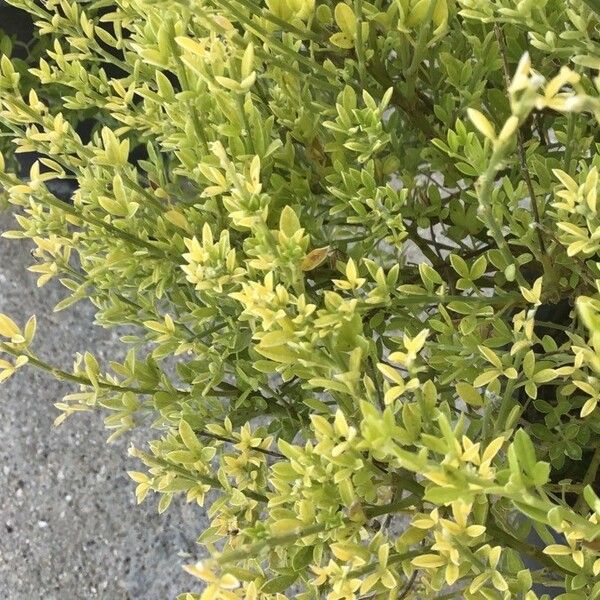
Plant Overview
Known as the Sweet Broom, Cytisus racemosus is a sun-drenched explosion of gold that fills the air with a fragrance reminiscent of honey and fresh lemon. Originally hailing from the volcanic landscapes of the Canary Islands, this shrub has become a beloved herald of spring. It is often nicknamed the "Easter Broom" because its peak bloom creates a spectacular, luminous display just as the garden wakes up from winter.
🔍 How to Identify
- 🌼 The Flowers: Dense, upright spikes (racemes) packed with bright yellow, pea-shaped blossoms that emerge from the tips of the branches.
- ☘️ The Foliage: Small, delicate, silvery-green leaves that are "trifoliate," meaning they are divided into three distinct leaflets, similar to a clover.
- 🌿 The Form: A bushy, upright evergreen shrub with slender, flexible green stems that remain attractive even when the plant isn't in bloom.
🏡 In Your Garden
- ✂️ The Post-Bloom Haircut: This plant blooms on "old wood," so it requires pruning immediately after the flowers fade. If you wait until winter to tidy it up, you’ll accidentally cut off all of next year’s golden buds.
- 🏜️ Lean and Mean: As a member of the legume family, it can "fix" its own nitrogen from the air. This means it actually prefers poor, sandy soil; giving it too much rich fertilizer will result in a floppy, weak plant with very few flowers.
- 🚫 Root Sensitivity: Like many brooms, it develops a deep taproot and deeply resents being moved. Pick a permanent "forever home" for it early on to avoid transplant shock.
⚠️ Safety & Toxicity
- 🐾 Toxic to Pets: All parts of the Sweet Broom contain quinolizidine alkaloids (specifically cytisine), which are poisonous to dogs, cats, and horses.
- 👶 Human Safety: Ingestion can cause nausea, vomiting, and a lowered heart rate in humans. It is best kept in a part of the garden where small children and curious nibblers won't be tempted by the "peas."
✨ Fun Fact
The common name "Broom" isn't a coincidence! Historically, the long, tough, and flexible stems of the Cytisus family were bundled together and tied to sticks to create the very first household sweeping tools. While your Racemosus is likely too ornamental for cleaning, its ancestors were the original vacuum cleaners!

Detailed Care Instructions
To grow Cytisus Racemosus, also known as broom, you can follow these steps:
- Select a suitable planting spot: Choose an area that receives full sun, as broom plants thrive in sunny locations. Ensure the soil is well-draining and slightly acidic, with a pH between 6 and 7.
- Prepare the soil: Before planting, loosen the soil and remove any weeds or grass from the intended planting area. Add organic matter, such as compost or well-rotted manure, to improve the soil's fertility and drainage.
- Planting: Dig a hole slightly larger than the root ball of the broom plant. Place the plant in the hole, ensuring it sits at the same depth as it was in the container. Backfill the hole with soil, gently firming it around the plant.
- Watering: After planting, water the broom plant thoroughly to settle the soil. Provide regular watering, especially in the first couple of months to establish the plant. However, once established, broom plants are drought-tolerant and need minimal watering.
- Mulching: Apply a layer of mulch around the base of the plant to retain moisture and suppress weed growth. Use organic mulch, like wood chips or straw, and keep it a few inches away from the stem to prevent rot.
- Pruning: Regular pruning is necessary to maintain the shape and size of the broom plant. Prune immediately after flowering by cutting back flowered stems to promote new growth. However, be cautious about the broom's invasiveness in some regions, as it may require more aggressive pruning or even removal.
- Fertilization: Cytisus Racemosus generally doesn't require heavy fertilization. However, you can provide a balanced, slow-release fertilizer once a year in early spring to enhance growth and flowering.
- Pest and disease control: Broom plants are generally resistant to pests and diseases. However, monitor your plants regularly for any signs of aphids, caterpillars, or fungal diseases. If infestations occur, treat accordingly with appropriate organic insecticides or fungicides.
It's important to note that the broom plant can be invasive in certain regions and can outcompete native plant species. Therefore, ensure it is not listed as an invasive species in your area before planting.

Place in a window with dappled sun or a spot in the middle of a room. Or directly in a window facing west or east.

To properly water this plant, first, check the soil moisture level by sticking your finger about an inch into the soil. If it feels dry, it's time to water. Use a watering can or hose with a gentle sprayer attachment to avoid damaging the plant or its roots. Water around the base of the plant, making sure to saturate the soil evenly. Avoid getting water on the leaves, as this can lead to fungal diseases. Allow the plant to soak up the water for a few minutes before draining any excess out of the pot or saucer. Water only when the soil feels dry to the touch. Over-saturating the soil can lead to root rot and other issues.
To fertilize this plant, mix a slow-release, balanced fertilizer into the soil in early spring before new growth appears. If desired, a liquid fertilizer may also be applied every few weeks during the growing season, following package instructions for dilution and frequency. Avoid over-fertilizing, as it may lead to excessive vegetative growth and reduced flowering.
The ideal soil for Cytisus Racemosus plant should be well-drained, slightly acidic, and nutrient-rich. It should contain a mixture of organic matter, such as compost or leaf mold, and a coarse material, such as sand or perlite, to ensure good drainage. The pH level of the soil should be between 5.5 and 7.0, and the soil should be kept moist, but not excessively wet. It is also recommended to use a slow-release fertilizer to help the plant thrive and produce healthy blooms.
First, select a healthy specimen of the plant and note the location of the parent plant. Take a sharp and sterile cutting tool and make a clean cut on a healthy stem about 4-6 inches long.
Remove the lower leaves from the cutting, leaving only a few leaves at the tips of the stem. Dip the cut end of the stem into rooting hormone to promote root growth.
Prepare a pot filled with sterile potting soil and create a hole in the center for the cutting. Place the cutting into the hole and press the soil firmly around the stem to make sure it is stable.
Water the cutting thoroughly and cover it with a clear plastic bag to create a mini greenhouse. Place the pot in a bright location but out of direct sunlight to avoid overheating.
After two to three weeks, check for root growth by gently tugging on the stem. If there is resistance, roots have started to grow. Remove the plastic bag and continue to care for the plant as usual.








