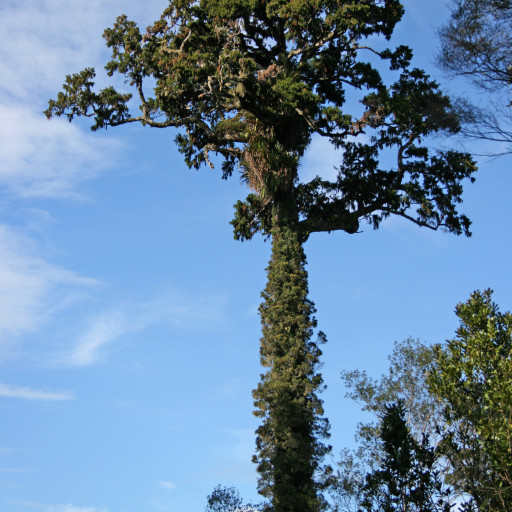
Plant Overview
Known as the Rimu or "Red Pine," this iconic conifer is a true giant of the New Zealand rainforest. In its youth, it is one of the most graceful trees in the world, featuring long, pendulous branches that look like emerald lace draping toward the ground. For the Māori people, the Rimu is a sacred "rangatira" (noble) tree, prized for its strength and the longevity of its spirit, as some individuals can live for over 1,000 years.
🔍 How to Identify
- 🍃 Foliage: The juvenile leaves are soft, needle-like, and arranged spirally around the stems, while adult leaves become shorter, scale-like, and pressed tightly to the twigs.
- 💧 The "Weeping" Habit: It is most easily identified by its distinctive drooping or pendulous branchlets that hang vertically, giving the tree a soft, shaggy appearance from a distance.
- 🪵 Bark and Color: The bark is dark brown and flakes off in large, thick scales. The overall color of the tree is a rich, deep green, often tinged with bronze or red during the colder months.
🏡 In Your Garden
- 🌱 A Generational Project: Rimu is an exceptionally slow-growing tree. While it makes a stunning ornamental specimen in a large garden, it requires patience and a spot where it won’t be disturbed for decades.
- 🌧️ Moisture Lovers: These trees naturally thrive in high-rainfall areas. They have a shallow root system and "resent" drying out; they prefer deep, organic-rich soil that stays consistently cool and moist, mimicking the damp forest floor.
⚠️ Safety & Toxicity
- ✅ Non-Toxic: Dacrydium cupressinum is generally considered safe and non-toxic to humans, cats, and dogs.
- 🪵 Handling Precaution: While the living tree is safe, the resin and sawdust (if pruning or woodworking) can cause mild skin irritation or respiratory sensitivity in some individuals. Always wear gloves when handling freshly cut wood.
✨ Fun Fact
The Rimu is the "life support system" for the Kakapo, the world’s rarest flightless parrot. These birds only breed when the Rimu trees "mast" (produce a massive amount of fruit), as the vitamin-rich berries are the primary food source required to trigger the birds' reproductive cycle.

Detailed Care Instructions
To grow a Dacrydium cupressinum plant, also known as Rimu or New Zealand Red Pine, you can follow these steps:
- Choose the right planting location: Dacrydium cupressinum prefers well-draining soil and partial shade. It thrives in cool, temperate climates but can tolerate light frosts.
- Propagation method: The most common way to grow Dacrydium cupressinum is from seeds. You can collect mature seeds from the cones or purchase them from a reputable nursery.
- Seed preparation: Soak the seeds in water for 24 hours before sowing. This will help soften their coat and improve germination rates.
- Sowing the seeds: Fill small pots or seed trays with a well-draining potting mix. Sow the soaked seeds about 1 cm (0.4 inches) deep in the soil and cover them lightly with a thin layer of soil.
- Provide the right conditions: Place the pots or trays in a warm and bright location, but avoid direct sunlight. Maintain a temperature between 20-25°C (68-77°F) for optimal germination.
- Watering: Keep the soil moist but not waterlogged. Mist the soil surface if it starts to dry out. Using a spray bottle or a fine mist irrigation system can help ensure proper moisture levels.
- Transplanting: Once the seedlings have developed 2-3 sets of true leaves, they can be transplanted into individual pots or a suitable garden location. Choose a spot with partial shade.
- Soil and fertilizer: Dacrydium cupressinum thrives in slightly acidic to neutral soil. Amend the soil with organic matter such as compost or well-rotted manure to provide nutrients. Avoid over-fertilizing to prevent excessive growth.
- Watering and maintenance: Regularly water the plants to keep the soil evenly moist, but avoid overwatering. Mulching around the base of the plant can help retain moisture and suppress weeds.
- Pruning: Minimal pruning is usually required for Dacrydium cupressinum. However, you can remove any dead or damaged branches to improve the overall appearance and promote healthy growth.
- Protection from cold: During colder months, protect young plants from frost by covering them with frost cloth or bringing them indoors.
- Patience: Dacrydium cupressinum is a slow-growing tree, so be patient. It can take several years for the plant to reach its full potential.
Remember to research specific care requirements for Dacrydium cupressinum in your particular climate and follow any additional instructions provided by the nursery or seed supplier.

Place in a window with dappled sun or a spot in the middle of a room. Or directly in a window facing west or east.

To properly water this plant, it is important to first check the moisture level of the soil. This can be done by inserting your finger into the soil up to your knuckle. If the soil feels dry, it is time to water.
When watering, it is best to use room temperature water and avoid getting water on the leaves. Slowly pour the water into the soil around the base of the plant, being careful not to flood the area. Allow the water to soak into the soil before emptying any excess water from the drainage tray.
It is important to note that over-watering can lead to root rot, so it is better to underwater than to overwater. During the winter months, as the plant goes into dormancy, it will need less water. Always monitor the soil moisture and adjust watering accordingly.
To nourish a certain species of plant, you can apply a balanced fertilizer that contains equal amounts of nitrogen, phosphorus, and potassium. Apply the fertilizer according to the package instructions, taking care not to over-fertilize, which can cause damage to the roots. During the spring and summer months, you can fertilize once a month, while reducing to bi-monthly in cooler seasons. Water the plant thoroughly after fertilizing to help the nutrients soak into the soil.
The soil suitable for Dacrydium Cupressinum should be well-draining, slightly acidic, and nutrient-rich. It should have a pH level between 5.5 and 6.5. The soil should also be able to retain moisture but not be waterlogged. A mixture of peat moss, perlite, and sand can be used for optimal drainage and aeration. Adding organic matter such as compost or well-rotted manure can also provide the necessary nutrients for the plant to thrive. It is important to avoid using heavy or clay soils as they can retain too much moisture and cause root rot.
To propagate this plant, you can start by collecting the seeds from mature cones. Soak the seeds in water for 24 hours before sowing them in a seed-raising mix. Keep the seed tray in a warm and well-lit area and water the soil regularly. Once the seedlings have grown a few centimeters tall, they can be potted into individual containers or planted directly into the ground. Alternatively, you can take stem cuttings from a healthy plant and plant them in a well-draining potting mix. Keep the soil moist and protect the cuttings from direct sunlight until they have grown roots. Transplant the rooted cuttings into individual containers or directly into the ground.








