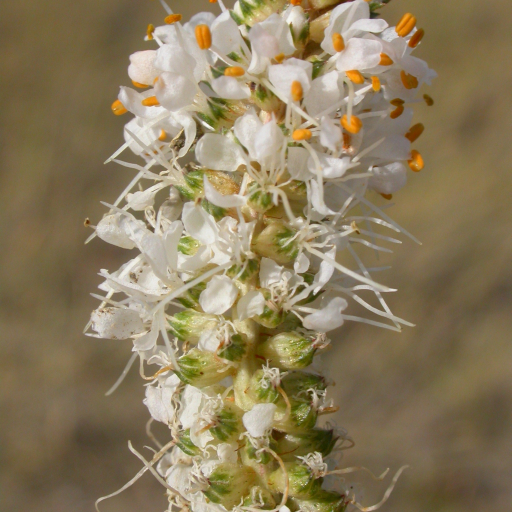
Plant Overview
Often called the White Prairie Clover, this elegant North American native is a staple of the tallgrass prairie. It is beloved by restoration experts and home gardeners alike for its slender, upright grace and its "thimble-like" white flower heads that seem to glow at dusk. Beyond its beauty, it is a hardworking legume that literally heals the earth by pulling nitrogen from the air into the soil.
🔍 How to Identify
- ⚪ The "Snowy" Spikes: Tiny, white star-shaped flowers bloom in a dense, cylindrical cluster at the top of the stem. They typically start blooming from the bottom of the cylinder and work their way up.
- 🌿 Feathery Foliage: The leaves are "pinnately compound," meaning they look like delicate green feathers. Each leaf is made up of 5 to 9 narrow, pointed leaflets that have a clean, citrusy scent when crushed.
- 📏 Slender Stature: It grows in a refined, upright clump, usually reaching about 1 to 2 feet tall, making it look much more "architectural" than common weeds.
🏡 In Your Garden
- 🌱 The Invisible Fertilizer: Because it is a legume, it has a symbiotic relationship with soil bacteria. It "fixes" nitrogen, meaning it actually improves the quality of the soil for the plants growing next to it.
- ⚓ Deep-Rooted Resilience: This plant develops a massive, woody taproot that can reach five feet deep into the ground. While this makes it incredibly drought-tolerant and tough, it also means it hates being moved—pick its "forever home" carefully!
- 🦋 Pollinator Magnet: It is a high-value buffet for native bees, honeybees, and butterflies. It is also a host plant for the Dogface Sulfur butterfly caterpillar.
⚠️ Safety & Toxicity
- ✅ Non-Toxic: Dalea candida is generally considered safe and non-toxic for humans, dogs, cats, and horses.
- 🦌 Wildlife Forage: In the wild, it is highly palatable and nutritious. Deer and rabbits love to snack on the young shoots, so you may need to protect young plants with a small cage until they are established.
✨ Fun Fact
Native American tribes, including the Pawnee and Lakota, had many uses for this plant. The roots are naturally sweet and were often chewed like a primitive "chewing gum," or dried and steeped into a medicinal tea to help reduce fevers.

Detailed Care Instructions
To grow Dalea Candida (White Prairie Clover) plants, follow these steps:
- Find an appropriate planting location: Dalea Candida prefers full sun and well-draining soil. It can tolerate various soil types but prefers neutral to slightly alkaline soil.
- Purchase or collect seeds: Obtain Dalea Candida seeds from a reputable seed supplier or collect them from mature plants in the wild.
- Prepare the soil: Clear the planting area of any weeds or grass. Loosen the soil with a garden fork or tiller and remove any rocks or debris.
- Sow the seeds: Broadcast the seeds evenly over the prepared area. You can lightly press them into the soil or cover them lightly with a thin layer of soil.
- Water regularly: Water the newly planted seeds immediately after sowing and continue to keep the soil consistently moist until the seeds germinate. After that, water the plants when the soil becomes dry.
- Provide support if needed: As the plants grow, they may require support to prevent them from falling over. You can use plant stakes or a plant cage to support them.
- Control weeds: Regularly remove any weeds that compete with the Dalea Candida plants for nutrients and water.
- Fertilize sparingly: Dalea Candida plants do not typically require fertilization if grown in fertile soil. However, if the soil is poor, you can apply a balanced slow-release fertilizer once a year in early spring.
- Monitor for pests and diseases: Although Dalea Candida has few serious pest or disease problems, some common issues to watch for include aphids, spider mites, and powdery mildew. Treat any problems promptly.
With proper care and maintenance, your Dalea Candida plants should grow and flourish.

Place in a bright room that is sun drenched almost all day. Or directly in a south-facing window.

To water this plant, it is important to assess the soil moisture level before watering. The plant should not be allowed to sit in waterlogged soil, as this can lead to root rot. However, the soil should not be left to completely dry out either.
When watering, it is best to apply water slowly and evenly around the base of the plant, allowing the soil to absorb the water gradually. This helps to prevent runoff and ensures that the water is reaching the roots where it is needed.
It is also important to avoid getting water on the foliage of the plant, as this can increase the risk of fungal disease.
Overall, the watering needs of this plant will depend on the environmental conditions and the specific soil type it is growing in, so it is important to monitor the plant closely and adjust watering accordingly.
Dalea Candida plant requires a balanced fertilizer with equal amounts of nitrogen, phosphorus, and potassium. Fertilize once a month during the growing season (spring and summer) and reduce frequency to once every two months during the dormant season (fall and winter). Avoid over-fertilizing as this may lead to excessive growth and weak stems. Always water the plant thoroughly before and after fertilizing to prevent fertilizer burn. Use a slow-release fertilizer or dilute liquid fertilizer according to the instructions on the package.
Dalea Candida plant prefers well-draining soil that is not too rich in nutrients. It requires a soil pH of 6.0-7.0 to grow effectively. A sandy loam or rocky soil is ideal for this plant to thrive in. It can tolerate clay soil if it is not too compacted, but heavy soils should be amended with grit, sand, or other materials to improve drainage. Organic matter such as compost or aged manure can be added to improve the texture of the soil without making it too rich. A general-purpose fertilizer can be added sparingly during the growing season, but excessive fertilization can harm the plant. Overall, the key to successful growth of Dalea Candida plant is to use a well-draining soil that is not too rich in nutrients.
One way to propagate this plant is to collect seed pods when they have ripened and turned brown. The seeds can then be sown in well-draining soil and kept moist until they germinate. Alternatively, you can take stem cuttings in the spring or summer, making sure each cutting has at least two nodes. Remove the bottom leaves and dip the cut end in rooting hormone before planting in a well-draining soil mix. Keep the soil moist and place the cuttings in a shady area until new growth appears, then gradually introduce it to more sunlight. Another method is to divide mature plants in the spring, ensuring each divided section has a healthy root system and replant immediately.








