Plant Overview
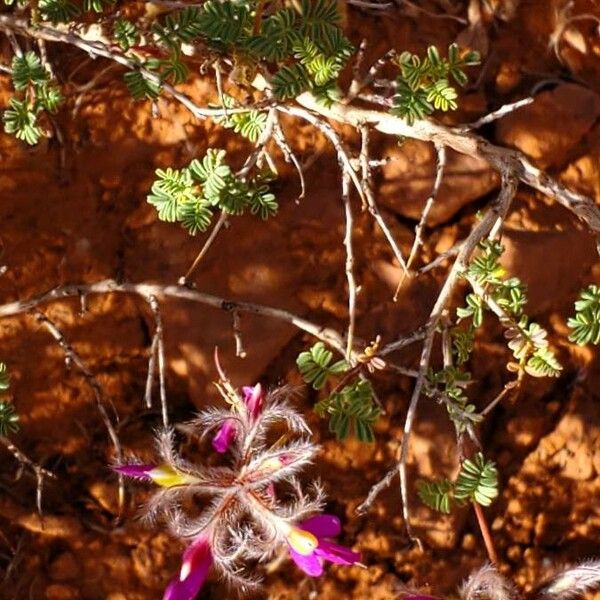
Dalea formosa, better known as the Feather Plume or Indigo Bush, is a desert jewel of the American Southwest. This low-growing, intricately branched shrub is famous for its "bi-colored" blooms that look like tiny, vibrant fireworks against the dusty landscape. It is a favorite for xeriscaping because it thrives where other plants wither, providing a burst of royal purple and gold in the height of summer.
🔍 How to Identify
- 💜 Bicolor Blooms: The flowers are the star, featuring bright purple "banners" and yellow "wings" that turn reddish-orange with age, clustered in dense spikes.
- 🪶 Feathery Calyx: After the petals fall, the remaining calyxes are covered in long, silvery-white hairs, giving the entire plant a soft, "feathered" appearance.
- 🍃 Miniature Foliage: The tiny, grey-green leaves are pinnately compound (looking like miniature fern fronds) and are dotted with small, translucent glands.
🏡 In Your Garden
- 🏜️ Desert Resilience: This plant is a true survivor; it prefers rocky, limestone-rich soils and absolutely hates "wet feet." In a garden setting, it requires excellent drainage to prevent root rot.
- 🧪 Soil Improver: As a member of the pea family (Fabaceae), it is a nitrogen-fixer. It works with soil bacteria to pull nitrogen from the air, actually improving the soil quality for its neighbors over time.
⚠️ Safety & Toxicity
- ✅ Safe Status: Dalea formosa is generally considered non-toxic to humans, dogs, cats, and horses.
- 🐝 Pollinator Traffic: While the plant itself isn't dangerous, it is a high-traffic magnet for bees and butterflies. Gardeners with severe sting allergies should place it away from high-traffic walkways.
✨ Fun Fact
The genus name Dalea honors Samuel Dale, an 18th-century English botanist, while the species name formosa is Latin for "beautiful"—a fitting title for one of the most ornamental wild shrubs of the high desert.

Detailed Care Instructions
To grow Dalea formosa, also known as feather dalea or featherplume, you can follow these steps:
- Choose the right location: Select a sunny spot in your garden that receives at least 6-8 hours of direct sunlight each day. Dalea formosa prefers well-draining soil.
- Prepare the soil: Ensure that the soil in the chosen spot is well-draining by amending it with organic matter like compost or aged manure. This will help the plant establish better root growth.
- Planting: Dig a hole slightly larger and deeper than the root ball of the plant. Place the plant in the hole and backfill with soil, gently firming it around the plant. Make sure the top of the root ball is level with the ground surface.
- Watering: After planting, water thoroughly to help the roots settle. Dalea formosa is drought-tolerant once established, but it requires regular watering until that time. Water deeply but infrequently, allowing the soil to dry out between waterings.
- Mulching: Apply a layer of organic mulch, such as wood chips or straw, around the base of the plant. This will help retain moisture, suppress weeds, and maintain more consistent soil temperatures.
- Fertilization: Dalea formosa generally doesn't require frequent fertilization. However, a balanced slow-release fertilizer applied in spring can provide some nutrients for optimal growth.
- Pruning: Trim back the plant in late winter or early spring to remove any dead or damaged branches. Prune lightly to maintain a compact and tidy shape.
- Pests and diseases: Dalea formosa is generally not prone to serious pest or disease issues. However, keep an eye out for aphids, spider mites, and scale insects. If necessary, use appropriate organic or chemical remedies to control infestations.
- Division and propagation: If you want to propagate more Dalea formosa plants, you can divide established plants in early spring. Lift the plant carefully, divide the root ball into several sections, and replant them in suitable locations.
By following these steps, you should be able to successfully grow Dalea formosa in your garden.

Place in a bright room that is sun drenched almost all day. Or directly in a south-facing window.

To water this specific plant, first ensure that the soil is dry to the touch before watering. When watering, it is important to give the plant a deep, thorough watering instead of frequent, shallow waterings. This encourages deep root growth and helps the plant become more drought resistant. It is best to water in the morning or late afternoon to reduce the amount of water lost to evaporation during hot, midday sun. Additionally, avoid getting water on the leaves and flowers, which can lead to fungal problems.
To properly fertilize this plant, apply a balanced, slow-release fertilizer in early spring before new growth begins. Avoid over-fertilizing as this can lead to excessive vegetative growth and reduce flowering. Water the plant deeply after fertilizing to help nutrients reach the root system. Repeat the fertilizer application once or twice during the growing season as needed. Always follow the instructions on the fertilizer package and adjust the amount applied based on the size of the plant.
The ideal soil for Dalea Formosa plants is well-draining and slightly alkaline. It should contain a mix of clay, sand, and organic matter such as compost or peat moss. High-quality topsoil can also be used as a base. The soil should be moist but not too wet, and the plant should be watered deeply but infrequently. The soil pH should be between 7.0-8.5, and it should be able to maintain a stable pH level. It's important to avoid using soils that are too heavy or compact, as they can trap moisture and lead to root rot. Additionally, a well-draining soil will help prevent fungal diseases that can affect the plant.
To propagate this plant, you will need to first collect seeds from the mature plant. The best time to do this is in the fall when the seed pods are dry and brittle. Gently shake the pod to release the seeds, and then store them in a cool, dry place until you are ready to plant them.
To plant the seeds, you will need to prepare a well-draining soil mixture that is rich in nutrients. You can either purchase a commercial potting mix or make your own by mixing together equal parts of perlite, vermiculite, and peat moss.
Next, sow the seeds into the soil mixture, making sure to cover them with a thin layer of soil. Water the seeds lightly, and then place them in a warm, well-lit area. Keep the soil moist but not waterlogged, and be patient as it may take several weeks for the seeds to germinate.
Once the seedlings have grown to a few inches in height, you can transplant them into individual pots or directly into the ground. Keep in mind that this plant prefers sandy, well-draining soil and full sun exposure.
With proper care, your newly propagated Dalea Formosa plant should thrive and produce beautiful flowers for years to come.








