Plant Overview
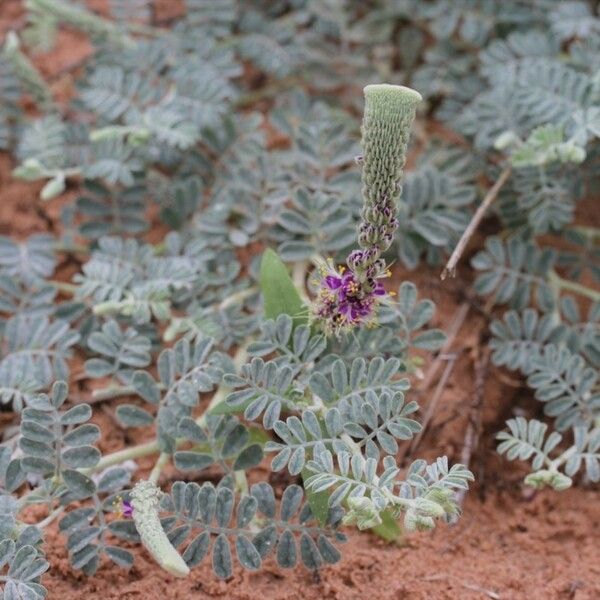
Often referred to as the Woolly Prairie Clover, Dalea lanata is a resilient "carpet-weaver" of the American Great Plains. This charming legume is draped in a soft, silvery fuzz that makes it look as though it’s permanently dusted with frost. While it may appear delicate, it is a rugged survivor perfectly adapted to the sun-scorched, sandy dunes where other plants might wither.
🔍 How to Identify
- ☁️ Foliage Texture: The leaves are small, compound, and densely covered in fine, white hairs, giving the entire plant a distinct gray-green or silvery shimmer.
- 匍 Growth Habit: Unlike its upright cousins, this species is decumbent, meaning its stems trail along the ground, creating a low-profile mat that helps it resist wind and conserve moisture.
- 🗼 Flower Spikes: In mid-to-late summer, it produces slender "cones" of tiny, reddish-purple or pink flowers that bloom in a ring, slowly climbing from the bottom of the spike to the top.
🏡 In Your Garden
- 🌱 Deep Root Strategy: This plant is notoriously difficult to move once established because it develops a massive, deep taproot. This "anchor" allows it to find water in deep soil layers, making it a champion of xeriscaping and drought-prone landscapes.
- 🐝 The Pollinator Party: It is a high-value "nectar bar" for native bees and butterflies. Because it is a legume, it also works silently underground to "fix" nitrogen, naturally improving the soil quality for neighboring plants.
- ☀️ Sand Specialist: If you have "difficult" sandy or gravelly soil where nothing else grows, this is your plant. It actually thrives in nutrient-poor areas and may struggle in heavy, wet clay.
⚠️ Safety & Toxicity
- ✅ Safe for All: Dalea lanata is generally considered non-toxic to humans, dogs, and cats.
- 🐄 Forage Friendly: In the wild, it is highly palatable and nutritious for livestock and wildlife, often disappearing quickly in over-grazed areas because animals find it so tasty.
✨ Fun Fact
Native American tribes, including the Comanche, traditionally used the sweet-tasting roots of various Dalea species as a type of natural "chewing gum" or brewed the leaves into a pleasant, medicinal tea.

Detailed Care Instructions
To grow a Dalea Lanata plant, also known as the Rocky Mountain Bee Plant, you can follow these steps:
- Obtain seeds: Purchase Dalea Lanata seeds from a reputable source. These seeds are typically available from garden centers or online seed suppliers.
- Choose a location: Select a suitable location for planting. Dalea Lanata prefers full sun and well-draining soil. It can adapt to different soil types but thrives in sandy or loamy soil.
- Prepare the soil: Clear the area of any weeds or grass. Loosen the soil with a garden fork or tiller to a depth of about 6-9 inches. Incorporate organic matter into the soil to improve its fertility and drainage.
- Sow the seeds: Scatter the Dalea Lanata seeds directly over the prepared soil. You can lightly rake them into the soil or press them lightly with your hand to ensure good seed-to-soil contact.
- Water regularly: Water the seeds thoroughly after sowing. Keep the soil evenly moist but not waterlogged. The seeds generally germinate within 7-21 days.
- Thin the seedlings: Once the seedlings have emerged and are a few inches tall, thin them out to provide adequate spacing. Space the plants about 12-18 inches apart to allow for proper air circulation and growth.
- Provide support (optional): If you are growing a tall variety of Dalea Lanata, you may need to provide support in the form of stakes or trellises.
- Mulch: Apply a layer of organic mulch around the base of the plants to help conserve moisture, suppress weeds, and regulate soil temperature.
- Maintenance: Water the plants regularly, especially during hot and dry periods. Monitor for any pests or diseases and take appropriate action if necessary. Deadhead spent flowers to encourage continuous blooming.
- Harvesting: For culinary purposes, you can harvest young flowers and tender leaves. To harvest the seeds, allow the flowerheads to fully mature and dry on the plants. Cut the seedheads and hang them upside down in a dry, well-ventilated area. Once completely dry, gently rub the seedheads to release the seeds.
With proper care and maintenance, your Dalea Lanata plant should grow and bloom, attracting bees and butterflies to your garden.

Place in a bright room that is sun drenched almost all day. Or directly in a south-facing window.

To provide adequate hydration for this particular plant, it is recommended to water it regularly and deeply, making sure the soil is thoroughly moistened. When watering, it is important to avoid getting water on the leaves or foliage, as this can lead to disease and mold issues. Additionally, it is recommended to monitor the soil moisture levels and adjust watering frequency based on the plant's needs and environmental conditions. Overwatering should be avoided as it can lead to root rot and other problems. It is also beneficial to mulch around the base of the plant to help retain moisture and protect the roots.
To fertilize Dalea Lanata, you'll want to follow these instructions:
- Choose a balanced, slow-release fertilizer with an NPK ratio of 10-10-10 or 14-14-14 to provide essential nutrients to the plant.
- Begin fertilizing in early spring as new growth begins. Follow up with monthly feedings throughout the growing season (spring to early fall).
- Apply the fertilizer according to the package instructions. Typically, you'll sprinkle the granules evenly around the base of the plant, taking care not to let it directly touch the stems.
- Gently work the fertilizer into the soil using a rake or garden fork, being cautious not to damage the plant's root system.
- Water the plant thoroughly after fertilizing to ensure the nutrients seep down into the soil and reach the roots.
- It's important not to over-fertilize, as excessive nutrients may lead to weak growth or burning of the plant. Stick to the recommended dosage and frequency.
- If you notice signs of nutrient deficiency (e.g., yellowing leaves or stunted growth), you may need to increase the frequency of fertilization slightly or switch to a fertilizer with higher nitrogen content.
Remember, always read and follow the instructions provided by the selected fertilizer brand as specific recommendations may vary.
Dalea Lanata plant prefers well-drained soil that is slightly acidic to neutral in pH. The soil should be rich in organic matter and should have a good amount of nutrients. It is important to avoid using heavy or clayey soils as they can restrict the growth of the plant. Sandy loam soils are ideal for this plant as they provide good drainage and aeration. The soil should also be moist but not water-logged, as the plant can be susceptible to root rot. It is recommended to use a good quality potting mix or a blend of cocopeat, perlite, and vermicompost for growing Dalea Lanata plant. The use of slow-release fertilizers can help provide the nutrients needed to keep the plant healthy and thriving.
Dalea lanata is a perennial plant species that belongs to the Fabaceae family. It is native to the southwestern United States and northern Mexico. Native Americans traditionally used this plant for various medicinal purposes.
To propagate Dalea lanata plant, you can follow these steps:
- Choose the right time: The best time to propagate this plant is in late spring or early summer when the weather is warm and the plant is actively growing.
- Prepare the soil: Dalea lanata prefers well-draining soil. Prepare a pot or a planting area with a mixture of equal parts sand, perlite, and peat moss. Ensure that the soil is loose and well-aerated.
- Collect seeds: Identify the mature seed pods on the Dalea lanata plant. These pods will turn brown and dry out when the seeds are ready for collection. Gently remove the pods and open them to extract the small seeds.
- Scarification: Many Dalea seeds have a hard outer coat that prevents germination. To enhance germination rates, scarify the seeds by rubbing them lightly between two sheets of sandpaper or by soaking them in warm water overnight.
- Sow the seeds: Place the scarified seeds on top of the prepared soil surface, gently pressing them into the soil. Alternatively, you can sow them in small seed trays filled with the prepared soil mixture.
- Provide proper growing conditions: Place the seeds or seed trays in a warm location that receives bright indirect sunlight. Water the seeds regularly to keep the soil consistently moist but not waterlogged. Ensure good air circulation to prevent mold or fungal growth.
- Transplanting: After the seeds have germinated and the seedlings have developed a few true leaves, they can be transplanted into larger pots or directly into the garden bed. Make sure to acclimate the seedlings gradually to outdoor conditions before transplanting them.
- Maintenance: Water the transplanted seedlings regularly, providing enough moisture to facilitate growth but avoiding overwatering. Once established, Dalea lanata is a drought-tolerant plant that requires minimal maintenance.
Remember, the propagation success rate may vary, and patience is key when propagating plants. It's also worth noting that Dalea lanata can be propagated via other methods, such as stem cuttings or division, but seed propagation is one of the most common methods.








