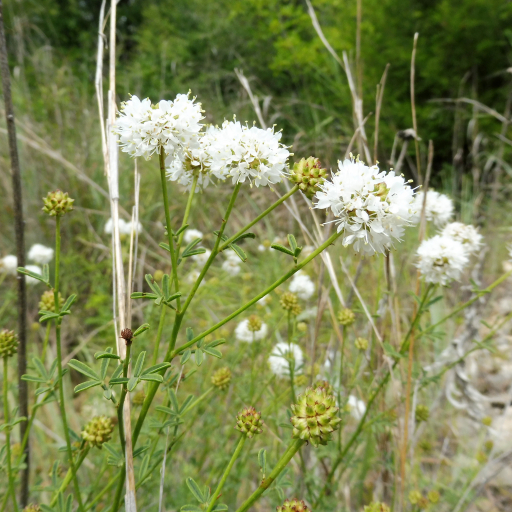
Plant Overview
Often called the Round-headed Prairie Clover, this resilient beauty is a hallmark of the North American Great Plains. With its snowy-white "thimbles" and delicate, fern-like foliage, it acts as a busy hub for local pollinators. Beyond its looks, it is a silent hero of the ecosystem, working underground to enrich the soil for its neighbors.
🔍 How to Identify
- ⚪ The Flower Heads: Unlike its cousins with elongated spikes, this species produces dense, globose (round) or slightly oval flower clusters at the tips of its stems.
- 🌿 The Foliage: The leaves are "pinnately compound," meaning they look like tiny green feathers. They are dotted with minute translucent glands if you look closely.
- 📏 Growth Habit: It typically grows in a clump of multiple stiff, upright stems, reaching about 1 to 2 feet in height, giving it a tidy, shrub-like appearance.
🏡 In Your Garden
- 🌱 The Taproot Secret: This plant develops a very deep, woody taproot. This makes it incredibly drought-tolerant once established, but it also means it "hates" being moved. Choose its forever home carefully!
- 🧪 Natural Fertilizer: As a member of the legume family, it possesses the magical ability to "fix" nitrogen. It pulls nitrogen from the air and stores it in the soil, naturally improving the ground for surrounding plants.
- 🐝 Pollinator Magnet: If you want to see your garden come alive, this is the plant to choose. It is a favorite of honeybees, native bumblebees, and various delicate butterflies.
⚠️ Safety & Toxicity
- ✅ General Safety: Dalea multiflora is considered non-toxic to humans and is generally safe for horses and livestock, who often find it quite tasty.
- 🐾 Pets & Kids: There are no known records of toxicity for cats or dogs. However, as with any ornamental plant, it is best to discourage curious toddlers or pets from munching on the stems to avoid any potential stomach upset.
✨ Fun Fact
Native American tribes, including the Pawnee and Comanche, historically used the stems of the Prairie Clover to make sturdy brooms and brewed the leaves into a pleasant-tasting medicinal tea.

Detailed Care Instructions
Here are some steps to help you grow Dalea Multiflora plants:
- Choose a planting location: Dalea Multiflora plants prefer full sun and well-draining soil. Make sure the location you choose receives at least 6-8 hours of direct sunlight daily.
- Prepare the soil: Amend the soil with organic matter, such as compost, to improve drainage and fertility. You can also add a slow-release fertilizer to provide nutrients for the plant.
- Planting: Dig a hole slightly larger than the root ball of the plant. Place the plant in the hole and backfill with soil, gently firming it around the base of the plant.
- Watering: Water the plant deeply after planting to help it establish its roots. After that, water the plant regularly, but make sure to allow the soil to dry out slightly between waterings to avoid overwatering.
- Mulching: Apply a layer of organic mulch, such as wood chips or straw, around the base of the plant. This helps to conserve moisture, suppress weeds, and insulate the soil.
- Pruning: Dalea Multiflora plants benefit from annual pruning to keep them compact and encourage bushier growth. Prune back the plant by about one-third in late winter or early spring before new growth emerges.
- Fertilizing: Apply a balanced, slow-release fertilizer in early spring to provide additional nutrients to the plant. Follow the package instructions for application rates.
- Pests and diseases: These plants are relatively pest and disease-resistant, but occasionally, they may be affected by aphids or powdery mildew. If necessary, treat the infestation with an appropriate insecticide or fungicide, following the product instructions.
- Propagation: You can propagate Dalea Multiflora through cuttings or by collecting and planting seeds.
Remember, each plant has specific requirements, so it's always helpful to research and understand the specific needs of the Dalea Multiflora plant in your region. Monitoring the plant's growth, providing adequate care, and making adjustments as necessary will help ensure its successful growth.

Place in a bright room that is sun drenched almost all day. Or directly in a south-facing window.

Dalea Multiflora is a type of plant that requires adequate watering to thrive. One should ensure that the plant is moist, but not over-watered. As a general rule, watering should be done when the top soil becomes dry to the touch. The plant should be watered deeply, allowing the water to reach the roots. It is recommended that the plant be watered in the early morning or late afternoon so as to avoid the hottest periods of the day. Over-watering can lead to root rot and other problems, so it is important to ensure that the soil has proper drainage and that excess water is removed from the pot or planting area. Additionally, environmental factors like humidity and temperature can affect watering requirements, so it is important to monitor the plant and adjust watering as needed.
To fertilize this plant, use a well-balanced fertilizer with equal parts nitrogen, phosphorus, and potassium. Apply the fertilizer at the beginning of the growing season and again in mid-summer. Make sure to follow the package instructions for proper application rates. Avoid over-fertilizing, as this can lead to excessive growth and may reduce the plant's overall health. Additionally, ensure the plant is watered thoroughly before and after fertilizing to prevent root burn.
The ideal soil for the plant has a sandy texture and is well-draining. It should be slightly acidic with a pH range of 6.0 to 7.5. The soil should be nutrient-rich, with a moderate amount of organic matter. The plant prefers soils that are not too wet or too dry, and it is tolerant of drought conditions. The soil should be aerated to allow for proper root growth and drainage. The plant is typically grown in areas with full sun exposure and can thrive in hot, dry environments. Fertilizing with a balanced, slow-release fertilizer can help promote healthy growth.
To propagate this plant, take a cutting from a mature and healthy stem that is at least 4 inches long. Remove all the leaves along the bottom 2 inches of the cutting, leaving only a few leaves at the top. Dip the cut end of the stem in rooting hormone and plant the cutting in a pot filled with a well-draining soil mix. Water the cutting immediately and keep it in bright, indirect sunlight. Ensure that the soil remains moist but not overly wet. It may take several weeks for roots to form. Once the cutting has established a healthy root system, it can be repotted into a larger container or planted in soil outdoors.








