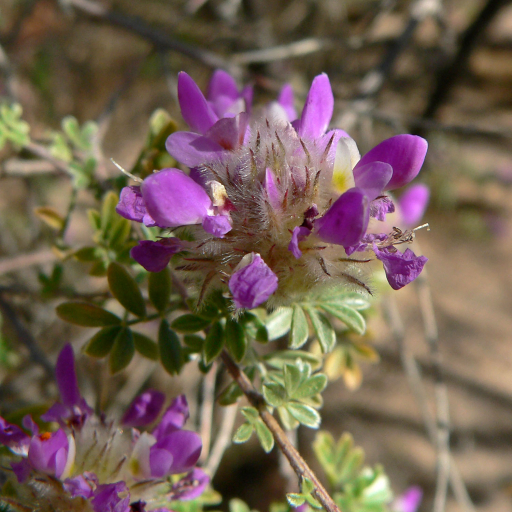
Plant Overview
Commonly known as the Indigo Bush or Santa Catalina Prairie Clover, this desert gem looks like something plucked from a purple-hued dream. Native to the rocky slopes of the Sonoran Desert, it is a tough-as-nails shrub that rewards gardeners with a soft, silvery texture and vibrant, globular blooms. It is a star of "xeriscaping" (water-wise gardening) because it thrives where other plants might wilt under the sun’s intense glare.
🔍 How to Identify
- 💜 Pom-pom Blooms: The flowers appear in dense, rounded clusters of tiny, pea-like blossoms that are a deep indigo-violet, often accented by tiny, bright yellow or orange tips.
- 🥈 Silvery Foliage: The small, compound leaves are covered in fine, silky hairs that give the entire plant a shimmering, gray-green or silvery appearance.
- ☁️ Growth Habit: It typically grows as a neat, mounded woody shrub, reaching about 3 to 4 feet in height and width, resembling a soft, purple-flecked cloud.
🏡 In Your Garden
- 🌵 Deep Roots: This plant develops a significant taproot to find water deep underground. Because of this, it hates being transplanted; once you find a sunny spot for it, it’s best to let it stay there for life.
- 🐝 Pollinator Magnet: It is a vital resource for native bees and butterflies. It is specifically a host plant for the Ceraunus Blue butterfly, making it a "must-have" for any Southwest habitat garden.
- 🧪 Soil Improver: As a member of the legume family, it has the incredible ability to "fix" nitrogen in the soil, essentially fertilizing itself and its neighbors naturally.
⚠️ Safety & Toxicity
- ✅ Safe Status: Dalea pulchra is generally considered non-toxic to humans, dogs, and cats. It is a safe choice for family-friendly landscapes.
- 🧤 Pruning Care: While it doesn't have thorns, the inner branches can become woody and brittle over time. It is best to wear gloves when pruning to avoid scratches from dry, stiff stems.
✨ Fun Fact
The genus Dalea is named after Samuel Dale, a famous 17th-century English physician and botanist. Despite its English name, this plant is a true American desert native that can survive temperatures as low as 15°F!

Detailed Care Instructions
Growing Dalea pulchra, commonly known as the Pretty Dalea or Indigo Bush, can be quite rewarding. This plant is native to the southwestern United States and northern Mexico, and it thrives in arid, desert-like conditions. Here are steps to help you successfully cultivate Dalea pulchra:
Choosing the Right Location:
- Sunlight: Dalea pulchra prefers full sun. Ensure the planting site receives at least 6 hours of direct sunlight per day.
- Soil: This plant thrives in well-draining soil. Sandy, rocky, or loamy soils work well. Avoid heavy clay soils that retain water, as this can lead to root rot.
- Space: Give each plant enough space to grow. Dalea pulchra can spread to about 3-5 feet in width.
Planting:
- Seeds or Plants: You can grow Dalea pulchra from seeds or young plants. Seeds should be soaked in warm water for 24 hours before planting to improve germination rates.
- Planting Depth: If using seeds, plant them about 1/4 inch deep. If planting a young plant, dig a hole that's twice as wide and just as deep as the root ball.
Watering:
- Establishment Period: Water regularly until the plant is established – usually the first growing season. Make sure the soil is moist but not waterlogged.
- After Establishment: Once established, Dalea pulchra is drought-tolerant. Water sparingly; occasional deep watering during prolonged dry periods will suffice.
Maintenance:
- Mulching: Applying a layer of mulch can help retain soil moisture and keep weeds at bay. Use organic mulches like wood chips or bark.
- Pruning: Prune to maintain shape, remove dead branches, and encourage bushier growth. Prune in late winter or early spring before new growth begins.
- Fertilization: Dalea pulchra typically doesn’t need much fertilization. If desired, you can use a balanced, slow-release fertilizer in the spring.
Pest and Disease Management:
- Pests: Generally, Dalea pulchra is resistant to most pests. However, keep an eye out for aphids or spider mites, particularly if the plant is stressed.
- Diseases: Ensure good air circulation and avoid overhead watering to minimize the risk of fungal diseases.
Additional Tips:
- Hardiness Zones: Dalea pulchra is hardy in USDA zones 7-10.
- Companion Planting: Consider pairing with other drought-tolerant plants like Agave, Yucca, or other native desert plants.
- Wildlife: It’s an excellent plant for attracting pollinators such as bees and butterflies.
By providing the right conditions and care, your Dalea pulchra can thrive and add beauty to your garden with its lovely purple flowers and silvery foliage.

Place in a bright room that is sun drenched almost all day. Or directly in a south-facing window.

Watering **Dalea Pulchra** requires some attention to its natural habitat and growth characteristics. Since it's a desert-adapted plant, here are some specific guidelines:
1. **Establishment Phase**: In the first year after planting, it's essential to water the plant more frequently to help establish its root system. Watering deeply once a week should suffice, ensuring the soil is moist but not waterlogged.
2. **Mature Plants**: Once established, **Dalea Pulchra** is quite drought-tolerant. Reduce watering frequency significantly. Typically, occasional deep watering is preferred over frequent shallow watering. This encourages deep root growth and greater drought resistance.
3. **Seasonal Variations**: Adjust watering based on seasonal changes.
- **Spring and Early Summer**: Water moderately as the plant enters a period of active growth. Every two to three weeks may be adequate, depending on local climate conditions.
- **Monsoon Season (if applicable)**: Natural rainfall may provide sufficient moisture. Reduce supplementary watering during times of significant rain.
- **Fall and Winter**: Watering can be minimized as the plant enters dormancy. Only water once a month or when the soil is completely dry.
4. **Soil Considerations**: Ensure the plant is in well-draining soil. Overwatering in poorly draining soils can lead to root rot. Sandy or gravelly soils typically suit **Dalea Pulchra** well.
5. **Mulching**: Adding a layer of mulch around the base can help in retaining soil moisture and minimizing the need for frequent watering. However, keep the mulch away from the stem to prevent potential rot.
6. **Observation and Adjustment**: Regularly check the plant’s appearance and soil moisture. If you notice signs of overwatering (such as yellowing leaves) or underwatering (such as wilting), adjust the watering schedule accordingly.
By following these guidelines, you can ensure that **Dalea Pulchra** receives the appropriate amount of water to thrive in your garden or landscape.
Here are some fertilizing instructions for Dalea pulchra:
- Soil Preparation:
- Ensure the plant is growing in well-drained soil with a neutral to slightly alkaline pH.
- Ensure the plant is growing in well-drained soil with a neutral to slightly alkaline pH.
- Fertilizer Type:
- Use a balanced, slow-release fertilizer with a ratio such as 10-10-10 (N-P-K), which provides a balanced amount of nitrogen, phosphorus, and potassium.
- Use a balanced, slow-release fertilizer with a ratio such as 10-10-10 (N-P-K), which provides a balanced amount of nitrogen, phosphorus, and potassium.
- Application Schedule:
- Apply the fertilizer in early spring, just as new growth begins.
- You can also provide another light application in late spring if the plant appears to need an extra boost.
- Apply the fertilizer in early spring, just as new growth begins.
- Application Method:
- Follow the manufacturer's instructions for the amount to use, but generally, you can sprinkle the fertilizer evenly around the base of the plant, extending out to the drip line (the outer edge of the plant's foliage).
- Lightly work the fertilizer into the topsoil, being careful not to disturb the roots.
- Water the area thoroughly after application to help the fertilizer penetrate the soil and reach the roots.
- Follow the manufacturer's instructions for the amount to use, but generally, you can sprinkle the fertilizer evenly around the base of the plant, extending out to the drip line (the outer edge of the plant's foliage).
- Watering After Fertilizing:
- Ensure the plant receives adequate water after fertilizing, keeping the soil consistently moist but not waterlogged.
- Ensure the plant receives adequate water after fertilizing, keeping the soil consistently moist but not waterlogged.
- Monitoring:
- Observe the plant for signs of nutrient deficiency or over-fertilization. Adjust the frequency or amount of fertilizer if the plant shows signs of stress, such as yellowing leaves or stunted growth.
This regimen should help maintain healthy growth and vibrant blooms.
- Observe the plant for signs of nutrient deficiency or over-fertilization. Adjust the frequency or amount of fertilizer if the plant shows signs of stress, such as yellowing leaves or stunted growth.
Dalea pulchra thrives best in well-drained soils that mimic its native, arid environment. Here are some detailed considerations for the type of soil to use:
- Drainage: It prefers soils with excellent drainage. This is crucial to prevent root rot and other fungal diseases. A sandy or gravelly soil composition can enhance drainage.
- Texture: A coarse-textured soil is ideal. This means incorporating materials that ensure the soil doesn't retain too much moisture. Components like sand, small gravel, or perlite can be beneficial.
- pH Level: The soil should be slightly acidic to neutral, with a pH range of about 6.0 to 7.5. Test your soil and amend it if necessary to reach this pH range.
- Nutrient Content: While the plant is not particularly demanding in terms of nutrient-rich soil, a slightly lean soil that is not overly fertile can help maintain the right growing conditions. Avoid using heavy composts or rich organic matter.
- Soil Amendments: If you are planting in a region that does not naturally have the desired soil type, you can amend your soil with sand or fine gravel to improve drainage. Adding a small amount of organic matter, like compost, can also support healthy growth, but be cautious not to overdo it.
- Container Growing: If you're planting in a container, use a cactus or succulent mix combined with an equal part of sand or small gravel. This mix will ensure adequate drainage and prevent water retention.
- Native Habitat Considerations: Consider replicating the natural conditions where this plant species is found, typically desert regions with well-drained, often rocky or sandy soils. This environmental mimicry will support the best growth and health of the plant.
By focusing on well-draining, slightly acidic to neutral, and relatively low-nutrient soils, you will create an optimal environment for the plant to flourish.
Propagating Dalea pulchra, a beautiful and hardy plant native to the southwestern United States and northern Mexico, can be done through several methods, primarily from seeds or cuttings. Below is a detailed guide on how to propagate this plant:
Propagation by Seeds
- Seed Collection:
- Collect seeds from mature, dried seed pods in late summer or fall.
- Ensure the seeds are fully ripe before harvesting for higher germination rates.
- Collect seeds from mature, dried seed pods in late summer or fall.
- Seed Preparation:
- Scarify the seeds to improve water absorption and germination. This can be done by lightly rubbing the seeds with sandpaper or soaking them in warm water for 24 hours.
- Scarify the seeds to improve water absorption and germination. This can be done by lightly rubbing the seeds with sandpaper or soaking them in warm water for 24 hours.
- Sowing Seeds:
- Use a well-draining soil mix, such as a combination of cactus mix and perlite.
- Sow the seeds on the surface and cover them lightly with a thin layer of soil or vermiculite.
- Maintain a temperature range of 70-85°F (21-29°C) for optimal germination.
- Use a well-draining soil mix, such as a combination of cactus mix and perlite.
- Watering:
- Keep the soil lightly moist but not waterlogged.
- Use a spray bottle to avoid displacing the seeds.
- Keep the soil lightly moist but not waterlogged.
- Germination:
- Seeds typically germinate within 2-3 weeks, depending on environmental conditions.
- Seeds typically germinate within 2-3 weeks, depending on environmental conditions.
- Transplanting Seedlings:
- Once seedlings have developed a few true leaves, they can be gently transplanted into individual pots.
- Continue to provide ample light and gradually acclimate them to outdoor conditions before planting in the ground.
Propagation by Cuttings
- Once seedlings have developed a few true leaves, they can be gently transplanted into individual pots.
- Selecting Cuttings:
- Choose healthy, semi-hardwood cuttings from vigorous, non-flowering growth.
- Cuttings should be around 4-6 inches (10-15 cm) long.
- Choose healthy, semi-hardwood cuttings from vigorous, non-flowering growth.
- Preparing Cuttings:
- Remove the lower leaves, leaving only a few at the top.
- Dip the cut end in rooting hormone to encourage root development.
- Remove the lower leaves, leaving only a few at the top.
- Planting Cuttings:
- Use a well-draining potting mix, similar to the one used for seed propagation.
- Insert the cuttings into the soil, burying at least two nodes below the surface.
- Use a well-draining potting mix, similar to the one used for seed propagation.
- Environmental Conditions:
- Maintain a stable temperature between 70-75°F (21-24°C) and provide high humidity.
- Using a humidity dome or placing the cuttings in a plastic tent can help maintain the necessary moisture levels.
- Maintain a stable temperature between 70-75°F (21-24°C) and provide high humidity.
- Watering:
- Keep the soil consistently moist but not soggy.
- Mist the cuttings regularly to keep the humidity high.
- Keep the soil consistently moist but not soggy.
- Root Development:
- Rooting typically occurs within 4-6 weeks.
- Check for root development by gently tugging on the cuttings. Resistance indicates root formation.
- Rooting typically occurs within 4-6 weeks.
- Transplanting Rooted Cuttings:
- Once substantial roots have formed, transplant the cuttings into individual pots.
- Gradually acclimate the new plants to outdoor conditions before planting them in their final location.
Care After Propagation
- Once substantial roots have formed, transplant the cuttings into individual pots.
- Light: Ensure the plants receive full sun to part shade.
- Soil: Plant in well-draining soil, such as sandy or rocky soil.
- Water: Water deeply but infrequently, allowing the soil to dry out between waterings.
- Pruning: Prune to shape and remove any dead or diseased branches.
By following these steps, you can successfully propagate Dalea pulchra and enjoy its beautiful blooms and foliage in your garden.








